Friday — May 29, 2026
Automatisiert mit einem lokalen KI-Modell erstellt, ohne redaktionelle Prüfung vor Veröffentlichung.
Multi-Agent Orchestrator
You are a senior AI architect. Design a dynamic multi-agent workflow for [specific task] that uses Claude Opus 4.8's parallel subagent capabilities. Include effort control settings, failure recovery, and a human-in-the-loop checkpoint. Output the architecture as a JSON specification.
Claude Opus 4.8 Launches with Dynamic Workflows
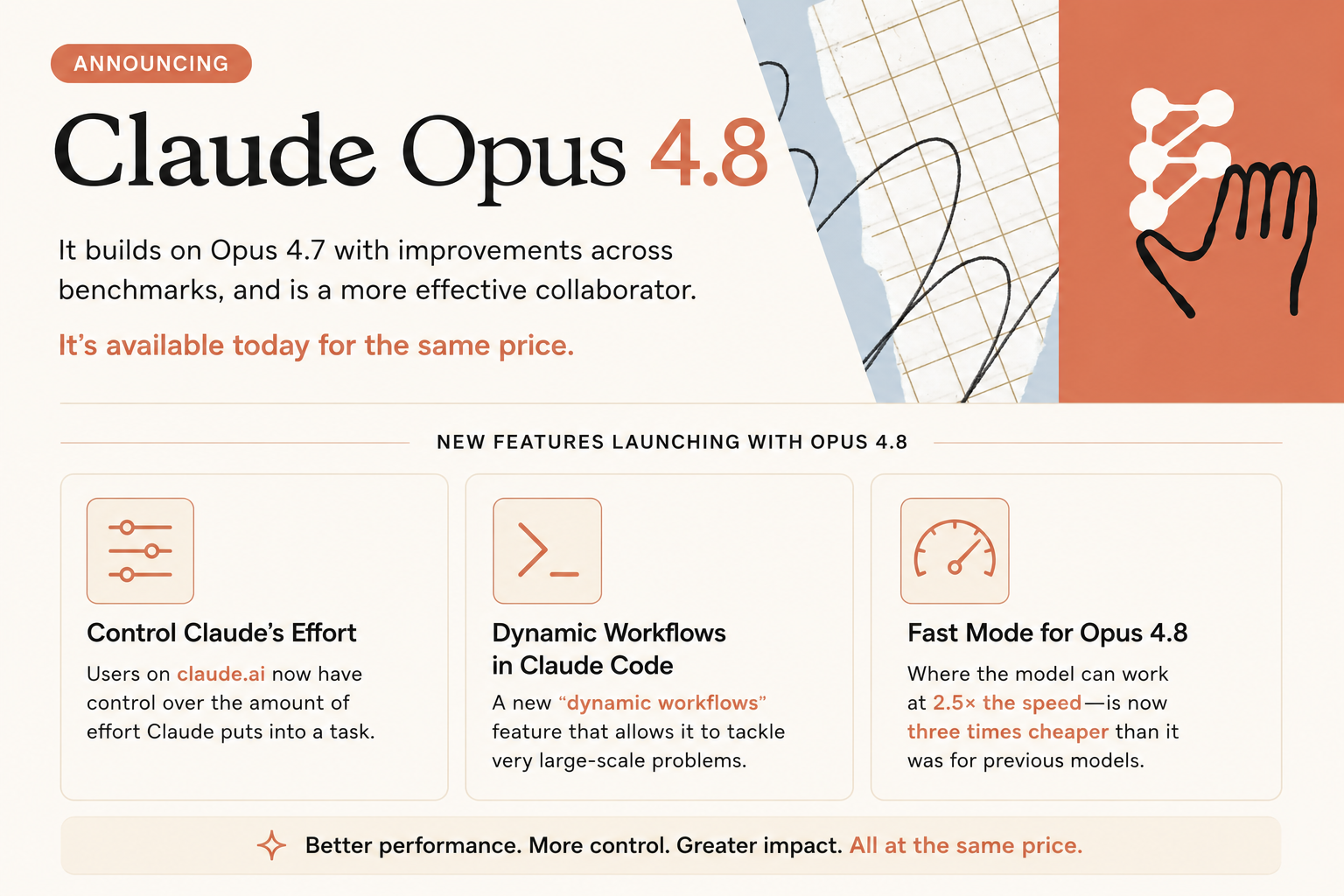
Anthropic dropped Claude Opus 4.8 on May 28, and it's not just another incremental update. The headline feature is Dynamic Workflows, a research preview that lets you orchestrate hundreds of parallel subagents on a single task. Think of it as giving Claude the ability to spawn an entire team of specialized AI workers, each handling a subtask, then synthesizing the results. The effort control system is equally significant — you can dial thinking time up for complex reasoning or down for simple queries, with a fast mode running 2.5x faster at one-third the cost. For developers, Claude Code v2.1.154 integrates these features with 44 changes including security fixes for MCP and authentication. The 4x reduction in hallucination and code flaw hiding is a direct response to enterprise trust concerns. If you're building production AI systems, this is the model to test immediately. The parallel subagent architecture fundamentally changes what's possible in agentic workflows, from code generation to research synthesis to complex data analysis.
Meine Einschätzung: This is the most important model release of 2026 so far. The dynamic multi-agent capability is a genuine breakthrough for complex, long-horizon tasks.
OpenAI Launches $4B Enterprise Consulting Arm
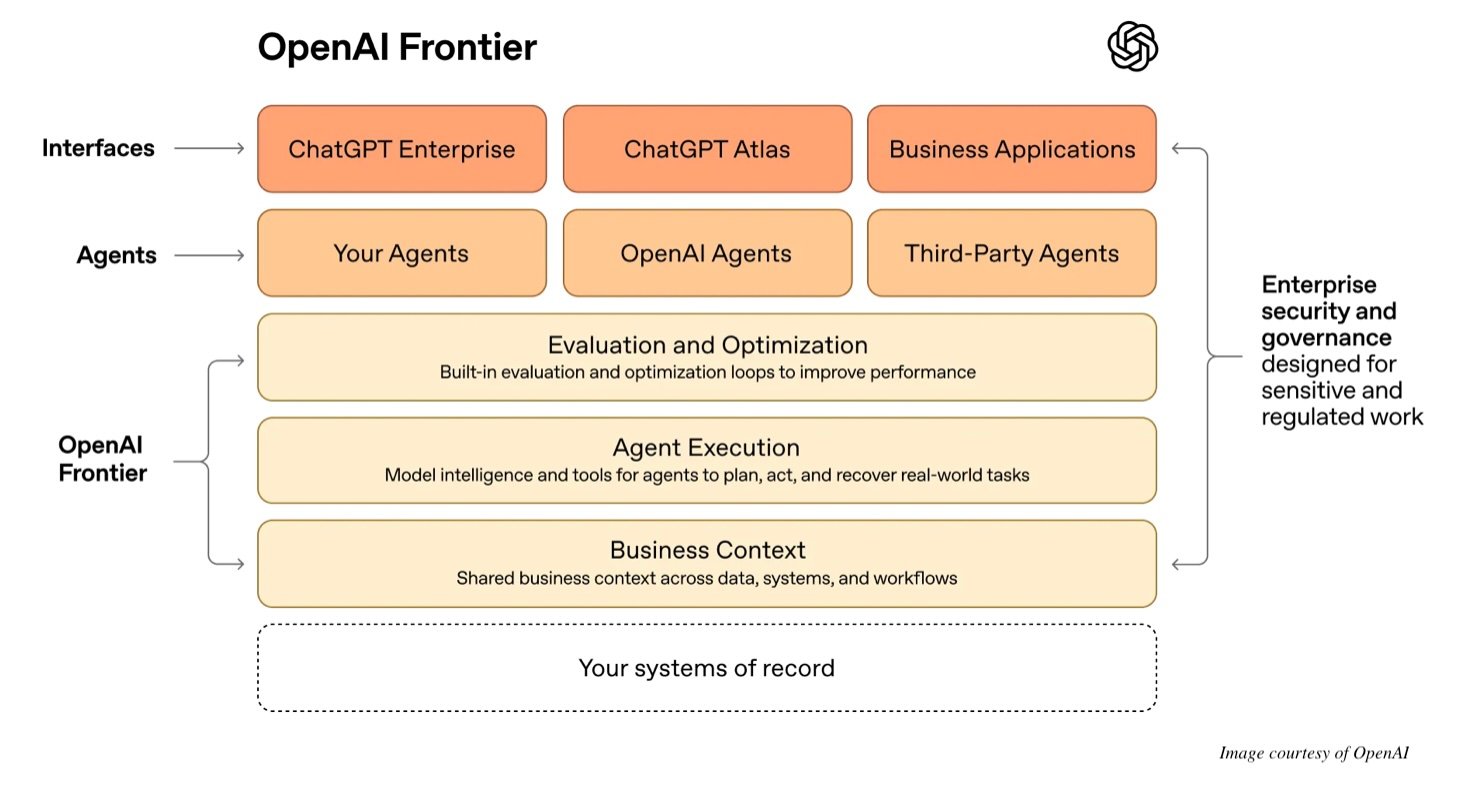
OpenAI's launch of DeployCo is a strategic pivot that every enterprise AI leader needs to understand. With a $4 billion budget and the acquisition of Tomoro's 150 engineers, OpenAI is building an end-to-end enterprise consulting practice. This isn't just about selling API credits anymore — they're going to help companies build, deploy, and manage AI systems directly. The move puts them in direct competition with every major consulting firm and systems integrator. For enterprises, this means a new option for AI transformation that comes with native model access and deep technical expertise. But it also raises questions about vendor lock-in and the concentration of AI expertise. The timing is strategic — coming alongside the Illinois AI safety bill and growing enterprise demand for auditable, compliant AI systems. If you're planning an enterprise AI deployment, you should evaluate DeployCo alongside traditional SI partners, but approach with clear exit strategy and multi-model flexibility.
Meine Einschätzung: OpenAI is no longer just a model provider — they're coming for the systems integrators' lunch. This changes the enterprise AI landscape completely.
Illinois Passes Frontier AI Safety Bill

The Illinois Frontier AI Safety Bill is a watershed moment for US AI regulation. The core requirement: any AI lab with over $500 million in revenue must undergo independent third-party audits. This goes beyond voluntary commitments and creates enforceable obligations. The bill includes whistleblower protections and mandatory risk assessments, mirroring elements of the EU AI Act but with a distinctly American regulatory approach. For builders, the implications are immediate. If you're training frontier models or deploying systems that could be classified as high-risk, you need to start building audit trails, documentation, and safety frameworks now. The bill creates a compliance burden but also an opportunity — companies that invest in robust safety infrastructure will have a competitive advantage. Expect other states to follow Illinois' lead, and watch for federal momentum. The key action items: implement model documentation systems, establish internal audit processes, and prepare for external auditors who will examine everything from training data to deployment monitoring.
Meine Einschätzung: This is the regulatory shot across the bow. If you're building at scale, start preparing for mandatory audits now — don't wait for your state to pass a similar law.
Google Gemini Omni Flash Goes Live

Gemini Omni Flash represents a fundamental shift in what we expect from AI models. It's a multimodal world model that can take text, images, or audio as input and generate coherent video output. The rollout begins today for paid Google AI subscribers, with YouTube Shorts and YouTube Create integration coming later this week for free users. This is significant because it puts professional-grade video generation in the hands of every creator. The implications for content creation are massive — imagine describing a scene and getting a video, or providing a reference image and having it animated. For enterprises, this means new capabilities in training, marketing, and communication. The deprecation of several Gemini 2.0 Flash models on May 31 signals Google's aggressive push toward this new architecture. If you're in content creation, marketing, or training, start experimenting with Omni Flash immediately. The quality bar is high enough for production use in short-form content, and it will only improve.
Meine Einschätzung: Video generation from any input modality is the killer app. This isn't just a feature — it's a new content creation paradigm.
Deep Dive
Architecting Dynamic Multi-Agent Systems
Claude Opus 4.8's Dynamic Workflows feature changes the game for complex AI tasks, but implementing it requires careful architecture. The key insight: you're not just running one AI call — you're orchestrating a team of specialized agents that can work in parallel, share context, and synthesize results. Start by decomposing your task into independent subtasks that can run concurrently. For example, if you're building a market research report, one agent can analyze competitors, another can review financial data, and a third can scan social media sentiment. The Dynamic Workflows system handles the orchestration, but you need to design the task decomposition yourself. Use the effort control system strategically — set high effort for reasoning-intensive subtasks and low effort for straightforward data extraction. Implement checkpointing and human-in-the-loop gates at decision points where errors would cascade. The parallel execution means you'll get results faster, but you need robust error handling for individual agent failures. Build a fallback mechanism that retries failed subtasks with increased effort or alternative approaches. For long-running workflows, leverage the suspend/resume capability to handle timeouts gracefully. The most common mistake is treating Dynamic Workflows as a magic black box — it's a powerful tool, but it requires thoughtful architecture design. Start with a simple two-agent workflow, validate the output quality, then scale up to more complex orchestrations.
The era of single-model, single-call AI is over. Build with agents, audit for trust, and prepare for regulation.