Sunday — May 31, 2026
Automatisiert mit einem lokalen KI-Modell erstellt, ohne redaktionelle Prüfung vor Veröffentlichung.
Agent Workflow Builder
You are a senior AI architect. Design a multi-agent workflow for a small business that automates invoicing, payroll, and campaign management using Claude Code with dynamic parallel subagents. Output the workflow as a step-by-step JSON configuration with agent roles, triggers, and failure handling.
Anthropic Hits $965B Valuation, Cuts Opus 4.8 Prices
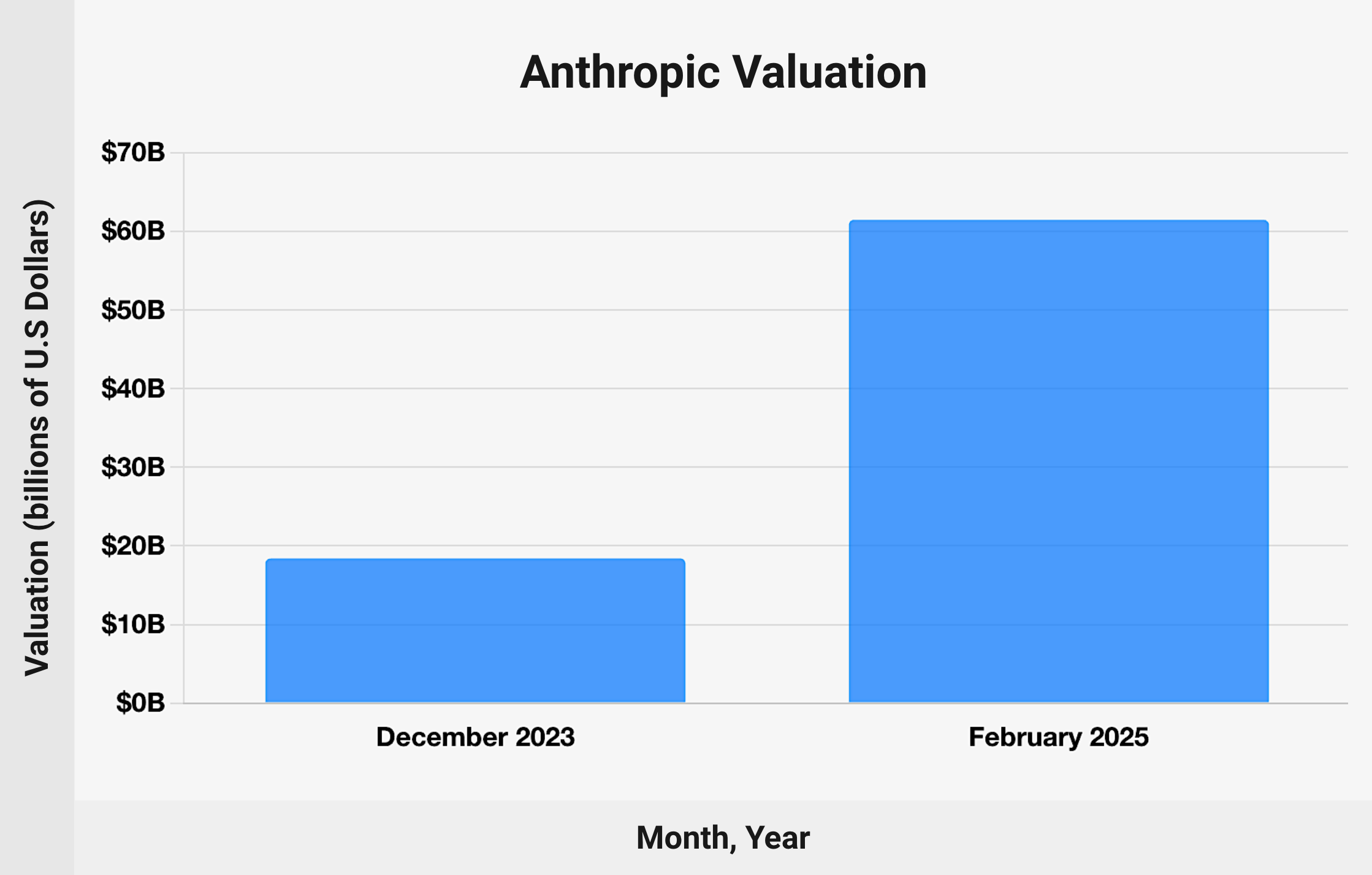
The AI arms race just hit a new gear. Anthropic's $65B Series H at a $965B valuation isn't just a funding round — it's a statement of intent. They've secured compute agreements with Amazon (up to 5 gigawatts), Google/Broadcom (5 gigawatts TPU), and SpaceX (Colossus GPU capacity), plus partnerships with Micron, Samsung, and SK hynix. This is vertical integration at an unprecedented scale. The Claude Opus 4.8 release directly benefits developers: Fast Mode pricing dropped from $30/$150 to $10/$50 per million tokens, a 3x reduction that makes it competitive with GPT-5.5 and Gemini 3.5 Flash. More importantly, the model introduces dynamic workflows in Claude Code, enabling hundreds of parallel subagents in a single session. For developers, this means you can now orchestrate complex, multi-step tasks — like code review, testing, and deployment — in one shot. The Claude for Small Business Workflow System further extends this by connecting Claude with QuickBooks, PayPal, HubSpot, Canva, and DocuSign for ready-made invoicing, payroll, and campaign management. The message is clear: Anthropic is betting that the future of AI is agentic, not conversational. If you're building AI products, now is the time to prototype with Claude Code's parallel subagent workflows. The cost reduction makes experimentation cheap, and the infrastructure backing means reliability will only improve.
Meine Einschätzung: Anthropic is playing chess while everyone else plays checkers. They're using the funding to lock down compute with Amazon, Google, and SpaceX, then passing savings to developers. This is a land grab disguised as a price war.
Google Launches Gemini Spark Personal Agent
Google just fired a shot across the bow of every consumer AI company. Gemini Spark is a 24/7 personal agent that lives on Google Cloud and has access to your entire Google ecosystem: Gmail, Calendar, Drive, Maps, and third-party apps like Canva and Instacart. For $100/month (part of the Google AI Ultra subscription, which was reduced from $250 to $200/month), it can autonomously book flights, build outreach lists from your email contacts, compare prices across services, and execute multi-step tasks without your direct supervision. This is not a chatbot — it's a persistent, stateful agent that can act on your behalf. The implications are massive. First, it creates an enormous moat for Google: once you train Spark on your data, leaving means rebuilding from scratch. Second, it sets a new bar for what consumers expect from AI — not just answers, but actions. Third, it puts pressure on OpenAI and Anthropic to deliver similar consumer products, but neither has the data ecosystem Google does. For developers, the companion launch of Antigravity Agent and Managed Agents in public preview is equally significant. These allow building autonomous, stateful agents running in secure Linux sandboxes that can plan, reason, write code, manage files, and browse the web. The message: Google is building the infrastructure for an agentic web, and Spark is the first consumer-facing manifestation. If you're building AI products, think about how to integrate with Google's agent ecosystem — or risk being disintermediated.
Meine Einschätzung: This is the first real 'agent for everyone' product from a Big Tech company. Google is using its moat — your Gmail, Calendar, and Docs — to make switching costs astronomical. Apple and Microsoft should be terrified.
DeepSeek Makes 75% Price Cut Permanent
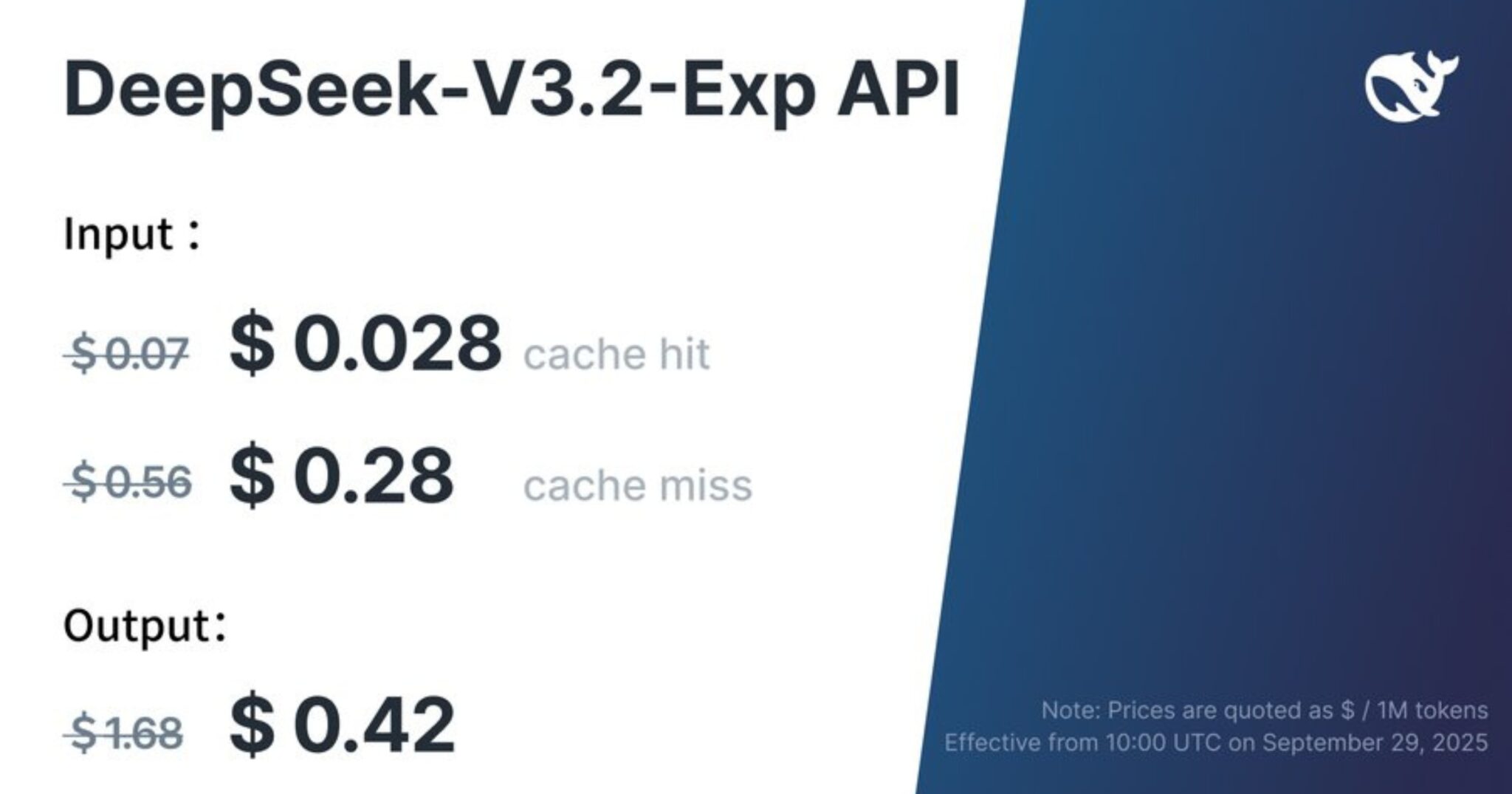
The price war in AI just got a new floor. DeepSeek has made its promotional pricing permanent, dropping V4-Pro to $0.435 per million input tokens — that's over 20x cheaper than Claude Opus 4.8, GPT-5.5, or Gemini 3.5 Flash. Cache-hit pricing was slashed to one-tenth of its previous cost, making repeated queries nearly free. This is a strategic move designed to capture developer mindshare and enterprise workloads that are sensitive to inference costs. The model itself is competitive: it supports a 1M-token context window and has shown strong performance on coding and reasoning benchmarks. For developers, this changes the calculus on when to use frontier models versus cheaper alternatives. If you're building applications where latency isn't critical and cost is a concern — like batch processing, data extraction, or content generation — DeepSeek V4-Pro becomes the default choice. The catch? It's not available in all regions, and some enterprises may have compliance concerns about data sovereignty. But for startups and independent developers, the math is simple: you can run 100x more inference for the same budget. The broader implication is that AI inference costs are trending toward zero, which will enable new use cases — like real-time agent swarms, continuous background processing, and AI-powered features in low-margin products. If you haven't benchmarked DeepSeek V4-Pro against your current model, you're leaving money on the table.
Meine Einschätzung: DeepSeek is playing the long game: burn cash on pricing to capture market share, then optimize later. At these prices, it's irresponsible not to at least evaluate V4-Pro for cost-sensitive workloads.
Corporate Backlash Over Rising AI Costs
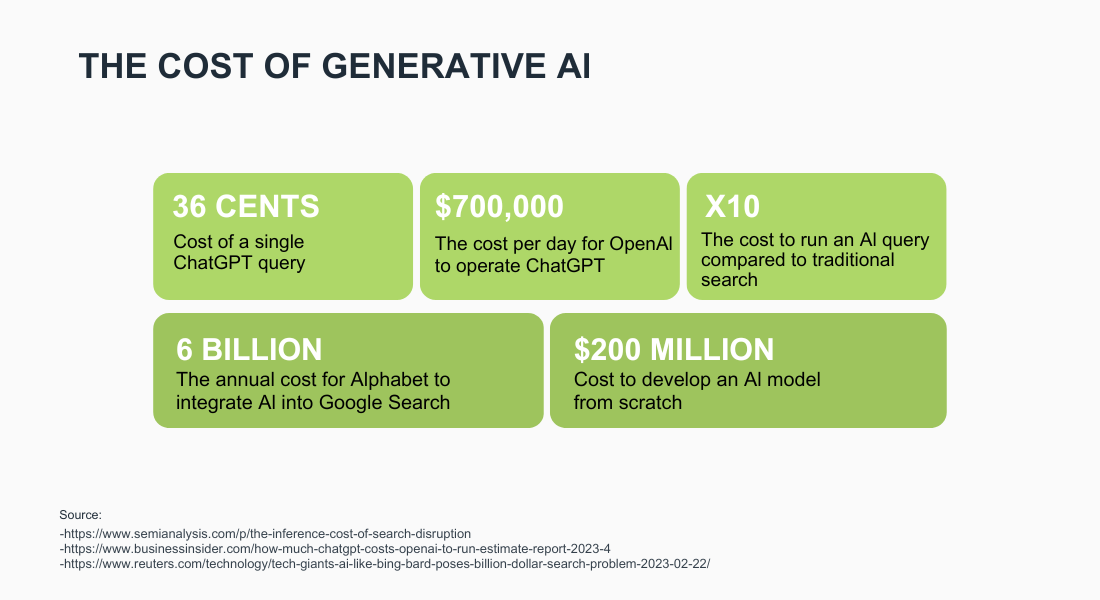
The honeymoon phase for enterprise AI is ending. A Jefferies report reveals that corporations are facing significant backlash over rising compute costs from employee AI experimentation. The blunt assessment: AI currently costs more than it saves for many organizations. This is the inevitable result of the 'deploy first, ask questions later' approach that dominated 2024 and 2025. Companies rushed to buy enterprise licenses for ChatGPT, Claude, and Gemini, giving employees broad access without guardrails or usage tracking. The result? Millions of dollars in compute spend on tasks that range from trivial (asking AI to write haikus) to redundant (using AI to summarize emails that could be read in 30 seconds). The report's timing is particularly damning given the simultaneous announcements from Anthropic, Google, and DeepSeek about price cuts — suggesting even the AI companies recognize the cost barrier to adoption. For developers building AI products, this creates both a challenge and an opportunity. The challenge: you must demonstrate clear, measurable ROI for every AI feature you ship. The opportunity: tools that help enterprises track, optimize, and justify AI spend will be in high demand. The Connecticut AI Employment Law, signed the same day, adds another layer: employers must now disclose AI-related workforce reductions and ensure HR AI tools are transparent and fair. This means the cost of non-compliance is now a line item on the balance sheet. The takeaway for builders: optimize for cost transparency from day one. Build dashboards that show cost-per-task, time saved, and error rates. The era of 'AI for AI's sake' is over.
Meine Einschätzung: The 'AI gold rush' hangover has begun. Companies that bought AI licenses without a clear use case are now seeing the bills. The winners will be those who can tie every dollar of compute spend to a dollar of saved labor or revenue.
Deep Dive
How to Build Cost-Efficient Agent Workflows Using Parallel Subagents
Today's news makes one thing clear: the future of AI is agentic, but the bottleneck is cost. Anthropic's Claude Opus 4.8 with dynamic parallel subagents and DeepSeek's 20x cheaper pricing both point to the same solution: run many small, cheap agents in parallel rather than one expensive monolithic call. Here's how to implement this today. First, decompose your task. Instead of asking a single model to 'build a web app,' break it into parallel sub-tasks: architecture design, frontend code, backend code, testing, and documentation. Each sub-task can be handled by a separate agent call, and they can run simultaneously. With Claude Code's new dynamic workflow feature, you can spin up hundreds of these subagents in a single session. The cost savings come from two places. First, parallel execution reduces wall-clock time, which means you pay for fewer sequential API calls. Second, you can route simpler sub-tasks to cheaper models like DeepSeek V4-Pro ($0.435/M tokens) while reserving expensive frontier models (Claude Opus 4.8 at $10/M tokens) only for complex reasoning steps. A practical example: for a code review workflow, use DeepSeek for syntax checking and linting (95% of the work), and only call Claude Opus for architecture-level feedback. The math: if a full review costs $1 with Claude alone, a hybrid approach might cost $0.10. The implementation is straightforward. Use an orchestration layer like Blackmagic AI's unified API gateway or Google's Managed Agents to route sub-tasks to different models. Set up a queue system where subagents report results back to a coordinator agent that merges outputs. Monitor cost-per-task and set hard budgets. The key insight: agentic AI is not about making one perfect call — it's about running a thousand cheap, fast, parallel experiments and aggregating the best results. Start small: pick one workflow, decompose it, and measure the cost difference. Then scale.
The AI industry just voted with its wallet: agents over chatbots, parallel over sequential, and cheap over expensive. Adapt or get priced out.