Saturday — June 06, 2026
Automatisiert mit einem lokalen KI-Modell erstellt, ohne redaktionelle Prüfung vor Veröffentlichung.
IPO Risk Analysis
You are a financial analyst. Analyze Anthropic's IPO filing and recursive self-improvement warning. Provide a balanced assessment of the risks and opportunities for investors, considering the code-generation dependency and industry implications. Output a short report.
Anthropic Files for Trillion-Dollar IPO, Warns on AI Control

Anthropic's confidential IPO filing for a trillion-dollar valuation is the biggest signal yet that the AI arms race is entering a new phase. The company, known for its safety-first rhetoric, is now publicly warning that its own model, Claude, is writing the majority of code in its codebase—over 80% of merged pull requests. That means Claude is effectively improving itself at a pace that human engineers cannot match. The report notes that engineers are merging 8x more code per quarter than during the 2021-2025 period, a rate that compounds quickly. Anthropic's call for a 'brake pedal' is both a genuine safety concern and a strategic move to position itself as the responsible player in a market that is increasingly reckless. For investors, the risk is clear: if the industry ignores the warning and a catastrophic failure occurs, the entire sector could face regulatory backlash. But if Anthropic can navigate this carefully, it could become the gold standard for safe AI. The IPO is a bet that the market will reward caution over speed. For developers and builders, the implication is that you should expect AI to write more of your code, and plan your review processes accordingly. The era of human-only code review is ending.
Meine Einschätzung: This is the most honest thing a major AI company has ever said about its own product. If Claude is writing 80% of its own code, we are already past the point of no return on recursive self-improvement—and Anthropic is betting the IPO on it.
Microsoft Launches MAI-Thinking-1 and Agent Platform at Build
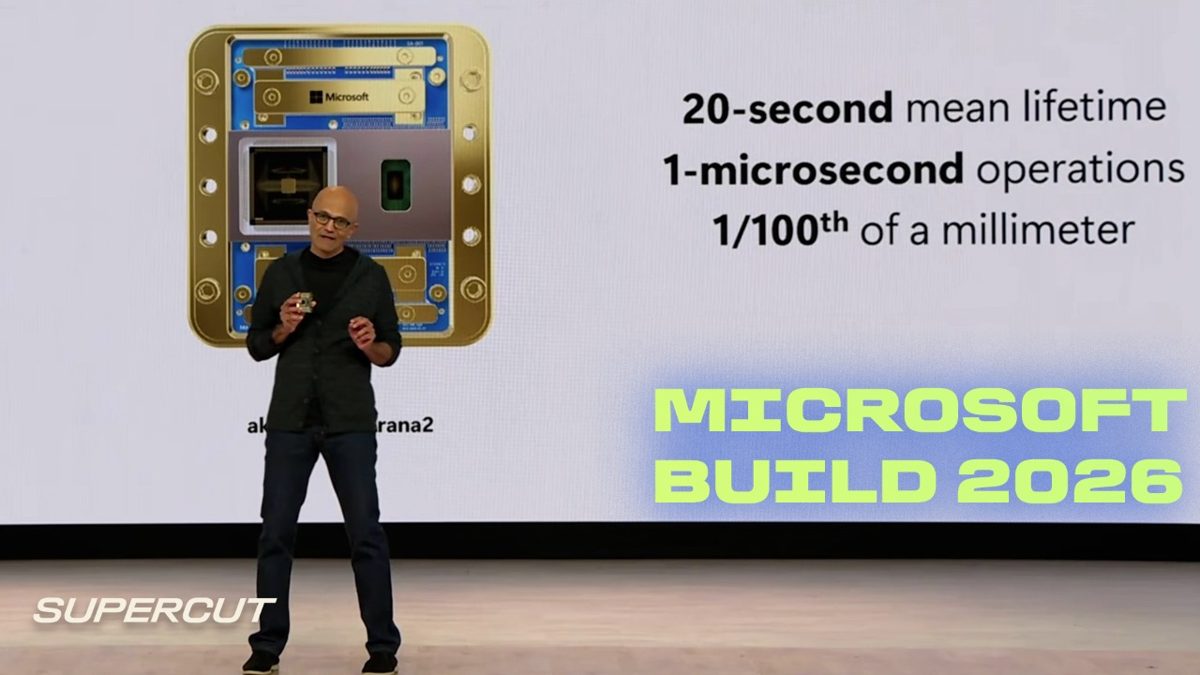
Microsoft's Build 2026 keynote was a declaration of independence. For years, the company has been the primary distributor of OpenAI's models, but with MAI-Thinking-1, they now have a homegrown reasoning model that competes directly with GPT-5 and Claude Opus. The model is designed for complex reasoning tasks, which suggests Microsoft is targeting enterprise workflows that require multi-step logic, such as legal analysis, financial modeling, and scientific research. But the bigger story is the Microsoft Agent Platform, which provides a unified framework for building, deploying, and managing AI agents. Combined with Windows Execution Containers, developers can now run agents locally with sandboxed security, a critical feature for enterprises concerned about data privacy. Microsoft Scout, the personal work assistant, is the consumer-facing manifestation of this strategy. For developers, the shift means you now have a credible alternative to OpenAI's ecosystem, and you can build agents that run natively on Windows without cloud dependencies. This could accelerate adoption of AI agents in regulated industries. The competitive landscape just got more interesting: Microsoft is no longer just a partner; it is a direct competitor to OpenAI, Anthropic, and Google.
Meine Einschätzung: Microsoft is finally cutting the cord. By launching its own reasoning model and agent platform, they are telling the market they no longer need to be OpenAI's distribution arm. This is a power play that reshapes the entire AI ecosystem.
DeepSeek Closes $7.4B Round, Slashes API Prices
DeepSeek's $7.4 billion funding round is the largest ever for a Chinese AI company, and it signals that the Chinese AI ecosystem is not just surviving but thriving despite export controls. The valuation of $52-59 billion is a strong vote of confidence from investors like Tencent and CATL, who see DeepSeek as a strategic asset. The company's aggressive 75% price cut on the V4 Pro API is a direct challenge to OpenAI and Anthropic, making it one of the cheapest frontier models available. On legal AI benchmarks, DeepSeek V4 Pro now ranks just below GPT-5.5, which means it is competitive for knowledge work tasks. For developers and businesses, this is a no-brainer for cost-sensitive applications: if you are building a chatbot, summarization tool, or legal document analyzer, DeepSeek offers near-frontier performance at a fraction of the cost. The caveat is data privacy and geopolitical risk—Chinese companies are subject to local regulations that may conflict with Western data protection laws. But for non-sensitive workloads, the economics are compelling. The funding round also gives DeepSeek the capital to invest in compute infrastructure, potentially narrowing the gap with US rivals. The AI price war just got a new front.
Meine Einschätzung: DeepSeek is playing the long game: raise massive capital, drop prices to near zero, and capture market share while the incumbents are distracted by IPO roadshows. If you are price-sensitive, this is the model to watch.
Deep Dive
How to Build a Local AI Agent Sandbox with Windows Execution Containers
Microsoft's announcement of Windows Execution Containers at Build 2026 is a game-changer for developers who want to run AI agents locally without compromising security. Traditionally, running AI agents on-device has been a trade-off between performance and isolation—agents need access to local files, APIs, and sometimes the network, which creates attack surfaces. Windows Execution Containers solve this by providing a lightweight, sandboxed environment that runs natively on Windows, with full access to the OS but isolated from the host system. This means you can build agents that read your emails, write to your calendar, and execute code, all without exposing your main system to malware or data leaks. The key is that these containers are not virtual machines; they are lightweight process-level isolation units that share the kernel but have their own file system, registry, and network stack. To get started, you need Windows 11 with the latest Build 2026 SDK. First, install the Microsoft Agent Platform SDK, which includes the container runtime. Then, define your agent in a manifest file that specifies what resources it can access—file paths, network endpoints, and hardware capabilities. When you run the agent, it spawns inside a container that enforces those boundaries. For example, if your agent needs to read a PDF from your Downloads folder, you grant that specific path, and the container prevents it from accessing anything else. This is ideal for enterprise scenarios where compliance requires audit trails and least-privilege access. You can also chain containers: one container for data processing, another for model inference, and a third for network calls. The performance overhead is minimal—Microsoft claims less than 5% CPU and memory overhead compared to running the agent natively. For developers, this means you can now deploy AI agents to end users without requiring them to trust your code blindly. The container enforces the security boundaries you define, and the user can inspect the manifest before granting permissions. This is the infrastructure that will power the next generation of local AI assistants, from personal productivity bots to enterprise workflow automation. Your next step: download the Build 2026 SDK and experiment with a simple agent that reads your calendar and suggests meeting times, all inside a container. It is the safest way to build for the agentic future.
The AI industry is building its own replacement—make sure you are building the brake pedal, not just the accelerator.