Monday — June 08, 2026
Automatisiert mit einem lokalen KI-Modell erstellt, ohne redaktionelle Prüfung vor Veröffentlichung.
CRM Auto-Pilot Prompt
Act as a sales operations specialist. Given my current CRM data (or lack thereof), generate a list of the next 5 best actions I should take today to move my highest-value deals forward. Include specific email drafts, follow-up reminders, and data fields I need to update. Constraint: Do not suggest generic actions like 'send a check-in email' without a specific reason tied to the deal stage.
Apple Rebuilds Siri with Gemini at WWDC
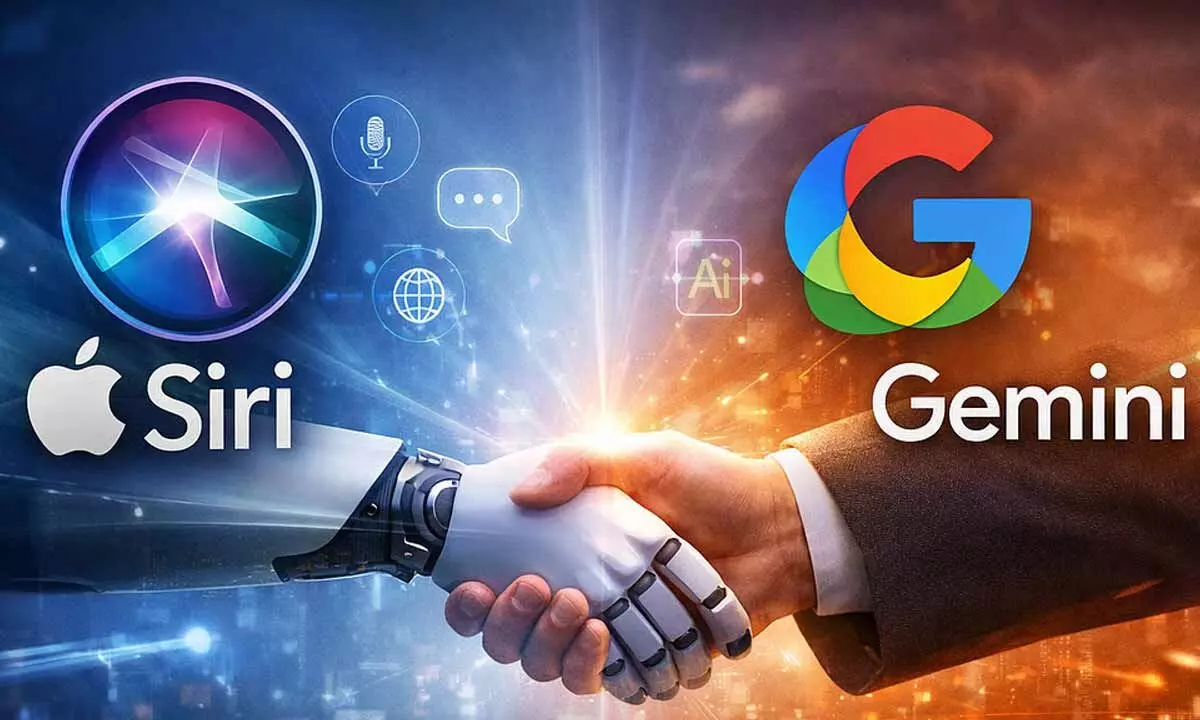
For years, Siri was the punchline of the AI assistant world — barely functional, limited to setting timers and playing music. Today, Apple is expected to flip the script entirely at WWDC 2026. The new Siri will be a standalone app, not a voice overlay. Think iMessage but with an AI that actually understands context, remembers your preferences, and can execute complex multi-step tasks. The underlying model is a 1.2-trillion-parameter beast, built on Google's Gemini architecture. This is a massive shift for Apple, which has historically guarded its AI stack fiercely. The partnership with Google signals that Apple is prioritizing performance over pride. For developers, this means a new platform to build on: you will be able to integrate Siri into your apps via APIs, creating conversational interfaces for everything from booking to data analysis. The walled garden just got a brain transplant. If you've been ignoring Apple's ecosystem for AI development, today is the day to reconsider. The integration will roll out with iOS 20 and macOS 17 later this year.
Meine Einschätzung: This is Apple finally admitting Siri was dead and burying it with Google's shovel. If you build for iOS, your next app needs a chat-first AI interface.
Generalist AI Raises $400M for Real-World Robots

Generalist AI is not a household name yet, but with $540 million in total funding, it's becoming a heavyweight in embodied AI. Founded in 2024, the company builds AI systems that control robots performing physical tasks — think picking items in warehouses, assembling components in factories, or even cleaning commercial spaces. The $400M injection comes from top-tier investors who see the next frontier of AI as moving beyond text and images into the physical world. The timing is critical: labor shortages in logistics and manufacturing are acute, and companies are desperate for automation that can adapt to changing environments, not just repeat fixed motions. Generalist AI's approach is to build general-purpose robots that can learn new tasks via demonstration rather than hard-coded programming. This is a direct competitor to companies like Figure AI and Tesla's Optimus. For builders, the implication is clear: the demand for AI that can control hardware is about to explode. If you have skills in computer vision, reinforcement learning, or robotic control, this is the most underrated career move right now.
Meine Einschätzung: The 'software eats the world' era is over. Now hardware eats the warehouse. If you're not thinking about how AI interfaces with physical reality, you're already behind.
Moonshot AI Seeks $2B at $30B Valuation
Moonshot AI is moving fast. This is their third financing round in six months, and the numbers are staggering: a $30 billion valuation on $200 million in annual recurring revenue. That's a 150x multiple. For context, even high-growth SaaS companies trade at 10-20x. But Moonshot is not a typical SaaS company — it's a consumer AI chatbot platform in China, where the market is fiercely competitive. The Kimi chatbot competes with Baidu's Ernie, Alibaba's Tongyi, and ByteDance's Doubao. Moonshot's edge appears to be user engagement and retention, which have driven revenue growth faster than peers. The $2 billion raise will likely go toward compute infrastructure, talent, and aggressive marketing to lock in users before the market consolidates. For Western builders, this is a reminder that AI monetization is happening at scale, even if the revenue models look different. Chatbots are not a fad — they are becoming primary interfaces for search, shopping, and productivity in China. The question is whether the West will follow the same trajectory or fragment into specialized agents.
Meine Einschätzung: A 150x revenue multiple is insane unless you believe this is the next WeChat. Moonshot is betting China's AI race is winner-take-all, and investors are buying the ticket.
Deep Dive
How to Build a Privacy-First Voice Assistant with Wave
Voice interfaces are everywhere, but most developers default to cloud-based transcription services like Google Speech-to-Text or Whisper API. The problem? Data privacy. If your app handles sensitive conversations — healthcare, legal, or finance — sending audio to the cloud is a liability. Wave, launched today on Product Hunt, offers a solution: voice-to-text with both local and cloud processing options. This is a game-changer for builders who want to integrate voice without compromising on privacy. Local processing means the audio never leaves the device. Wave uses on-device models (likely a distilled version of Whisper or a custom model) to transcribe in real-time. The trade-off is accuracy: local models are smaller and may struggle with accents or noisy environments. Cloud processing, on the other hand, gives you access to larger models with higher accuracy but introduces latency and privacy concerns. The smart approach is to build a hybrid system: default to local processing, but offer users the option to 'enhance with cloud' for difficult audio. You can even set up a confidence threshold — if the local model's confidence is below 80%, flag the user and offer cloud processing. This gives users control and transparency, which builds trust. For implementation, Wave provides an API that abstracts the decision. You send audio, and it returns text along with a 'processing_location' field. Your app can then log whether the user opted for local or cloud, which is critical for compliance with GDPR or HIPAA. Start by integrating Wave's SDK into your app, test with diverse audio samples, and let users choose their privacy level in settings. The future of voice interfaces is not just about accuracy — it's about trust.
Siri got a brain. Robots got funding. And your CRM just became self-aware. Build accordingly.