Thursday — June 11, 2026
Automatisiert mit einem lokalen KI-Modell erstellt, ohne redaktionelle Prüfung vor Veröffentlichung.
Speech Translation Strategy
You are a product strategist at a global SaaS company. Analyze the competitive threat of Google Gemini 3.5 Live Translate and propose a 90-day counter-strategy that leverages our existing customer data and partnerships. Focus on differentiation through domain-specific accuracy and compliance, not just language breadth.
Claude Fable 5: Cheaper, Smarter, Safer
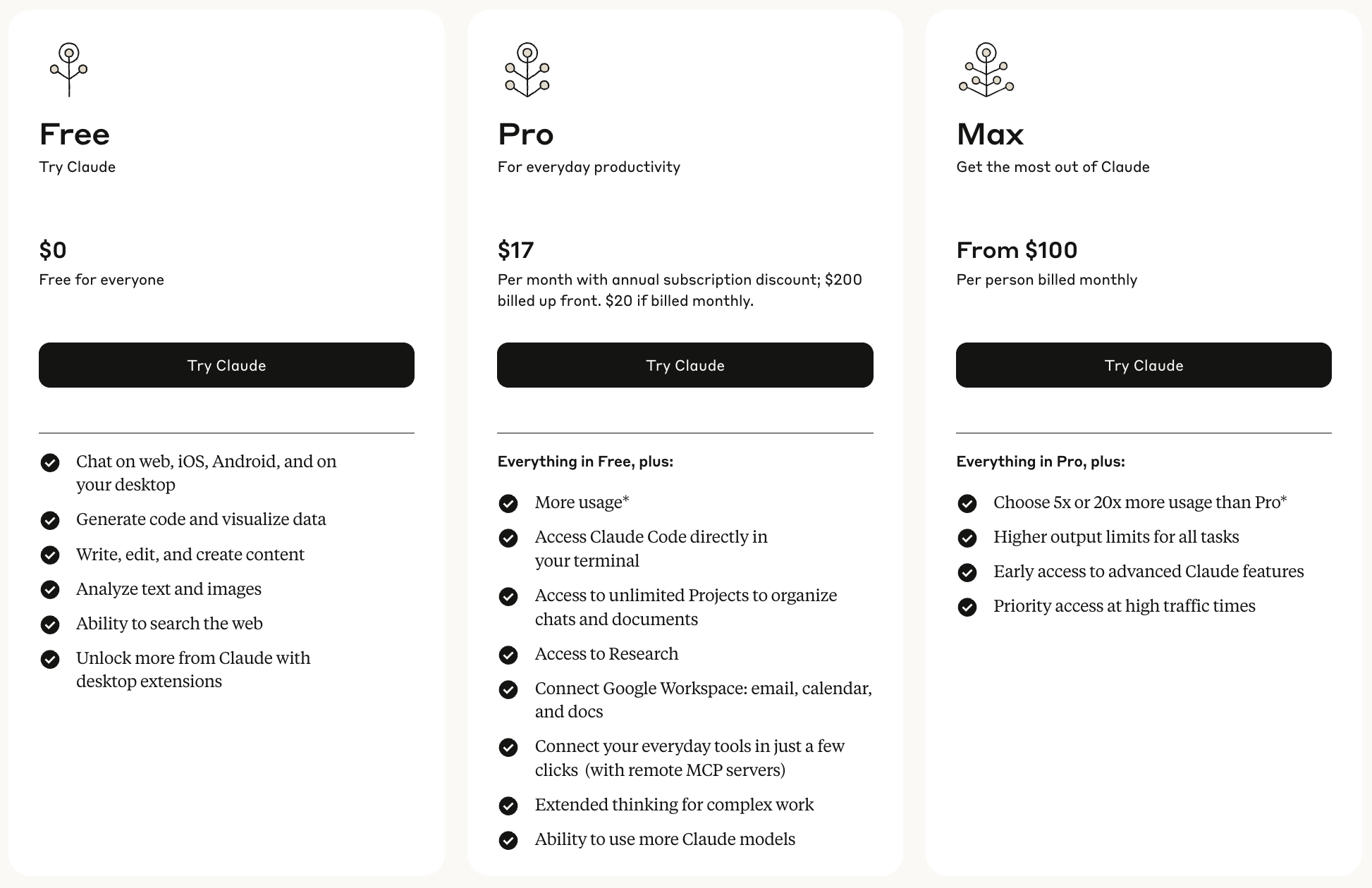
Anthropic's Fable 5 launch is a triple threat: lower price, longer context, and built-in safety gating. At $10 per million input tokens, it undercuts every other frontier model on the market while delivering 1M token context windows — enough to process entire codebases, legal documents, or book-length transcripts in a single pass. The 128K output token limit is equally aggressive, enabling full report generation without chunking.
The safety architecture is the quiet revolution here. Fable 5 includes a routing layer that automatically redirects high-risk requests — think medical diagnoses, financial advice, or legal reasoning — to Opus 4.8, a less capable but more conservative model. This means enterprises can deploy Fable 5 broadly without worrying about regulatory blowback, but it also creates a capability ceiling for sensitive domains.
Pricing is aggressive enough to force competitors to respond. At half the cost of Mythos Preview, Anthropic is betting that volume will offset margin. The free access for Pro/Max/Team/Enterprise plans until June 22 is a classic land-grab — get users hooked, then convert them to paid.
For developers, the message is clear: your cost-per-token assumptions just got rewritten. If you're building on GPT-4 or Gemini, run your benchmarks against Fable 5 immediately. The 1M context window alone could eliminate entire classes of engineering work around document splitting and retrieval augmentation.
The catch? Reliability. Claude Haiku 4.5 experienced elevated errors on June 10, marking the sixth distinct model-level outage across Anthropic's lineup in seven days. Fable 5 is cheaper and smarter, but it inherits a shaky operational track record.
Meine Einschätzung: This is the first frontier model that doesn't make you choose between capability and cost. The safety-routed fallback is a clever hedge — but it also means Fable 5 won't answer everything. Know your use case before you bet on it.
Google Gemini 3.5 Translates Live, With Feeling
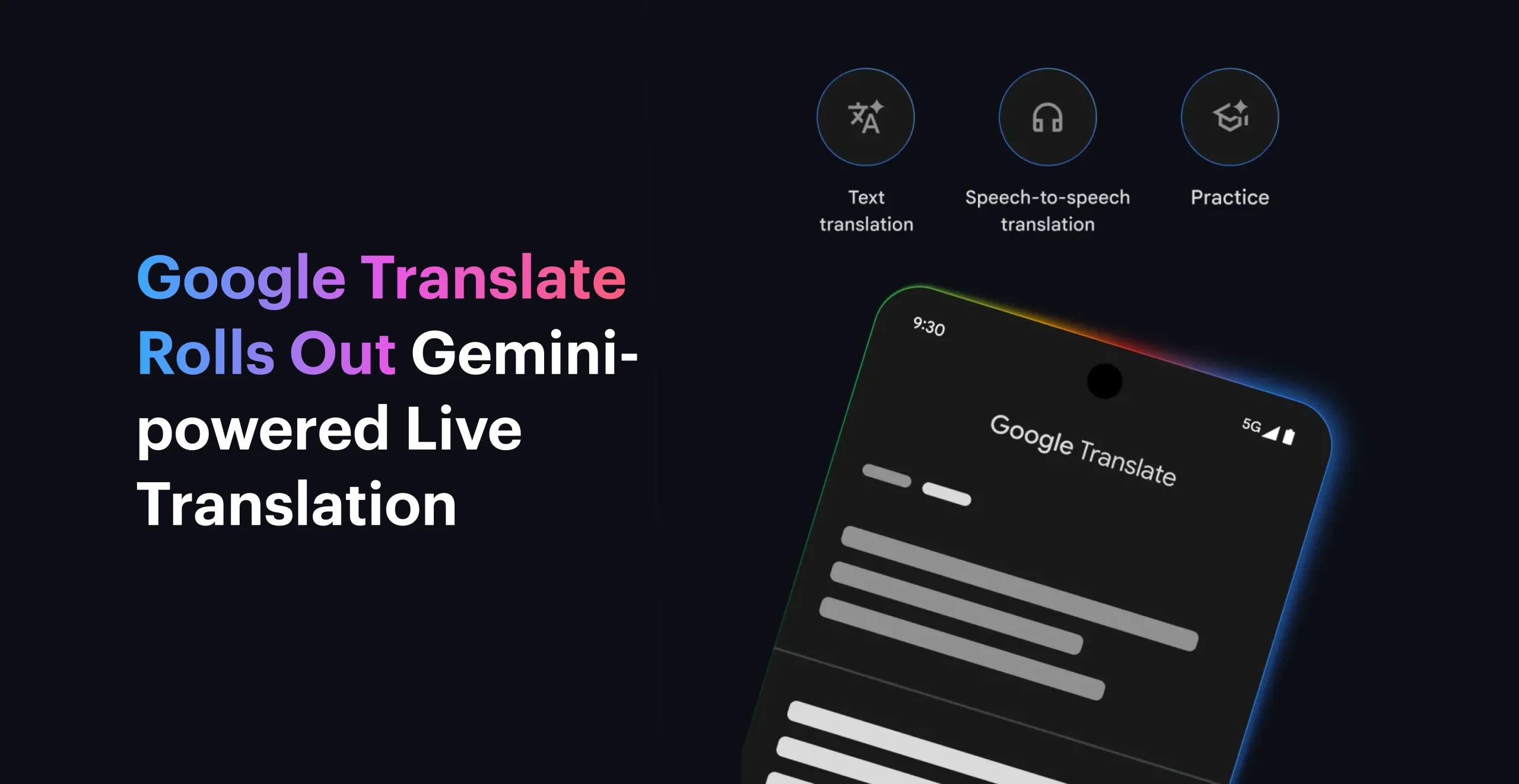
Google's Gemini 3.5 Live Translate is a step change in speech translation. Previous real-time systems focused on accuracy and latency — getting the words right, fast. Google's approach adds emotional and prosodic fidelity, meaning the translated output retains the speaker's original tone, emphasis, and rhythm. This matters more than most people realize: a flat, monotone translation loses the subtext that carries meaning in negotiation, customer service, and leadership communication.
The technical architecture is notable. Google claims the model runs on-device for the Translate app, reducing latency and privacy concerns. The listening mode provides live subtitles without sending audio to the cloud — a smart workaround for enterprise compliance requirements. The 70-language support covers the vast majority of global business communication, though the 2,000+ language combinations suggest some pairings will be more reliable than others.
The Google Meet integration, expected later this year, is the strategic play. If every meeting participant can hear their colleagues in their native language with natural intonation, the value of real-time translation shifts from 'nice to have' to 'table stakes' for international teams. Microsoft Teams and Zoom will need to respond.
For developers and product managers: this changes the UX bar for multilingual products. Users will now expect translated speech to sound human, not like a GPS navigation voice. If your product handles voice interaction across languages, you need to evaluate whether your current TTS and translation pipeline can match this fidelity.
The immediate risk is reliability. Google Gemini experienced widespread errors (error 1076 and 1099) on June 10, particularly affecting Workspace users. A translation service that goes down during a live meeting is worse than no translation at all.
Meine Einschätzung: Preserving intonation and pacing is the killer feature — it makes translated speech feel human instead of robotic. But the real story is the Meet integration coming later this year, which could fundamentally change how global teams communicate.
NVIDIA Nemotron 3 Ultra: Best US Open Model
NVIDIA's Nemotron 3 Ultra is a direct challenge to the closed-model hegemony. At 550B parameters with only 55B activated per token, it uses a Mixture-of-Experts architecture that delivers frontier-level performance at inference costs comparable to much smaller models. The 47.7 score on the Artificial Analysis Intelligence Index puts it ahead of Llama 3.1 405B and Mistral Large 2, making it the best performing open-weights model developed in the United States.
The agentic benchmark results are equally impressive. A 91% score on PinchBench Agent Productivity matches Kimi K2.6, a model that was previously considered the gold standard for agentic tasks. This means Nemotron 3 Ultra can handle complex multi-step workflows — web browsing, code execution, API orchestration — without the performance degradation that plagues many open models.
The licensing is the sleeper hit. The OpenMDW-1.1 license permits royalty-free commercial use, including for proprietary applications and fine-tuning. This removes the legal friction that has made many enterprises hesitate to adopt open models. You can deploy Nemotron 3 Ultra in production without a lawyer reviewing your license agreement.
For infrastructure teams, the availability on HuggingFace, OpenRouter, and NVIDIA NIM means you can deploy this model without building custom infrastructure. The MoE architecture also means it runs efficiently on consumer-grade GPUs — a single A100 or H100 can serve inference at acceptable speeds.
The strategic implication is clear: the gap between open and closed models is closing. If you're paying per-token for GPT-4 or Claude, run your benchmarks on Nemotron 3 Ultra. The cost difference could be 10x or more, and the performance gap may be negligible for your use case.
Meine Einschätzung: This is the open model that US enterprises have been waiting for. It's competitive with closed frontier models, fully open weights, and legally safe for commercial use. If you've been waiting for a reason to move off GPT-4, this is it.
Pega's Outcome Pricing Could Reshape Enterprise AI
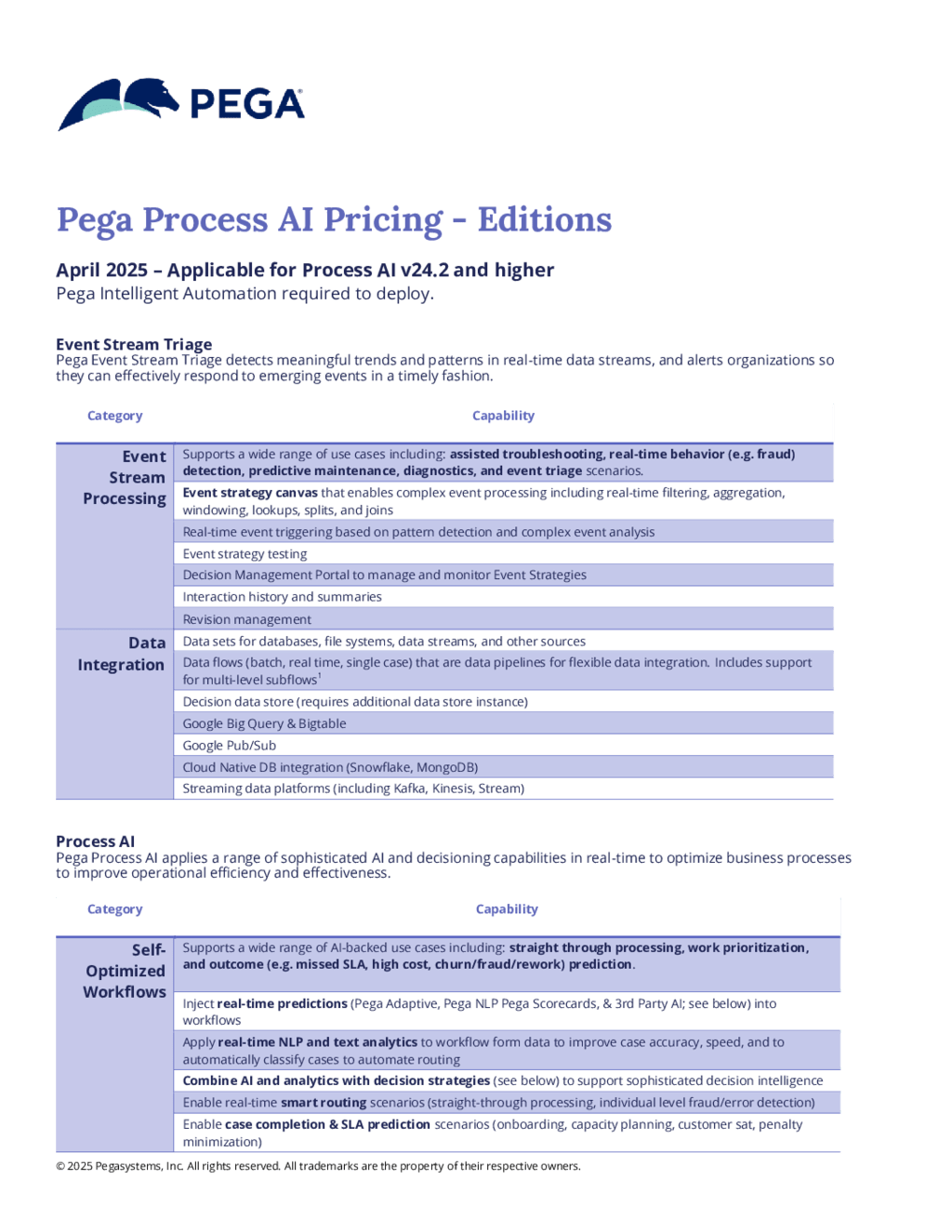
Pega's Infinity 26 launch is more interesting for its pricing model than its features. The outcome-based approach replaces per-token billing with a flat rate tied to business outcomes — think 'per resolved customer case' or 'per approved loan application' rather than 'per thousand tokens processed.' This is a direct response to the cost unpredictability that has kept regulated industries like banking, insurance, and healthcare from deploying AI at scale.
The problem with token-based pricing is fundamental: enterprise CFOs cannot budget for a cost that varies with usage volume, model upgrades, and prompt engineering choices. A single prompt that returns 10 tokens versus 10,000 tokens creates a 1,000x cost variance with no change in business value. Outcome-based pricing aligns AI costs with the value it delivers, which is how every other enterprise software category is priced.
Pega's bet is that enterprises will pay a premium for predictability. If Infinity 26 costs more per outcome than a comparable token-based solution, but the cost is fixed and known in advance, finance teams will approve it. The regulated sector — where AI adoption has been slowest — is the beachhead. If Pega can demonstrate compliance and cost control in banking and healthcare, the rest of the enterprise market will follow.
The competitive pressure is real. Salesforce, ServiceNow, and Adobe all use token-based or consumption-based AI pricing. If Pega's model gains traction, these companies will need to respond. The outcome-based model is harder to implement — it requires deep integration with the customer's business metrics — but it's also harder to compete against.
For AI builders: this is a signal that your pricing model matters as much as your model quality. If you're selling to enterprises, consider whether outcome-based pricing could unlock deals that token-based pricing blocks. The technical challenge of measuring outcomes is real, but the business case is compelling.
Meine Einschätzung: Token-based pricing is the biggest barrier to enterprise AI adoption — it turns every conversation into a cost negotiation. Pega's move is the first credible alternative, and if it works, every major platform will follow within 12 months.
Deep Dive
Why Mixture-of-Experts Models Like Nemotron 3 Ultra Change Your Cost Calculus
Mixture-of-Experts (MoE) architecture is the single most important development in cost-efficient AI since the transformer. Understanding how it works will change how you think about model selection and deployment.
A standard dense model like GPT-4 or Claude activates all its parameters for every token it processes. If the model has 500 billion parameters, every single inference call uses all 500 billion. This is computationally expensive — you're paying to analyze every token with the full brain, even for simple tasks like translation or summarization.
MoE models work differently. They consist of multiple 'expert' sub-networks, each specialized in different types of knowledge — one expert might be good at code, another at creative writing, another at mathematical reasoning. A routing mechanism decides which expert(s) to activate for each incoming token. In Nemotron 3 Ultra's case, only 55 billion of its 550 billion parameters are activated per token. That's a 10x reduction in compute per inference.
The practical impact is dramatic. A single H100 GPU can serve Nemotron 3 Ultra at production-grade speeds because it only needs to load 55 billion parameters into memory per token. Compare this to a 500 billion parameter dense model, which requires multiple GPUs in parallel just to hold the weights. The hardware cost difference is 5-10x.
But there's a catch: MoE models are harder to fine-tune and optimize. The routing mechanism needs to be trained to route tokens to the right experts, which requires specialized training pipelines. For most enterprises, the best approach is to use MoE models as-is for inference, and keep fine-tuning on smaller dense models.
The strategic takeaway: MoE models like Nemotron 3 Ultra make frontier-level AI accessible on commodity hardware. If you're currently paying per-token for a dense model, run your inference workload through an MoE model and compare the cost. The savings could be transformative — and the performance gap is shrinking with every release.
The price of intelligence just dropped — again. Don't get caught paying yesterday's rates for today's models.