Friday — June 12, 2026
Automatisiert mit einem lokalen KI-Modell erstellt, ohne redaktionelle Prüfung vor Veröffentlichung.
Agent Skill Optimizer
You are an AI agent skill optimization specialist. Given a set of text-based markdown skill files for an AI coding agent, analyze their performance feedback and propose specific edits to improve accuracy and adaptability for enterprise use cases. Do not modify underlying model weights.
Anthropic Files $965B IPO, Launches Claude Managed Agents
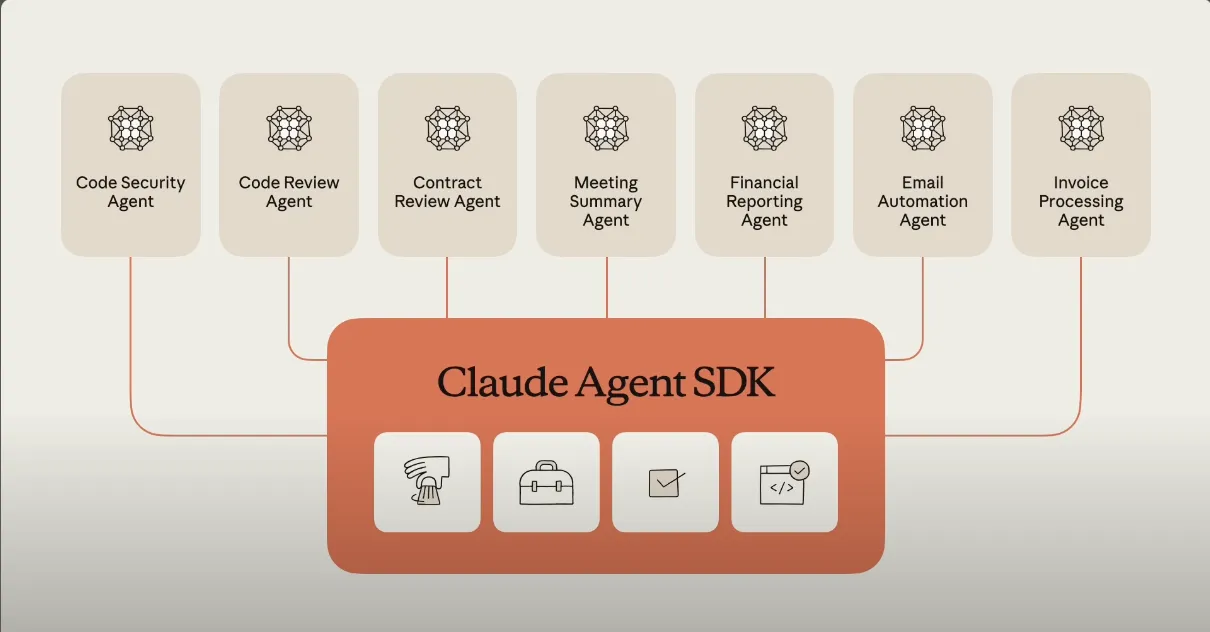
Anthropic's IPO filing is a watershed moment for the AI industry, placing a staggering $965 billion valuation on the company just as it releases Claude Fable 5, priced at $10 per million input tokens and $50 per million output tokens. This pricing positions Fable 5 as a premium offering for enterprise customers who need cutting-edge reasoning and safety. Meanwhile, Claude Mythos 5 remains available for trusted access users with lifted cyber safeguards, suggesting Anthropic is segmenting its market between high-security and performance tiers. The simultaneous launch of Claude Managed Agents in public beta is arguably more significant for day-to-day AI builders. These agents can run on schedules via cron jobs, securely use CLI tools, and access authenticated services through vault-stored environment variables. They also support self-hosted sandboxes, meaning enterprises can execute agents within their own security perimeter. This addresses a critical pain point: moving AI from one-off prompts to reliable, production-grade automation. For developers, this means you can now schedule a Claude agent to scan your codebase for vulnerabilities every night, generate reports, and push fixes — all without human intervention. The combination of a massive IPO valuation and a practical agent platform suggests Anthropic is betting that the future of AI is not just smarter models, but smarter, autonomous workflows. The takeaway for builders is clear: start experimenting with Managed Agents now, because the infrastructure for autonomous AI is becoming a competitive necessity.
Meine Einschätzung: This is the shot heard 'round the AI world. A $965B valuation for an AI company that's barely five years old? The market is screaming that frontier models are the new infrastructure. Managed Agents are the practical play — they turn Claude from a chatbot into a reliable employee.
DeepSeek V4 and Kimi K2.6 Lead Open-Source Leaderboards
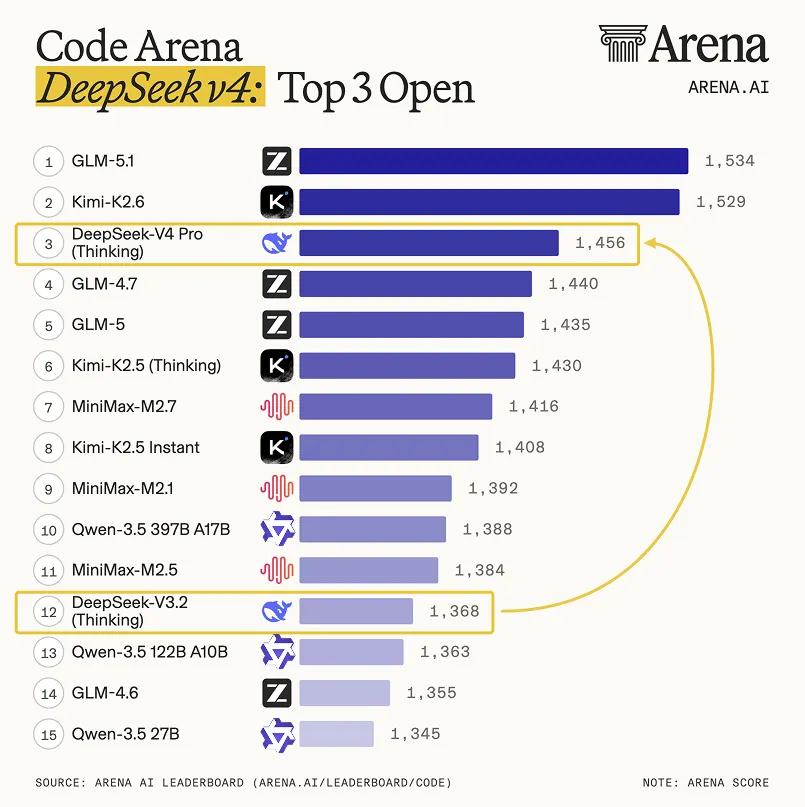
DeepSeek V4 and Kimi K2.6 have surged to the top of open-source model leaderboards, challenging the dominance of US-based frontier models like GPT-5 and Claude. Their API costs are dramatically lower — sometimes 10x cheaper than comparable US offerings — making them attractive for startups and enterprises with high-volume inference needs. The key battleground is coding and office productivity, where these models are demonstrating near-parity or even superiority in benchmarks like HumanEval and SWE-bench. This is not just a technical achievement; it's a commercial signal. Chinese AI companies are aggressively pricing their models to capture market share, and the open-source community is rallying behind them. For US builders, this creates a strategic dilemma: do you stick with expensive, closed-source US models for perceived safety, or switch to cheaper, open-source alternatives that may have different data governance and security implications? The answer likely lies in hybrid approaches — using US models for sensitive, regulated tasks and open-source models for high-volume, lower-risk applications. The pressure is now on OpenAI, Anthropic, and Google to justify their premium pricing with demonstrably superior performance or unique safety features. In the meantime, developers should be benchmarking DeepSeek V4 and Kimi K2.6 against their current models on real-world tasks, not just leaderboard scores. The cost savings alone could fund entire engineering teams.
Meine Einschätzung: The open-source narrative just flipped. US companies have been coasting on brand and ecosystem, but DeepSeek and Kimi are proving you can compete on raw performance at a fraction of the cost. If you're not evaluating these models for your stack, you're leaving money and capability on the table.
Microsoft Releases SkillOpt for Agent Skill Optimization
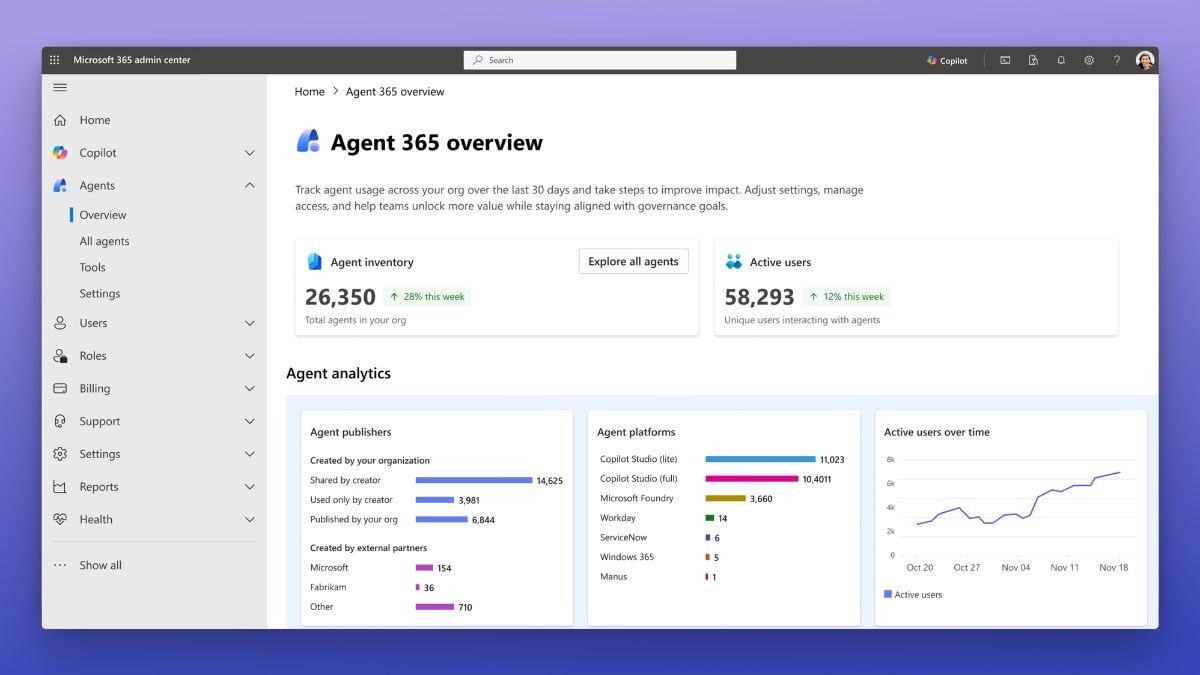
SkillOpt addresses a fundamental challenge in AI agent development: how to improve agent performance without retraining the underlying model. The framework works by treating skill documentation — typically text-based markdown files that define how an agent should behave — as optimizable assets. When an agent performs a task, SkillOpt collects performance feedback (success rates, error types, user corrections) and systematically explores alternative instruction combinations to find the best configuration for specific enterprise use cases. This is MIT-licensed, meaning it's freely available for commercial use. The implications are significant. Currently, most agent developers manually tweak prompts and hope for the best. SkillOpt automates this process, treating it as a search problem over instruction space. For example, if your customer support agent consistently fails at handling refund requests, SkillOpt can test variations of the refund-related skill documentation to find the phrasing that yields the highest success rate. It doesn't change the model's weights — it changes how the model is instructed. This is particularly powerful for multi-agent systems where different agents need different skill sets. Microsoft's release signals that the company sees agent skill optimization as a core infrastructure layer, not just a niche tool. For builders, the immediate action is to integrate SkillOpt into your agent development pipeline. Start by defining clear performance metrics for each skill, then let the framework optimize iteratively. Over time, this approach could make manual prompt engineering as obsolete as manual memory management.
Meine Einschätzung: This is the kind of infrastructure we've been missing. SkillOpt treats agent skills like code — versionable, testable, optimizable. If you're building agents with custom skills, this framework could save you weeks of manual prompt engineering.
White House Issues Executive Order on AI Security

The White House's latest executive order on AI focuses on three pillars: public-private collaboration, cyber defense against AI-enabled threats, and voluntary benchmarking for frontier models. While the order is not legally binding, it establishes clear expectations that the federal government will hold AI developers accountable for responsible deployment. The emphasis on 'advanced AI' suggests the administration is particularly concerned about models that could be used for large-scale cyberattacks, disinformation, or autonomous weapon systems. The voluntary benchmarking component is a double-edged sword. On one hand, it allows companies to self-regulate without rigid mandates. On the other, it creates a public record of which companies are — or are not — participating in safety evaluations. For builders, the practical implications are immediate. If you're developing AI agents that interact with critical infrastructure, handle sensitive data, or operate autonomously, you should start implementing the security and transparency practices outlined in the order. This includes red-teaming, bias testing, and documentation of model limitations. The order also signals that the government is watching the open-source ecosystem. While open-source models are not directly targeted, the call for 'strengthening cyber defenses against advanced AI' implies that any model — open or closed — that could be weaponized will face scrutiny. The smart move is to treat this executive order as a compliance roadmap. Build with security and transparency baked in from day one, not as an afterthought. The Colorado AI Act, set for implementation on June 30, 2026, is a concrete example of state-level regulation that mirrors these federal priorities.
Meine Einschätzung: Voluntary doesn't mean optional. This order sets the stage for future regulation. Smart builders will treat these guidelines as de facto standards now, rather than scrambling to comply later. Proactive security and transparency are your best hedge.
Deep Dive
Building Production-Grade AI Agents with Scheduled Workflows
Today's news around Claude Managed Agents and Microsoft's SkillOpt highlights a critical shift: AI agents are moving from reactive chatbots to proactive, scheduled workers. If you're building agents that need to run on a timer — like nightly code reviews, daily report generation, or hourly monitoring — you need a robust architecture. Here's how to think about it. First, separate the agent's 'brain' (the LLM) from its 'body' (the execution environment). Claude Managed Agents do this well by running in self-hosted sandboxes. This means your agent can access CLI tools, databases, and APIs without exposing your entire infrastructure. For your own agents, use containerized execution environments (Docker, Kubernetes) to ensure isolation and reproducibility. Second, use cron-based scheduling with idempotent task definitions. Each scheduled run should be a complete, self-contained job that produces the same result regardless of how many times it's run. This is critical for debugging — if an agent fails at 3 AM, you need to be able to re-run the exact same task with the same inputs. Store task definitions as version-controlled JSON or YAML files, not in the agent's memory. Third, implement a feedback loop for continuous improvement. This is where SkillOpt comes in. After each scheduled run, capture performance metrics: Did the agent complete the task? How long did it take? Were there errors? Store this data in a structured log (e.g., SQLite or a time-series database). Then, use SkillOpt or a similar framework to automatically tweak the agent's skill documentation based on this feedback. Over time, the agent improves without any manual intervention. Fourth, secure your agent's credentials. Claude's vault-stored environment variables are a good pattern. Never hardcode API keys or secrets in your skill files. Use a secrets manager (HashiCorp Vault, AWS Secrets Manager, or even encrypted environment variables) and inject them at runtime. Finally, monitor and alert on agent failures. Scheduled agents are only useful if they actually run. Set up health checks that ping the agent after each scheduled run and alert you if it fails or times out. Treat your agent like a production service — because it is. The era of one-off prompts is ending. The future is autonomous, scheduled, and optimized. Start building your agent workflows with these principles today, and you'll be ahead of the curve when managed agent platforms become the standard.
The agents are coming — not as chatbots, but as scheduled, optimized, autonomous workers. Build the infrastructure now.