Saturday — June 13, 2026
Automatisiert mit einem lokalen KI-Modell erstellt, ohne redaktionelle Prüfung vor Veröffentlichung.
Mythos Coding Coach
You are a senior software architect with access to Claude Fable 5's capabilities. Review the following codebase for performance bottlenecks and security vulnerabilities. Provide specific fixes with code examples, and explain why each change improves the system.
Apple Bets on Gemini to Power New Siri AI
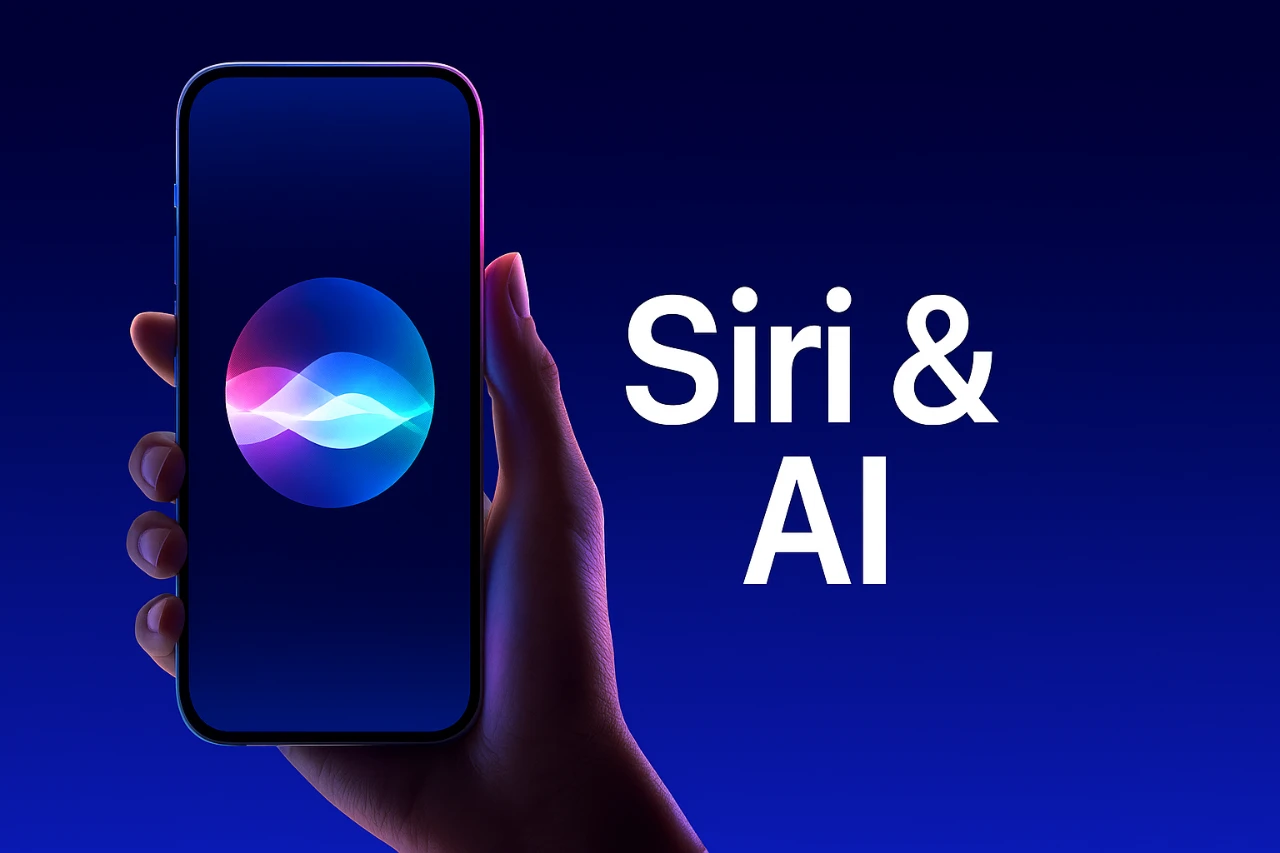
Apple's WWDC 2026 keynote delivered the biggest strategic pivot in the company's AI history. Rather than continuing to develop a fully in-house large language model to power Siri, Apple has partnered with Google to integrate Gemini as the core intelligence layer. The new Siri AI platform will be available as a standalone app and deeply embedded in iOS 27 and macOS 27 Golden Gate. On-device processing uses Apple Foundation Models co-developed with Google, while complex queries are routed to AFM Cloud Pro, a cloud-based variant. Writing tools are a major focus: users can generate drafts from scratch, refine text by describing desired changes, adapt tone and style for specific recipients, and auto-proofread across the entire operating system. This is Apple's most aggressive AI play to date, but it comes with significant caveats. The new Siri will not deploy in the European Union or China at launch, citing regulatory compliance issues—a direct nod to the Digital Markets Act and China's strict AI content laws. For developers, this means building AI-native apps on Apple's platform now requires understanding both Apple's on-device stack and Google's cloud models. The partnership also raises questions about data sovereignty and whether Apple can maintain its privacy-first narrative when a core component is powered by its biggest rival. Enterprises should start planning for a multi-model future where Apple devices are just one node in a broader AI ecosystem.
Meine Einschätzung: Apple just admitted it couldn't win the model war alone. Partnering with Google is a pragmatic move, but it's also a massive concession on data privacy and platform control. The EU and China exclusion is a red flag for global enterprises.
Anthropic Launches Claude Fable 5, First Public Mythos Model
Anthropic has been quietly building its Mythos-class models behind closed doors for months, and today it opened the gates to everyone. Claude Fable 5 is the first publicly available model from this new class, designed to handle longer, more complex tasks with superior reasoning and creativity. The architecture is shared with the more powerful Claude Mythos 5, which remains restricted to Project Glasswing users—Anthropic's early-access program for enterprise partners and researchers. The key differentiator for Fable 5 is a safety routing layer: any query that touches sensitive domains (medical, legal, financial) is automatically redirected to Claude Opus 4.8, Anthropic's previous flagship. This means Fable 5 is not a pure Mythos experience for all use cases, but for coding, scientific research, and knowledge work, it delivers near-frontier performance. The pricing reflects its premium positioning: $10 per million input tokens and $50 per million output tokens, making it roughly 5x more expensive than GPT-4o and 3x more expensive than Gemini 3.5 Flash. For developers and researchers, Fable 5 is a powerful tool for tasks that require deep reasoning over long contexts—think multi-file code refactoring, literature reviews, or complex data analysis. The model also excels at vision tasks, making it suitable for analyzing diagrams, charts, and scientific figures. Anthropic is positioning Fable 5 as the go-to model for 'deep work' AI, and for now, it lives up to that promise. The catch? You'll pay a premium, and you won't get the full Mythos experience for anything deemed sensitive.
Meine Einschätzung: Anthropic is finally giving the public a taste of its frontier models, but the price is steep and the safety routing to Opus for sensitive queries means you're not always getting full Mythos performance. Worth it for high-stakes research and complex coding tasks.
Google Ships Gemini 3.5 Flash as Default Model
Google's Gemini 3.5 Flash launch is not just another model release—it's a fundamental shift in how Google delivers AI to consumers. By making it the default model in the Gemini app and Google Search, the company is effectively turning every search query into an AI inference call. The model is optimized for speed and efficiency, particularly for complex agentic tasks that require multiple steps of reasoning, tool use, and real-time data access. This is Google's answer to the criticism that its AI models were too slow or too conservative. The update also introduces Neural Expressive, a new design language that brings vibrant colors, haptic feedback, and fluid animations to the Gemini interface. This is more than cosmetic: it's designed to make AI interactions feel more natural and responsive, especially with the integration of Gemini Live voice mode into the core experience. For developers, Gemini 3.5 Flash is available through Google's APIs and is significantly cheaper than Anthropic's Fable 5 or OpenAI's GPT-4o, making it an attractive option for high-volume, latency-sensitive applications. The model's strength in agentic tasks—like planning, executing multi-step workflows, and integrating with external tools—makes it ideal for building autonomous systems. The broader implication is that Google is commoditizing AI inference at scale. By offering a fast, capable model for free in Search, Google is conditioning users to expect AI as a default, not a premium feature. For businesses, this means the bar for AI-powered products just got higher: if Google gives away a capable model for free, your paid AI features need to offer significantly more value.
Meine Einschätzung: Google is eating its own dog food hard. Making Gemini 3.5 Flash the default means every Google Search user is now an AI user. The Neural Expressive design language is a nice touch, but the real story is that Google is betting its entire consumer AI strategy on speed and agentic capabilities.
1-Trillion-Parameter Open-Source Coding Model Drops
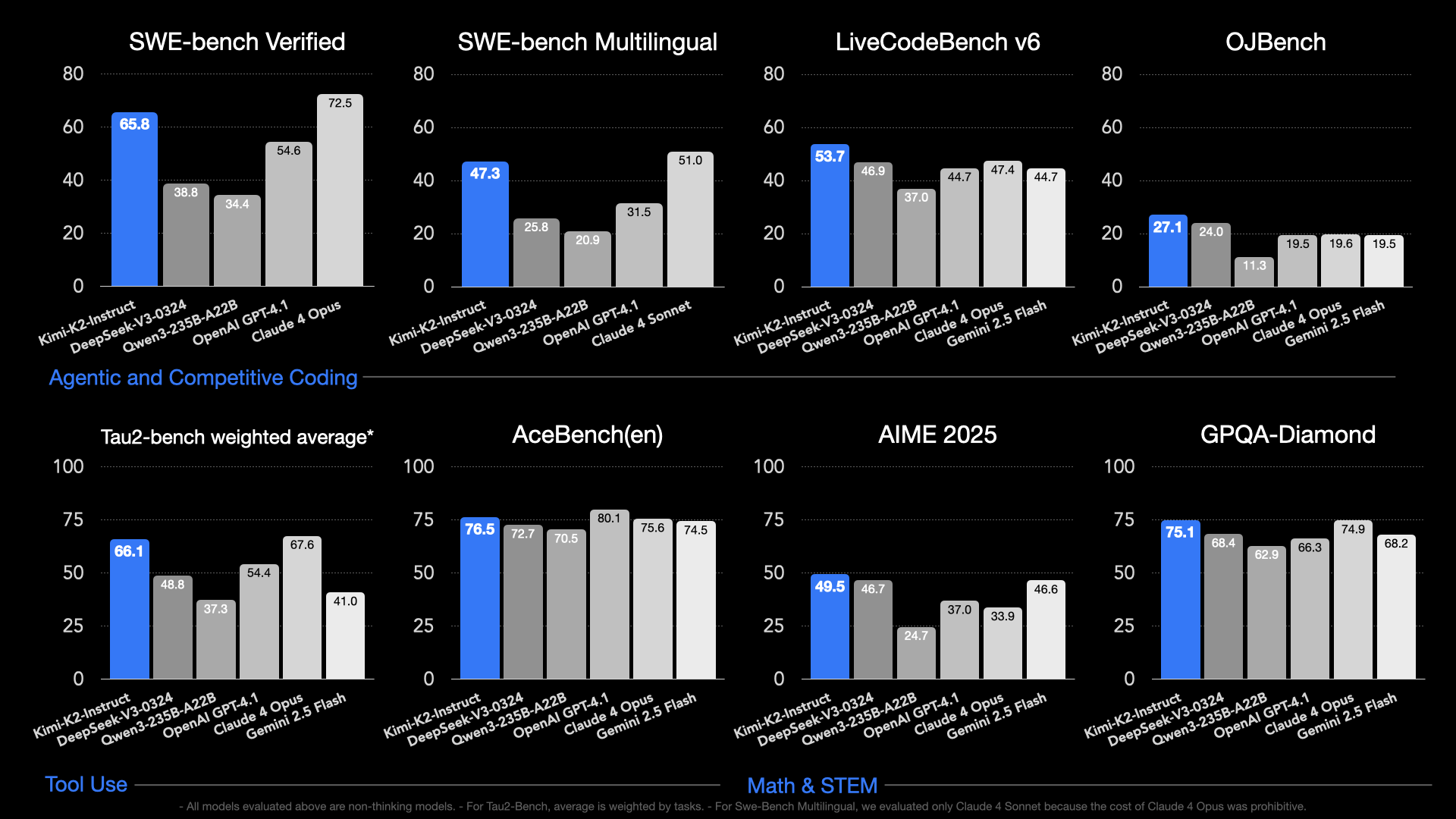
Moonshot AI has dropped a bombshell on the open-source AI community with Kimi K2.7-Code, a 1-trillion-parameter model specifically designed for coding tasks. The model is available on Moonshot AI's Kimi platform APIs and Hugging Face under a Modified MIT License that allows commercial use with attribution—meaning startups and enterprises can integrate it into their products without the restrictive terms that often accompany large open-source models. The headline feature is a 30% reduction in reasoning token usage compared to its predecessor, which translates directly to lower inference costs and faster response times for complex coding tasks. Early benchmarks show significant gains over previous open-source coding models, particularly in multi-file code generation, bug fixing, and code explanation tasks. The model's architecture is optimized for long-context understanding, making it suitable for large codebases and complex software projects. For developers, this is a game-changer. Until now, the largest open-source coding models were in the 70-180 billion parameter range, and even those required significant compute resources. Kimi K2.7-Code pushes the boundary of what's possible with open weights, and the commercial-friendly license means it can be used in production without legal headaches. The model is particularly strong in Python, JavaScript, TypeScript, and Rust, but supports most major languages. The catch? Running a 1-trillion-parameter model requires serious hardware. Moonshot AI recommends at least 8 A100 GPUs for inference, and fine-tuning is even more resource-intensive. However, the company offers API access for those who don't want to manage infrastructure. For builders, the recommendation is clear: download the model, run it against your development workflow, and see if the token savings translate to real-world productivity gains. If they do, this could become the default open-source coding model for 2026.
Meine Einschätzung: This is the open-source model the coding community has been waiting for. 1 trillion parameters, commercial license, and 30% less token waste? If you're building developer tools or coding assistants, you need to evaluate this immediately.
Deep Dive
How to Choose Between Frontier, Flash, and Open-Source Models for Your Next AI Product
Today's news makes one thing clear: the AI model landscape is no longer a simple choice between 'cheap and dumb' or 'expensive and smart.' With Anthropic's Claude Fable 5 at the high end, Google's Gemini 3.5 Flash in the middle, and Moonshot AI's Kimi K2.7-Code on the open-source side, builders now have a spectrum of options. The key is matching the model's strengths to your specific use case, not just picking the biggest or the cheapest. Let's break down the decision framework.
Start with your latency and cost constraints. If you're building a consumer-facing product that needs sub-second responses and serves millions of users, Gemini 3.5 Flash is your default choice. It's fast, efficient, and Google is essentially subsidizing it through Search integration. For enterprise products where accuracy and reasoning depth matter more than speed—think legal document analysis, scientific research, or complex code refactoring—Claude Fable 5's Mythos-class reasoning is worth the premium. The $10/$50 per million token pricing is steep, but if it saves your team hours of manual work, it pays for itself.
For developers building coding tools, Kimi K2.7-Code changes the calculus. Open-source models give you full control over data privacy, customization, and cost structure, but they require infrastructure investment. If you have the GPU capacity, running K2.7-Code locally eliminates API costs and data leakage risks. The 30% token reduction means your inference costs are lower than comparable closed models, making it viable for high-volume coding assistants. However, don't ignore the safety routing in Claude Fable 5: if your use case involves sensitive data, Anthropic's built-in guardrails might save you from building your own safety layer.
The real strategic insight is that you don't have to pick one. The most sophisticated builders are using a multi-model architecture: Gemini 3.5 Flash for simple, high-volume queries; Claude Fable 5 for deep reasoning tasks; and Kimi K2.7-Code for specialized coding workflows. This approach lets you optimize for cost, speed, and quality simultaneously. The challenge is building the routing logic to send each query to the right model—but that's exactly the kind of agentic task that Gemini 3.5 Flash excels at. Meta, isn't it?
Your action plan for this week: identify your three most common AI tasks. For each, estimate the latency tolerance, cost ceiling, and accuracy requirements. Then map them to the models above. Start with Gemini 3.5 Flash as your baseline, upgrade to Claude Fable 5 for the 20% of tasks that need deep reasoning, and experiment with Kimi K2.7-Code if you have the infrastructure and need full control. The era of the one-model-fits-all solution is over. Welcome to the multi-model stack.
The model wars are over. The model integration wars have just begun.