Sunday — June 14, 2026
Automatisiert mit einem lokalen KI-Modell erstellt, ohne redaktionelle Prüfung vor Veröffentlichung.
Code Refactor Agent
You are a senior software engineer. Given a natural language instruction to refactor a codebase, generate a plan listing the files to change and the exact diffs. Apply changes only after producing a preview diff for user approval. Constraint: handle up to 10 files simultaneously.
OpenAI GPT-5 Turbo: 2M Tokens, Lower Cost

OpenAI dropped this on a Friday afternoon, which is classic 'quiet launch' behavior, but this is anything but quiet. The 2M token context window is double what GPT-4o offered and matches the longest available from any frontier model. The latency improvement is significant for real-time applications like chatbots or code assistants. The MMLU-Pro jump from 78% to 90% isn't just incremental — it puts GPT-5 Turbo ahead of every published benchmark. The real story is the pricing war: at $15 per million input tokens, OpenAI is roughly 40% cheaper than Claude 3.5 Opus. For developers, this means you can now afford to use long-context reasoning for tasks like analyzing entire codebases or processing hours of meeting transcripts. The native structured outputs and parallel tool calling are the hidden gems — they make it trivial to build agents that call multiple APIs simultaneously. If you're building on the API, update your endpoints and re-run your evals this week.
Meine Einschätzung: This is a direct price war on Anthropic. If you're paying for Claude Opus, switch your API calls today.
Mistral Codestral 2.0 Auto-Debugs Its Code
Codestral 2.0 is a 22B parameter model, which is small enough to run on a single GPU but powerful enough to be dangerous. The auto-fix loop works like this: the model generates code, runs it against a test suite, identifies failing tests, then re-runs with the error message as additional context. It repeats until tests pass or a max iteration limit is hit. On SWE-bench, which tests real-world GitHub issues, it resolved 78% in one pass — meaning no human needed to review the fix. Compare that to GPT-4o which hovers around 45% on the same benchmark. The permissive license is the killer feature: you can fine-tune it on your private codebase and deploy it internally without paying per-token fees. For startups, this is the model to build your internal code review agent on. The catch? It's specialized for software engineering — don't expect it to write poetry. But if you're shipping code, this is the most practical release of the week.
Meine Einschätzung: Mistral is winning the 'open-source but actually useful' race. This is the first agent that fixes its own homework.
ReasonBench Reveals Frontier Model Flaws
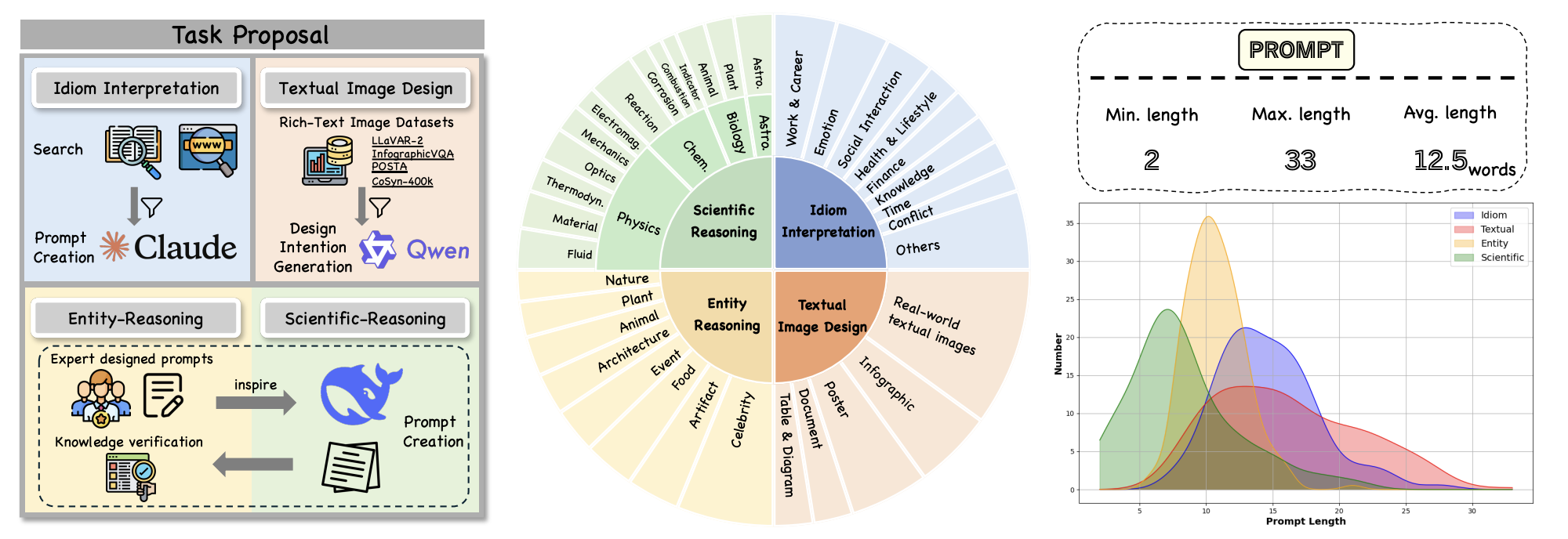
ReasonBench is designed to expose a specific weakness: models that look smart on standard benchmarks but fall apart when you add noise. The benchmark gives a multi-step reasoning problem, then inserts irrelevant facts — like 'the sky is blue' in the middle of a math problem. GPT-5 Turbo dropped to 67%, while the open-source Qwen 2.5 72B managed 71%. Even more telling: performance collapsed when the reasoning chain exceeded 8 steps. This matters because real-world problems are rarely clean. A customer support agent has to filter out irrelevant complaints. A code assistant has to ignore comments that don't match the logic. The implication for builders: don't trust benchmark scores. If your application involves complex reasoning, build your own test set with distractors. The good news is that the benchmark is fully open-source — you can run it on your own models before deployment. The bad news is that no current model is truly reliable for multi-step reasoning. This is the next frontier for AI research.
Meine Einschätzung: This is a humbling reality check. The 'smartest' models still can't handle a simple logic puzzle with a red herring.
Anthropic Raises $3.5B for Claude Works

Anthropic's $85B valuation is a 2x jump from its previous round, and the $3.5B raise is the largest single round for an AI startup this year. The product, Claude Works, is essentially a platform for building and deploying custom agents that can read your company's internal databases, send emails, and call APIs. Think of it as 'Copilot for the enterprise' but with Anthropic's safety-first approach. The timing is interesting: Salesforce just launched its own agent builder, and Microsoft is pushing Copilot Studio. Anthropic's edge is Claude's safety features — the company has spent years building 'constitutional AI' that resists prompt injection and follows instructions more reliably. The $500M upfront from AstraZeneca (in the DeepMind deal) shows pharma is willing to pay for AI agents. For developers, this means the enterprise agent market is about to get crowded. If you're building a startup in this space, you now have three giants to compete with. The playbook: focus on a vertical where generic agents fail — healthcare compliance, legal document review, or manufacturing logistics.
Meine Einschätzung: Anthropic is betting the farm on enterprise agents. This is their 'move fast and break things' moment.
Salesforce Launches No-Code AI Agent Builder
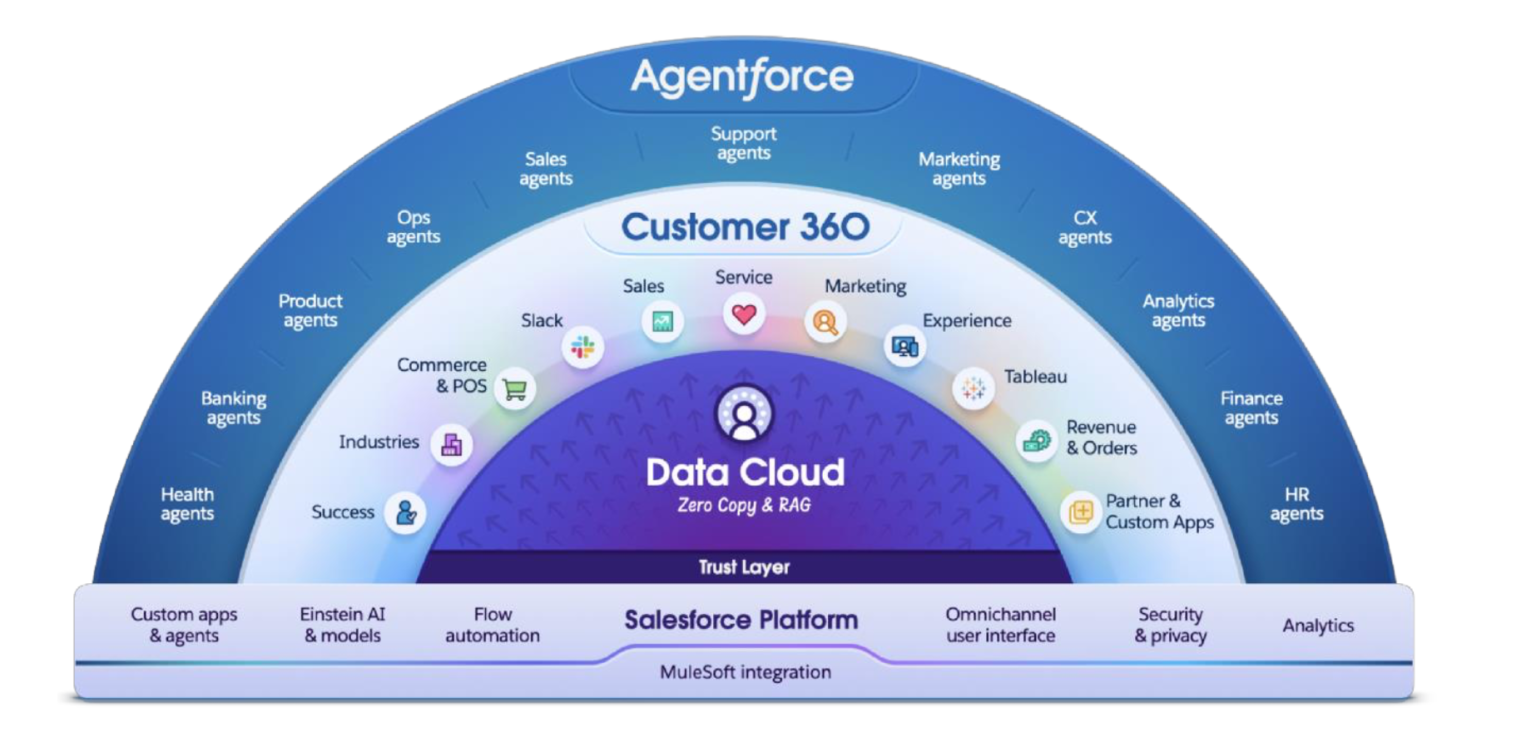
Salesforce's Einstein AI Agent Builder is exactly what it sounds like: drag-and-drop interface to build an AI agent that lives inside your Salesforce instance. It can read leads, send emails, and schedule meetings — all the grunt work that sales reps hate. The 'under 10 minutes' claim is aggressive but plausible if you're using pre-built templates. The integration with Salesforce objects is the key advantage: your agent can access the same data your sales team uses, without any custom API work. The $50 per user per month pricing is cheaper than hiring an SDR but expensive compared to HubSpot's Breeze AI which starts at $30. The free tier for up to 5 agents is clearly designed to get teams hooked. For sales leaders, the question isn't whether to use this — it's whether to pick Salesforce or HubSpot. The answer depends on your existing stack. If you're already on Salesforce, this is a no-brainer. If you're on HubSpot, stick with Breeze. The real loser here is every third-party sales automation startup.
Meine Einschätzung: This is Salesforce playing defense against HubSpot's Breeze AI. The no-code angle is smart, but $50/user is steep.
Deep Dive
How to Build a Multi-Step Reasoning Test for Your AI Agent
ReasonBench exposed a painful truth: even the best models fall apart when you add irrelevant information or require more than 8 reasoning steps. If you're deploying an AI agent that makes decisions, you need to test for this weakness before it costs you a customer. Here's how to build a simple but effective reasoning test in 30 minutes.
Start by taking three problems from your domain that require logical reasoning. For a customer support agent, that might be: 'A customer ordered a blue widget on Monday, but the red widget arrived on Wednesday. They want a refund but also need the correct item by Friday. What should you do?' This requires tracking order date, item color, delivery date, and two separate requests.
Now add distractors. Insert a sentence like 'The customer's name is Jane' or 'It rained on Tuesday' somewhere in the middle. The goal is to see if your model ignores the irrelevant info. Run the same prompt with and without the distractor. If the answer changes, your model is vulnerable.
Next, extend the reasoning chain. Take your base problem and add two more steps: 'Jane also ordered a green gadget last month that was refunded. The refund hasn't processed yet. How does that affect this request?' Now the model has to track five entities across time. If it fails, you know your agent can't handle complex histories.
Finally, automate this as a CI check. Use GitHub Actions to run your test suite every time you update your prompt or model. LangSmith v2 (released today) can do this automatically with its regression detection feature. The cost of not testing is an agent that confidently gives wrong answers — which is worse than no answer at all.
Remember: benchmarks like MMLU and HumanEval test knowledge, not reasoning. Your customers don't care if your model knows the capital of France; they care if it can figure out why their order is delayed. Build the test, run it weekly, and don't deploy until your model scores above 90% on your custom set.
If your AI agent can't handle a red herring, it's not ready for the real world.