Tuesday — June 16, 2026
Automatisiert mit einem lokalen KI-Modell erstellt, ohne redaktionelle Prüfung vor Veröffentlichung.
Agent Policy Auditor
You are a compliance officer for an AI agent platform. Review the following agent tool calls and evaluate them against a set of predefined policies for financial institutions. For each call, determine if it is allowed, denied, or requires human review. Output a structured audit log with timestamps, decisions, and rationale.
Microsoft launches own AI models and M365 API
Microsoft's move is a tectonic shift in the AI platform wars. Until today, the narrative was Microsoft = OpenAI's distribution channel. With their own model family and the GA of Work IQ API, they are signaling independence. The Work IQ API is the real story here: it gives developers a secure, compliant way to access calendar, email, documents, and Teams data without building custom connectors. The Copilot Credits billing model is clever — it creates a unified currency across Microsoft Copilot Studio and custom agents, making it easy for enterprises to budget. For developers, this means you can now build a customer support agent that reads a customer's email history, checks their calendar for availability, and drafts a response — all with one API call and baked-in security. The implication is clear: if you are building business agents, you cannot ignore this. Microsoft is eating the enterprise agent market from the inside out.
Meine Einschätzung: Microsoft is no longer just OpenAI's distributor. They're building their own stack, and the M365 data moat is the killer feature. If you build enterprise agents, this API is the fastest path to production.
Google pays SpaceX $920M/month for GPUs
The Google-SpaceX deal is a signal flare for the entire AI industry. $12.1 billion for GPUs over 33 months. That is $920 million every single month. To put that in perspective, that is more than the annual GDP of some small countries. The deal reveals three things. First, GPU supply is still brutally constrained despite all the talk of easing. Second, hyperscalers are locking in long-term contracts at premium prices, which means the secondary market for GPUs will remain expensive. Third, this deal will set a floor for compute pricing that smaller players will have to pay. For builders, this means you cannot be wasteful. You need to use smaller models where possible, optimize inference, and consider alternatives like AMD's Instinct GPUs (which Meta just committed to at scale). The DiffusionGemma 26B model released today is a direct response to this — 4x faster inference at lower cost. If you are not optimizing for compute efficiency today, you will be priced out of the market tomorrow.
Meine Einschätzung: This is the single most important data point for anyone building AI today. Compute costs are not coming down anytime soon. If Google is paying this much, you need to optimize every token.
Anthropic acquires Stainless, retires old models
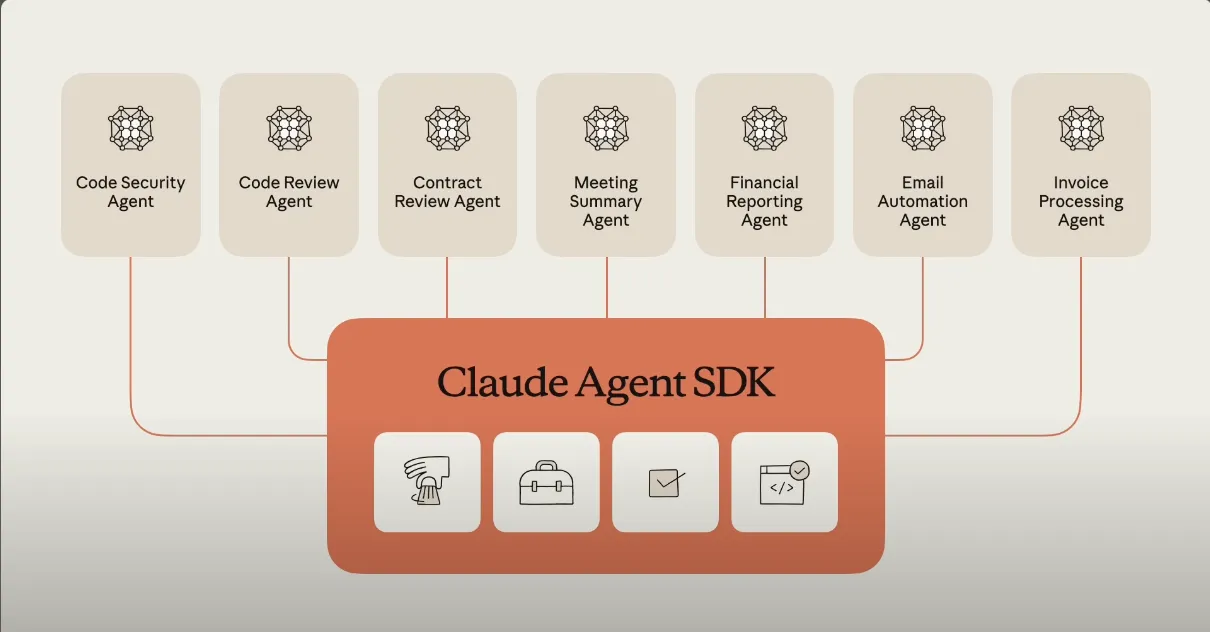
Anthropic's dual move today is a clear strategy: double down on enterprise agent connectivity while cleaning up the product line. The Stainless acquisition is the more interesting piece. Stainless builds SDKs and MCP (Model Context Protocol) server tooling — the plumbing that lets Claude actually talk to Salesforce, SAP, or any REST API. This is the missing piece for enterprise adoption. Without it, Claude is a smart brain with no hands. With it, Claude becomes a full-fledged agent that can act on enterprise systems. The model retirements are equally significant. Sonnet 4 and Opus 4 are dead as of yesterday. Sonnet 4.8 is coming this week, promising Opus-tier quality at a lower price. This is classic Anthropic: they are willing to break things to move fast. For developers, the message is clear: build your agent stack on the MCP protocol and be ready to migrate models frequently. The days of a single model lasting a year are over. Plan for quarterly model updates as a feature, not a bug.
Meine Einschätzung: Anthropic is building the enterprise agent platform, not just a model company. The Stainless acquisition gives them the connectivity layer they were missing. Migrate off Sonnet 4 now — it's already gone.
Databricks and Vercel release open agent harnesses
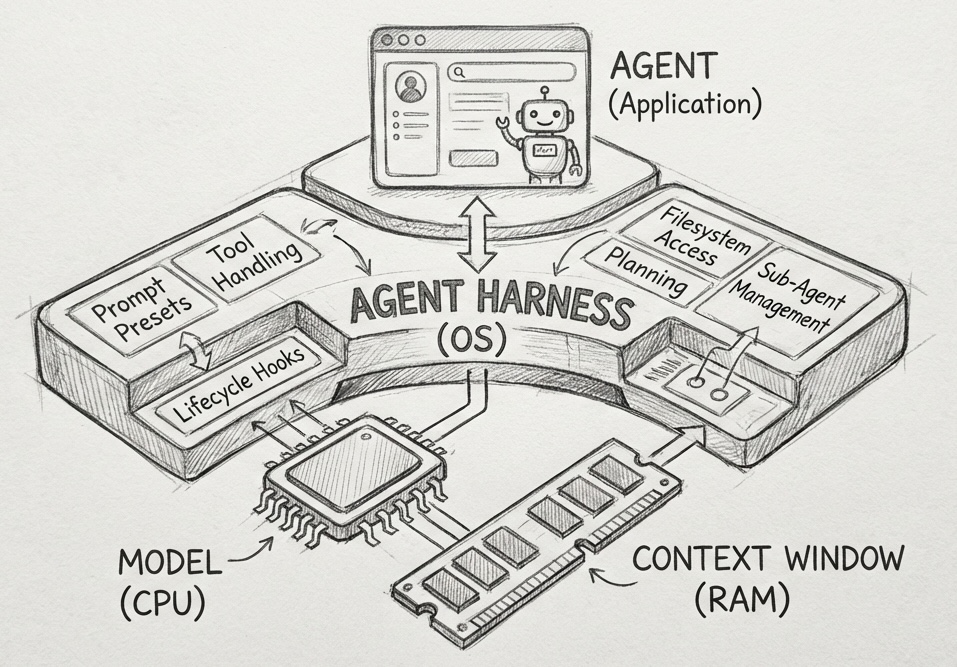
Today marks a turning point in agent development. Two major platforms released tools that solve the same problem: how do you run agents from different ecosystems without rewriting everything? Databricks' Omnigent is an open-source meta-harness that lets you compose agents from Claude Code and Codex under a shared governance layer. Think of it as a conductor for an orchestra of different agents. Vercel's AI SDK 7 takes a different approach with HarnessAgent — a single API that abstracts away the differences between Claude Code, Codex, and Pi agents. Both solve the same pain: today, if you build an agent on Claude Code, you cannot easily run it on Codex. These tools fix that. The implications are huge. First, it means you can A/B test different models on the same task without changing your code. Second, it creates a portable agent format that survives model churn. Third, it enables multi-agent systems where different models handle different parts of a workflow. For developers, the takeaway is simple: pick one of these harnesses and standardize on it. The era of bespoke agent code is ending.
Meine Einschätzung: The agent harness war is heating up. These tools let you swap models and harnesses like Lego blocks. If you are not using one of these, you are wasting time rewriting the same agent loop.
Deep Dive
How to Build a Compute-Efficient Agent Pipeline in 2026
The Google-SpaceX GPU deal makes one thing painfully clear: compute is the new oil, and it is only getting more expensive. If you are building AI agents today, you need a strategy for token efficiency that goes beyond just picking a cheaper model. Here is a practical framework based on today's news.
First, use the right model for the right job. DiffusionGemma 26B achieves 4x faster inference than comparable autoregressive models by generating 256-token blocks in parallel. Kimi K2.7-Code cuts reasoning token usage by 30% with its new architecture. This means you can run a three-step agent workflow on DiffusionGemma for the cost of one step on GPT-4. Map your agent's tasks to the cheapest model that can handle them. Use a router to send simple classification tasks to a small model and complex reasoning to a larger one.
Second, leverage context compression aggressively. Kimi K2.7 supports 256K-token context, but that does not mean you should use it all. Implement sliding window attention and summarization checkpoints. Every time your agent reads a long document, have it produce a compressed summary that becomes the new context. This alone can cut token usage by 60-80% on long-horizon tasks. The Weaviate Engram service, which reached GA today, can help manage this memory layer across sessions.
Third, batch and parallelize where possible. DiffusionGemma's block-parallel generation is a hint at the future. If your agent needs to process 10 customer emails, do not process them sequentially. Batch them into a single inference call. Most modern model APIs support batching, and the cost savings are linear. For high-throughput workloads, this is the single biggest lever you have.
Fourth, cache everything. The Work IQ API from Microsoft and the MCP servers from Anthropic's Stainless acquisition both support response caching. If your agent asks the same question twice (e.g., "what is the customer's current plan?"), the second call should hit a cache, not the model. Implement a semantic cache that stores vector embeddings of queries and returns cached responses for similar questions. This can reduce API costs by 40-60% in production.
Finally, monitor and iterate. The ValidMind Atryum framework, released today, includes an audit trail for every tool call. Use this to track which steps in your agent pipeline are consuming the most tokens. You will almost always find that 20% of the steps consume 80% of the tokens. Optimize those steps first. The era of compute abundance is over. Build lean or get priced out.
Build lean, migrate fast, and never assume compute will get cheaper.