Friday — June 19, 2026
Automatisiert mit einem lokalen KI-Modell erstellt, ohne redaktionelle Prüfung vor Veröffentlichung.
Agent Deployment Plan
You are a senior AI infrastructure architect. Given the news about Vercel's eve framework and Google's Antigravity CLI, design a 3-step deployment plan for a production AI agent that handles customer support ticket triage. Include tool selection, context window sizing, and a fallback strategy for API outages. Output as a structured markdown document.
Claude Fable 5 returns after forced shutdown
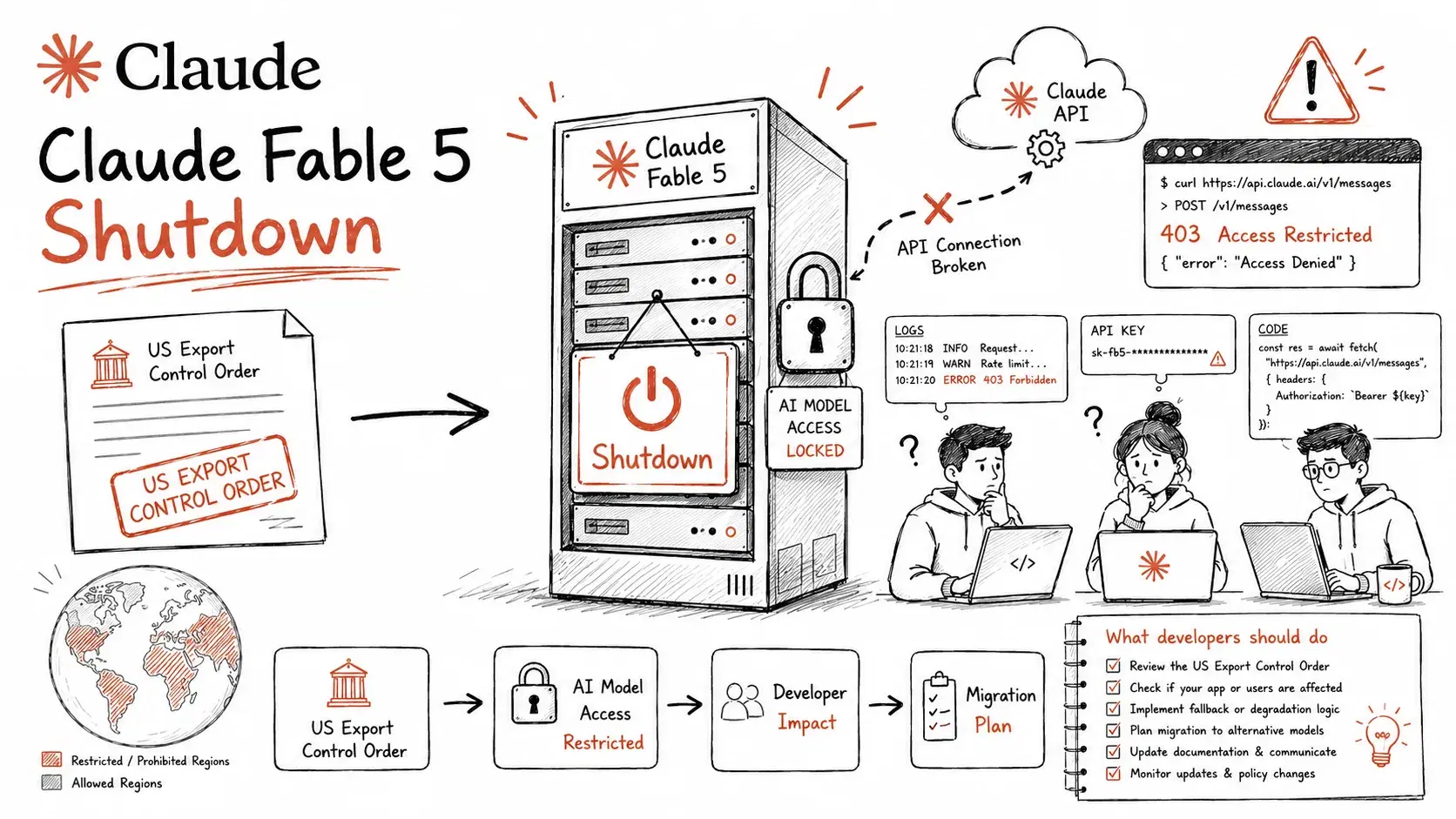
The six-day shutdown of Claude Fable 5 and Mythos 5 began on June 12 under US export control provisions, marking one of the first times a frontier AI model has been forcibly taken offline by government action. Anthropic restored access on June 18 with no announced changes to the models themselves. Both models still hold top positions on SWE-Bench Pro and FrontierCode benchmarks. However, the broader Claude service experienced a separate widespread outage on June 18 affecting the main chat interface, though Claude Code remained operational for some users. The dual incidents highlight a growing fragility in relying on API-access-only frontier models. For developers and enterprises, the lesson is clear: diversify your model providers, maintain local fallback models for critical workflows, and treat API access as a potential single point of failure. Anthropic has not disclosed whether the government imposed any modifications to the models before restoration. The incident also raises questions about how the Great American Artificial Intelligence Act of 2026, now in discussion draft, might formalize such shutdown powers.
Meine Einschätzung: The fact that the US government can shut down a frontier model for a week and it comes back still leading benchmarks says more about the regulatory vacuum than the model. But if you're building on Fable 5, you just got a stark reminder you don't control your own stack.
Midjourney pivots to full-body ultrasound scanners
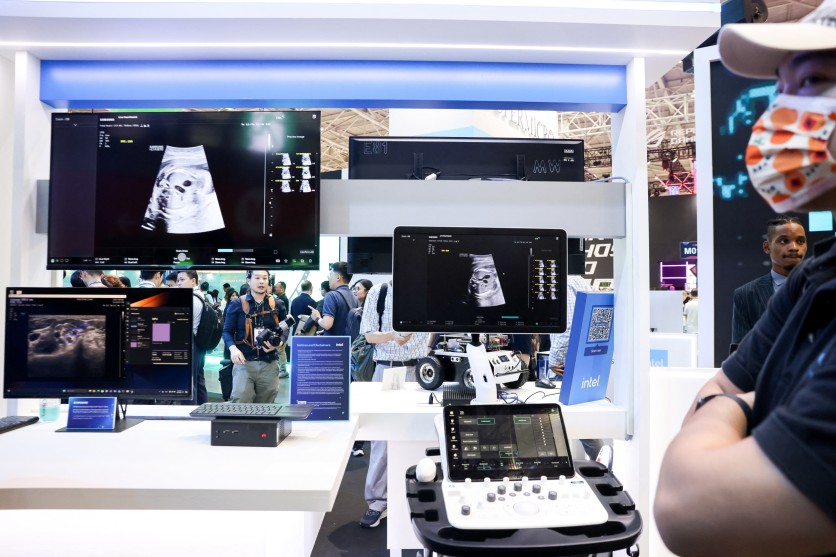
Midjourney's pivot from generative AI image and video services to physical health hardware is one of the most unexpected strategic moves in AI this year. The company announced the Midjourney Scanner, a full-body ultrasound machine, under a new division called Midjourney Medical. Their rollout plan involves deploying 50,000 scanners in Midjourney Spa locations, suggesting a consumer-facing wellness model rather than clinical diagnostics. Critically, the company stated it will focus on hardware and software first, with AI integration arriving later. This reverses the typical AI company playbook of leading with software intelligence. The move leverages Midjourney's brand recognition and design capabilities but enters a heavily regulated market dominated by established medical device manufacturers. The spa deployment strategy bypasses traditional hospital sales cycles but raises questions about medical liability, insurance billing, and regulatory clearance. For the AI industry, this signals that generative AI companies are looking for physical-world revenue streams beyond subscription APIs. Midjourney is essentially betting that their user experience DNA can disrupt medical hardware the way they disrupted image generation.
Meine Einschätzung: This is either visionary or insane. Midjourney is betting that their brand trust and design sensibility can win in medical hardware against Siemens and GE. The AI integration comes later, which means they're selling hardware first. That's a brutal business.
Google Antigravity CLI 2.0 replaces Gemini CLI
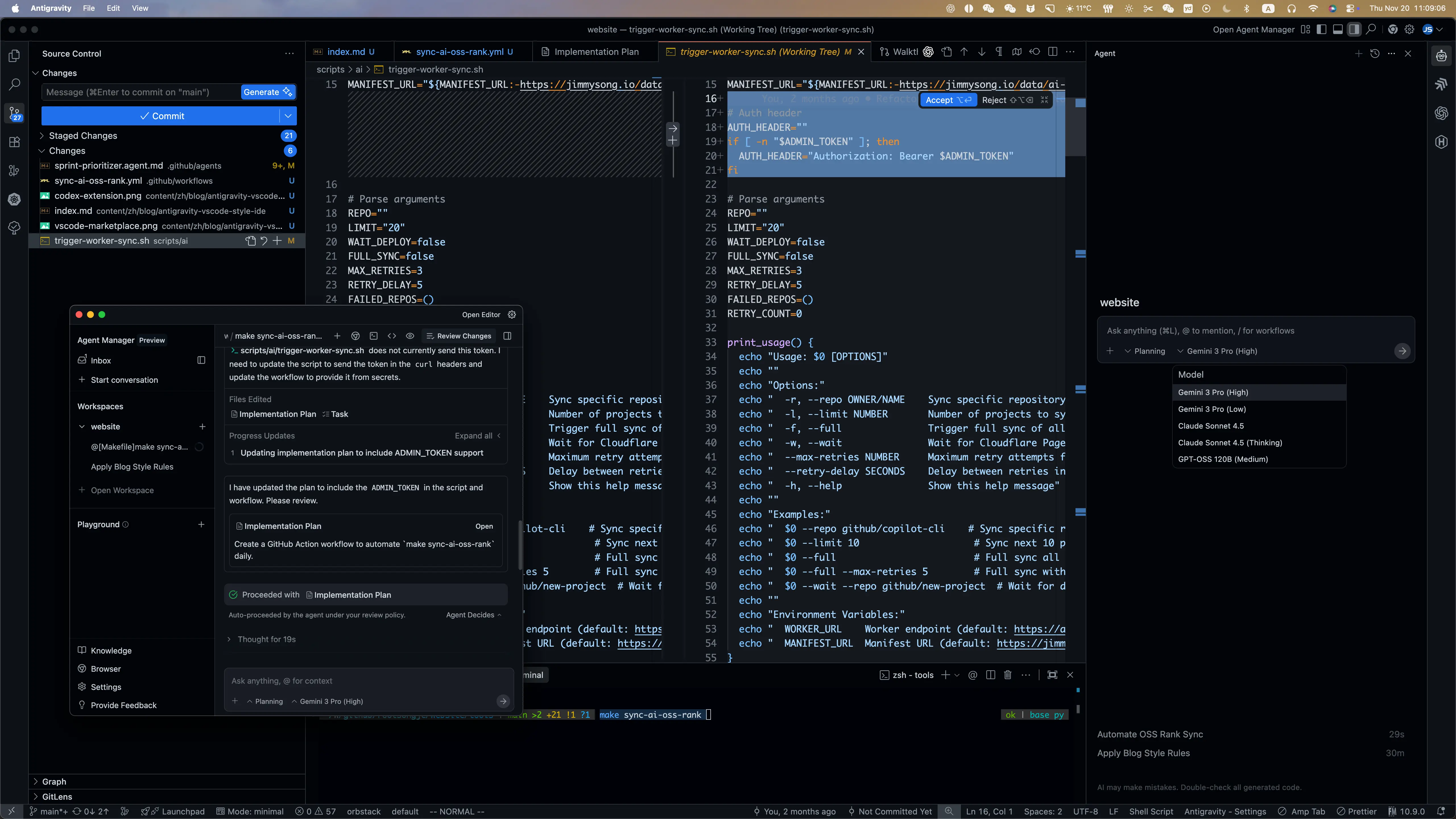
The transition from Gemini CLI to Antigravity CLI 2.0 represents Google's most aggressive push yet into AI developer tooling. The new CLI is powered by Gemini 3.5 Flash and introduces features that directly compete with Anthropic's Claude Code and Microsoft's GitHub Copilot. The parallel dynamic subagents feature allows multiple AI processes to run concurrently on different tasks, while scheduled background tasks enable persistent automation. Native voice commands and the 1M+ token context window position it as a comprehensive development assistant. The tool is available globally for free, which puts pressure on competitors to justify their pricing. Google also expanded Antigravity into 2.0 with a standalone desktop app, SDK, and enterprise deployment options. New subscription tiers include AI Ultra at $100/month and Ultra Premium at $200/month, suggesting a freemium model that monetizes power users. The Gemini API now includes Managed Agents for easier deployment. For developers, the key decision is whether to invest in Google's ecosystem given its history of deprecating tools. However, the combination of free access, massive context windows, and parallel agent execution makes Antigravity CLI 2.0 the most capable free option available today.
Meine Einschätzung: Google is finally serious about developer tools. Antigravity CLI 2.0 with parallel subagents and 1M token context for free is a direct shot at Claude Code and Cursor. The question is whether Google will kill this one too in 18 months.
Vercel eve framework redefines agent deployment
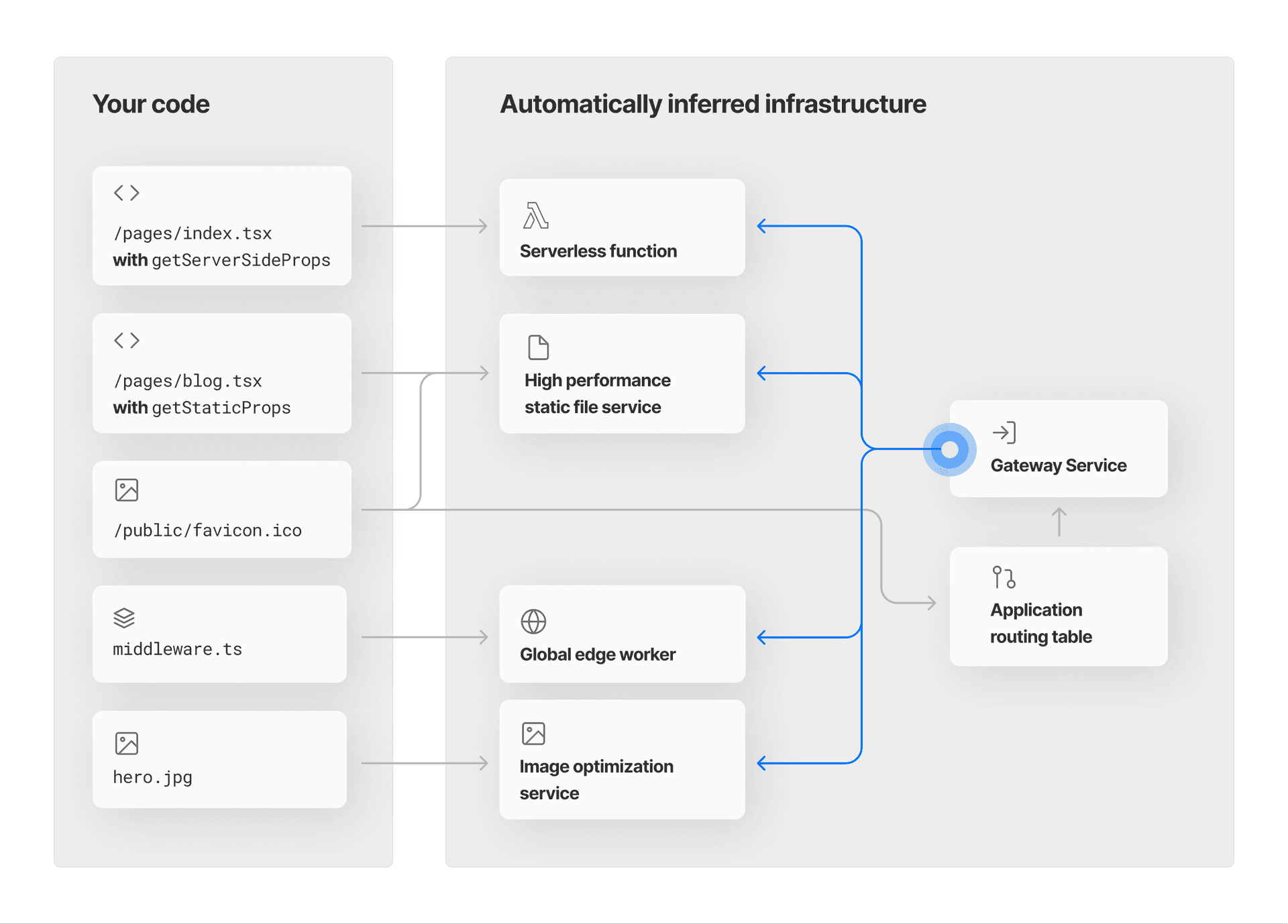
Vercel's eve framework, launched on June 17, solves a problem that has plagued AI agent development: the gap between prototyping and production deployment. By treating each agent as a directory of files — configuration, tools, prompts, and logic — eve enables developers to use familiar version control and deployment workflows. The framework bundles infrastructure that typically requires separate setup: durable execution that survives crashes, sandboxed environments for safety, human-in-the-loop approval workflows, and connections to external services. Vercel's claim of running over 100 agents in production internally provides credibility that few open-source frameworks can match. The Apache-2.0 license means enterprises can adopt it without legal friction. For developers, the most compelling feature is that agents can be deployed unchanged via 'vercel deploy', eliminating the translation layer between development and production. This directly competes with frameworks like LangChain, CrewAI, and Microsoft's Semantic Kernel by offering a simpler mental model. The framework's focus on production concerns — sandboxing, approvals, durable execution — suggests Vercel understands that the hard part of agents isn't building them, it's keeping them running safely at scale.
Meine Einschätzung: This is the most practical agent framework I've seen. Treating agents as deployable directories that work with 'vercel deploy' is exactly the kind of simplicity that gets adopted. The real signal is that Vercel eats their own dogfood with 100+ agents.
Deep Dive
How to Evaluate Agent Frameworks After This Week's Launches
This week saw three major agent infrastructure releases: Google's Antigravity CLI 2.0, Vercel's eve framework, and Microsoft's Scout built on OpenClaw. If you're building production agents, you need a decision framework that cuts through the hype. Here's how to evaluate which one fits your use case. Start by mapping your constraints. Antigravity CLI 2.0 is a command-line tool optimized for developers who want a free, powerful assistant with massive context windows and parallel execution. It's not a framework for building custom agents — it's a tool for using agents. If your primary need is a superior coding assistant that doesn't cost per token, Antigravity wins. Vercel's eve is a framework for building and deploying agents that need to run persistently in production. The key differentiator is the directory-as-agent model, which makes version control, testing, and deployment trivial. If you're building agents that other developers will maintain or that need to be deployed across multiple environments, eve's simplicity is a significant advantage. Microsoft's Scout, built on OpenClaw, targets enterprise IT automation with privileged local operations. It can read and write files, execute shell scripts, apply code patches, and automate browser sessions. If your agent needs deep system access and you're already in the Microsoft ecosystem, Scout is the obvious choice. The critical evaluation criteria are: deployment complexity (eve wins for simplicity), cost structure (Antigravity wins for free access), and access level (Scout wins for system integration). No single framework solves all three. The smartest approach is to use Antigravity CLI for development and rapid prototyping, then migrate to eve for production deployment, with Scout reserved for specialized enterprise automation tasks. This layered strategy gives you flexibility without locking into a single ecosystem.
Flo's rule: If you can't deploy your agent with a single command, your framework is the bottleneck, not the model.