Sunday — June 21, 2026
Automatisiert mit einem lokalen KI-Modell erstellt, ohne redaktionelle Prüfung vor Veröffentlichung.
Agentic AI ROI brief
You are an AI strategy consultant. Summarize the key drivers behind the 171% average ROI from enterprise agentic AI deployments, listing three specific company examples and one actionable step for a mid-size tech firm to replicate this. Keep it under 200 words.
SpaceX buys Cursor for $60B
SpaceX's $60 billion acquisition of Anysphere, the startup behind the AI coding agent Cursor, marks one of the largest AI acquisitions in history. The deal, expected to close by the end of September 2026, signals that SpaceX sees AI coding agents as critical infrastructure for building and maintaining the software that powers rockets, satellites, and ground systems. Cursor has grown rapidly as a developer favorite for its ability to generate, refactor, and debug code in real time. The June 2026 SDK update introduced custom tools, configurable persistence stores, nested subagents, and automations for CI/CD pipelines — features that make it far more than a coding assistant. For developers, the immediate implication is uncertainty: Cursor's roadmap will likely prioritize SpaceX's internal needs, potentially deprioritizing general-purpose features. The broader signal is that enterprise AI agents are now strategic assets worth tens of billions. Expect other aerospace, defense, and industrial giants to follow suit with acquisitions of their own.
Meine Einschätzung: This is a land grab. SpaceX isn't buying a code editor — they're buying the agent infrastructure to automate rocket software. Every Cursor user should brace for a pivot toward industrial-grade deployment.
DeepSeek V4 Flash triggers US-China AI tensions
DeepSeek V4 Flash has become the most consumed AI model globally by token volume, reaching 4.63 trillion tokens — a figure that surpasses any US-based model. This dominance has alarmed OpenAI, which has formally raised concerns with US lawmakers that DeepSeek is using sophisticated techniques to extract results from American models and use them to train competing systems. The accusations come amid a broader US-China technology rivalry, with both nations vying for leadership in AI. DeepSeek V4.1 Flash, an efficiency-focused variant with a 1-million-token context window optimized for fast inference, has taken the top trending slot on Hugging Face within a week of release, indicating strong developer adoption. For US-based enterprises, the risk is twofold: first, relying on models that may face sudden export restrictions; second, potential intellectual property exposure if training data includes proprietary outputs. The practical response is to audit your model supply chain, ensure you have alternatives (e.g., Llama, Mistral, or Claude), and avoid sending sensitive data to Chinese-hosted APIs. The geopolitical dimension is unlikely to resolve quickly — expect this to escalate into formal trade actions within months.
Meine Einschätzung: The token war is the new arms race. DeepSeek is winning on usage, but OpenAI's espionage claims are a diplomatic grenade. Expect export controls to tighten — and every developer using Chinese models should have a fallback plan.
Enterprise agentic AI delivers 171% ROI
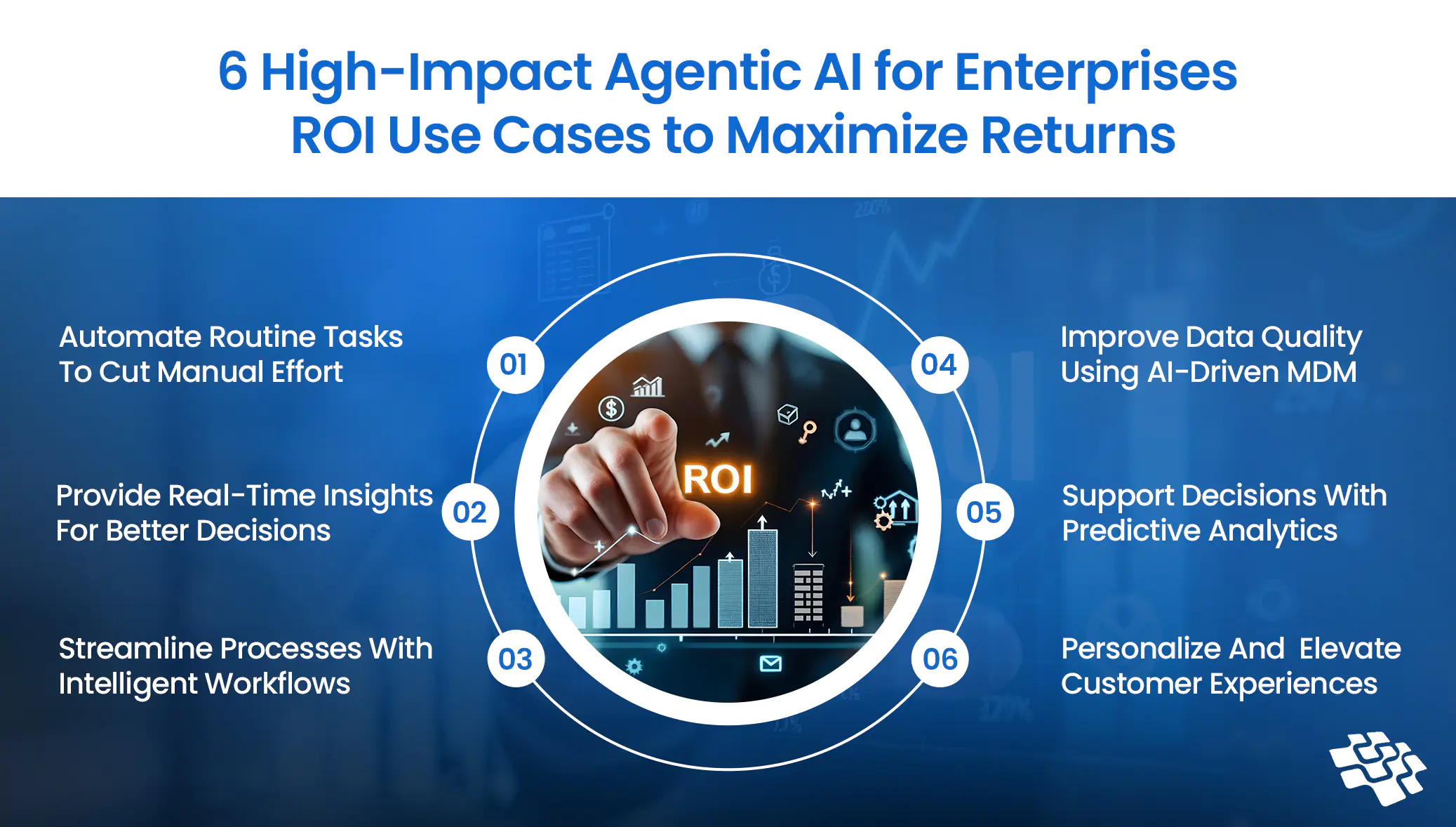
Enterprise agentic AI — where AI systems autonomously execute multi-step workflows rather than just answering questions — is delivering a 171% average ROI, according to a new survey of large enterprises. US companies are outperforming the global average at 192%, tripling the returns of traditional automation. JPMorgan Chase is running over 450 agentic AI cases daily, spanning fraud detection, trade settlement, and customer service. Klarna replaced 853 full-time equivalent employees with a single customer service AI agent, dramatically reducing operational costs. Salesforce cut $5 million in legal costs by using an agent to automate contract review and redlining. Critically, most executives reported achieving ROI within the first year, and 39% saw productivity at least double. The key success factors are not technical — they are organizational: clear process mapping, executive sponsorship, and willingness to redesign workflows rather than just overlay AI on broken processes. For companies looking to start, the recommendation is to pick one high-volume, rule-heavy process (e.g., invoice processing, customer triage, contract review) and deploy a pilot agent. Measure time saved and error reduction, then scale. The window for early mover advantage is closing fast.
Meine Einschätzung: The ROI numbers are real because agentic AI isn't a chatbot — it's automation that closes loops. If your company isn't running at least one agentic AI use case in production, you're leaving money on the table.
Anthropic disables Claude models after US export order
Anthropic has taken the unprecedented step of globally disabling its newest Claude models, including the recently released Fable 5, after the US government issued an export control order. The order cited concerns that the models' advanced capabilities could be used for automated hacking and cyberattacks. This is the first time a frontier AI model has been pulled from availability due to security concerns, marking a new era of regulatory intervention in AI deployment. Developers who had integrated Fable 5 into their workflows are now scrambling to find alternatives. Meanwhile, Claude Code received a June 2026 update that introduces Safe Mode (a restricted execution environment), Opus 4.8 as the new default model, doubled rate limits, and CLAUDE.md for persistent configuration. The practical takeaway: never build a production system that depends on a single model, especially a frontier one. Always maintain a fallback (e.g., GPT-4o, Gemini, or an open-source model like Mistral) and test your pipelines against multiple models. The regulatory landscape is shifting fast, and availability can change overnight.
Meine Einschätzung: This is the first time a frontier model has been pulled globally over security fears. It sets a precedent — if your workflow depends on the latest Claude, you need a backup model ready to swap in.
Deep Dive
How to build a model-agnostic agent pipeline
With DeepSeek facing potential export restrictions, Anthropic pulling models, and SpaceX acquiring Cursor, one lesson is clear: your AI agent should not be married to a single model. A model-agnostic architecture lets you swap providers without rewriting your entire system. Here's how to build one in practice. First, abstract the model interface. Instead of calling OpenAI's API directly, define a common interface (e.g., a Python protocol or TypeScript interface) that expects a prompt string and returns a response string. Each model provider implements that interface as a thin adapter. This lets you switch from Claude to GPT to DeepSeek by changing one config line. Second, standardize tool calling. If your agent uses tools (web search, code execution, database queries), define them using the Model Context Protocol (MCP), which has become the universal standard in 2026. MCP makes any tool discoverable by any MCP-capable agent, regardless of the underlying model. Third, implement a fallback chain. Your agent should try Model A, and if it fails (rate limit, error, timeout), automatically retry with Model B, then Model C. This ensures uptime even when a provider goes down. Fourth, log and monitor token usage and cost per model. You'll quickly see which models give the best quality-to-cost ratio for your specific use case. Tools like headroom (which compresses tool outputs by 60-95% before they reach the LLM) can dramatically reduce costs. Finally, test your agent against at least three models before going to production. If your agent only works well with one model, your architecture is fragile. The goal is not to be model-agnostic for fun — it's to survive the next export control order, acquisition, or model deprecation without a fire drill.
If your AI stack depends on one model, one provider, or one tool, you don't have a system — you have a single point of failure.