Tuesday — June 23, 2026
Automatisiert mit einem lokalen KI-Modell erstellt, ohne redaktionelle Prüfung vor Veröffentlichung.
Agent Infrastructure Builder
You are an AI infrastructure architect. Given the news about Cloudflare Temporary Accounts, Vercel Eve, and Agent Beacon, design a 3-step deployment pipeline for an autonomous coding agent that can deploy Workers, log its activities, and scale across Slack/GitHub. Output a JSON configuration with service names, API endpoints, and error handling rules.
SpaceX Signs $6.3B Compute Deal with Reflection AI

SpaceX, primarily known for rockets and satellite internet, is doubling down on its role as an AI infrastructure provider. The company has signed a compute lease agreement with Reflection AI, an open-source startup, valued at up to $6.3 billion. The deal centers on Nvidia GB300 chips housed at SpaceX's Colossus 2 facility, which was originally built to support Starlink's compute needs. Reflection AI will gain access to a massive cluster of these next-generation GPUs, which are designed for both training and inference workloads. For the broader AI community, this signals a major shift in compute availability. SpaceX has been quietly building one of the world's largest private compute networks, and this lease opens that capacity to external players. Reflection AI's focus on open-source models means the compute could indirectly benefit the entire ecosystem through model releases and shared infrastructure. Builders should monitor this space closely: as Colossus 2 comes online, spot pricing for GPU compute on cloud providers may see downward pressure. Startups that have been priced out of training large models should explore whether Reflection AI offers subsidized access or partnerships. This deal also validates the thesis that hyperscale compute is becoming a commodity, leased like real estate rather than owned outright.
Meine Einschätzung: This is the single biggest infrastructure news today. If you've been waiting for GPU prices to drop, your wait just got shorter.
Cloudflare Temporary Accounts for AI Agents
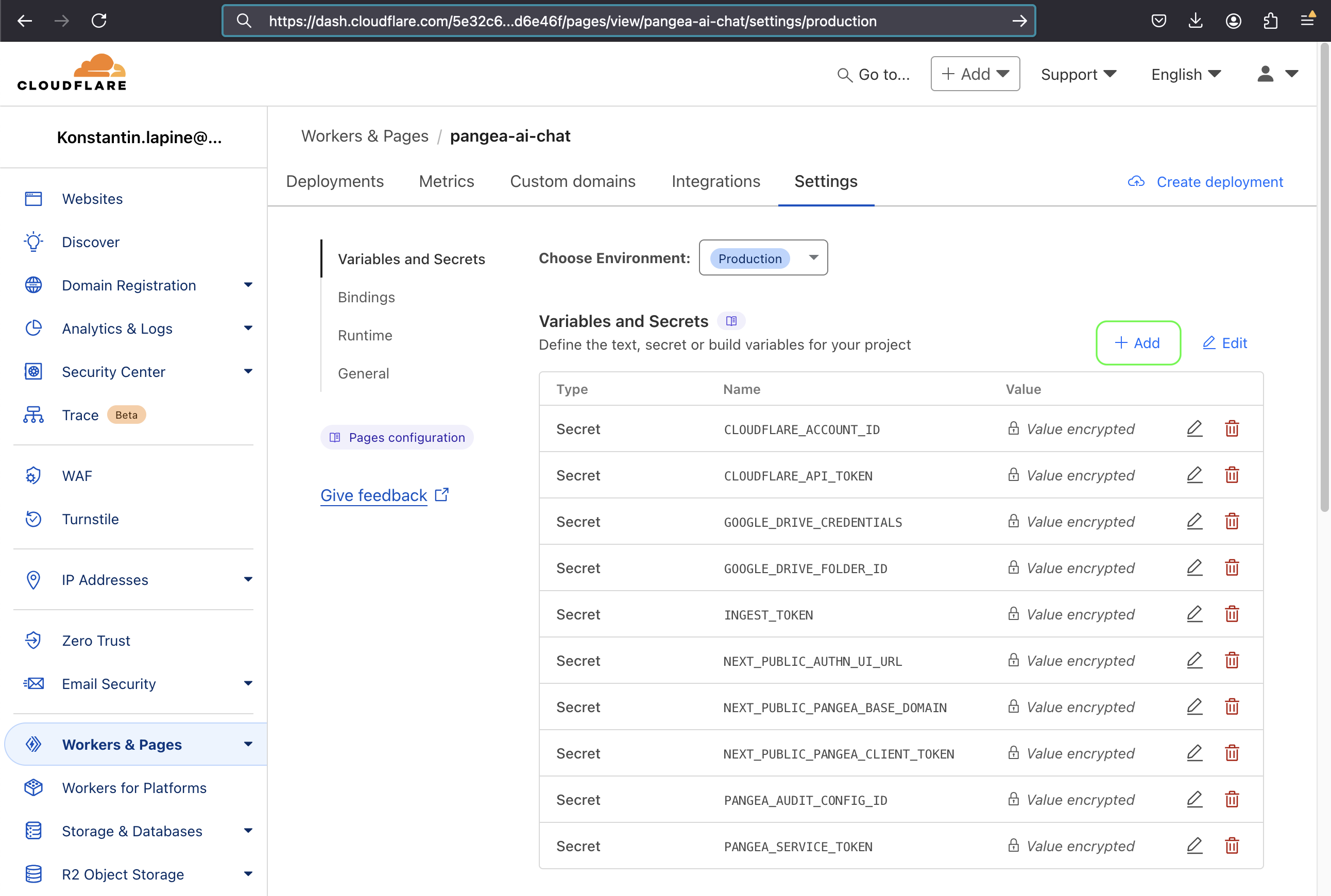
Cloudflare has solved one of the most frustrating bottlenecks in agentic AI: the inability for an AI agent to actually deploy its output to production without human intervention. The company announced temporary Workers accounts, which allow AI agents to spin up live Workers endpoints using ephemeral credentials. The flow works like this: an agent generates code, requests a temporary account via Cloudflare's API, receives a short-lived token, deploys the Worker, and the result is a live URL that can be shared or tested. No signup, no credit card, no API key management. This is a game-changer for agent frameworks like Vercel Eve or Claude Code, which can now truly close the loop from generation to deployment. For builders, this means you can build agents that autonomously create microservices, webhooks, or data processing pipelines without requiring a human to manually create cloud accounts. The temporary accounts have rate limits and time-to-live constraints to prevent abuse, but for prototyping and testing, this is more than sufficient. The implications for MCP servers, agent marketplaces, and autonomous debugging tools are enormous. If you're building an agent that generates code, integrate this immediately — it turns your agent from a suggestion engine into a deployment engine.
Meine Einschätzung: This is the unlock for truly autonomous agents. No more 'generate code but can't run it' — your agents can now ship to production without you.
DeepSeek V4.1 Flash Tops HuggingFace
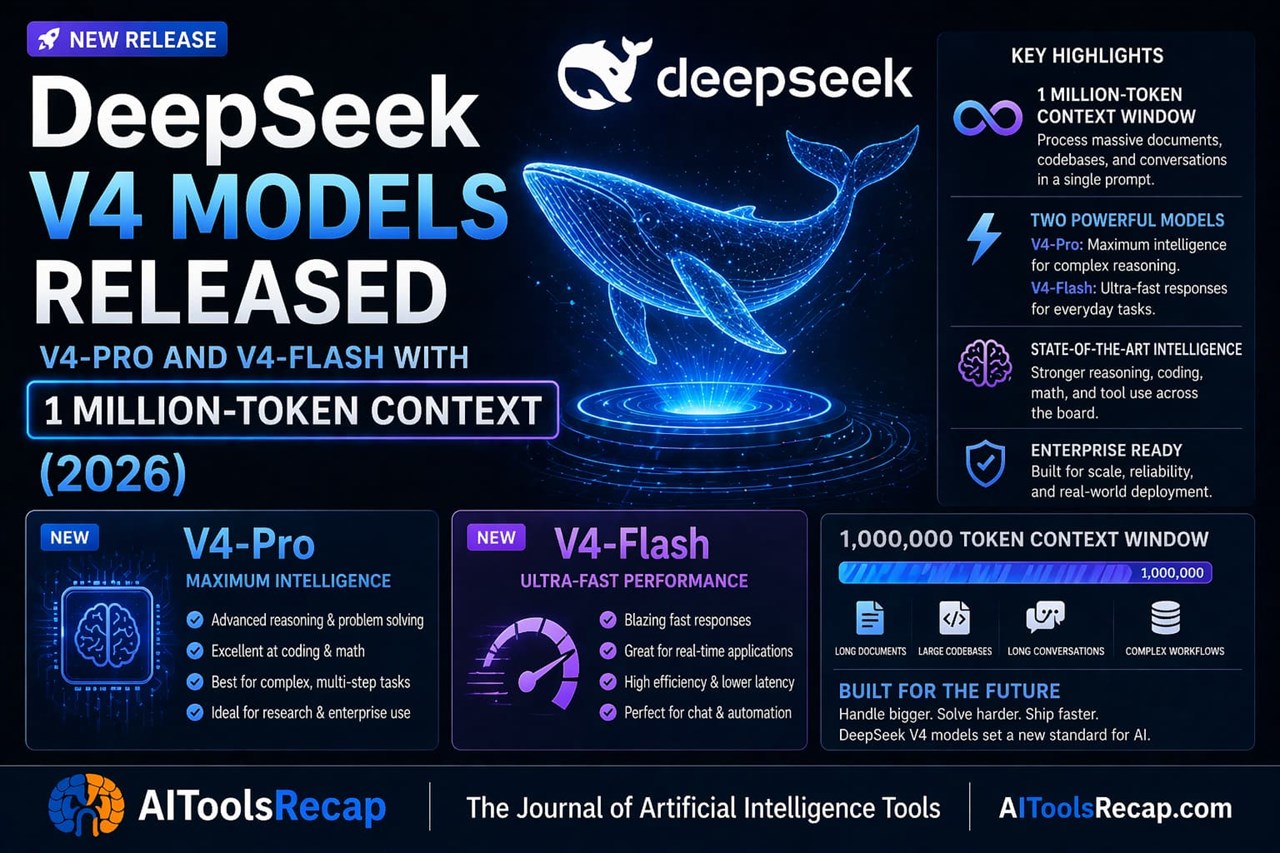
DeepSeek continues its relentless pace of model releases with V4.1 Flash, which has taken the HuggingFace community by storm. Within seven days of release, it climbed to the number one trending spot, a sign of both its quality and the community's hunger for fast, efficient models. V4.1 Flash is explicitly designed for latency-sensitive applications — think real-time chat, code completion, and interactive agents where every millisecond counts. Early benchmarks show it competing with much larger models on reasoning tasks while delivering 2-3x faster inference. The model uses a mixture-of-experts architecture with optimized attention mechanisms that reduce memory bandwidth requirements. For builders, this is the model to evaluate if you're running inference on consumer GPUs or need to keep costs low at scale. It pairs particularly well with the Cloudflare Workers ecosystem mentioned above, as its small footprint allows it to run on serverless edge functions. DeepSeek has also released a quantized version that fits in 8GB of VRAM, making it accessible for local deployment. If you've been using GPT-4o-mini or Claude Haiku for high-volume tasks, swap in V4.1 Flash and measure the latency improvement. The community benchmarks on HuggingFace suggest you'll see significant gains.
Meine Einschätzung: If you care about inference speed, stop reading and go benchmark this model. It's trending for a reason.
DiffusionGemma: 1000+ Tokens/sec Open Model
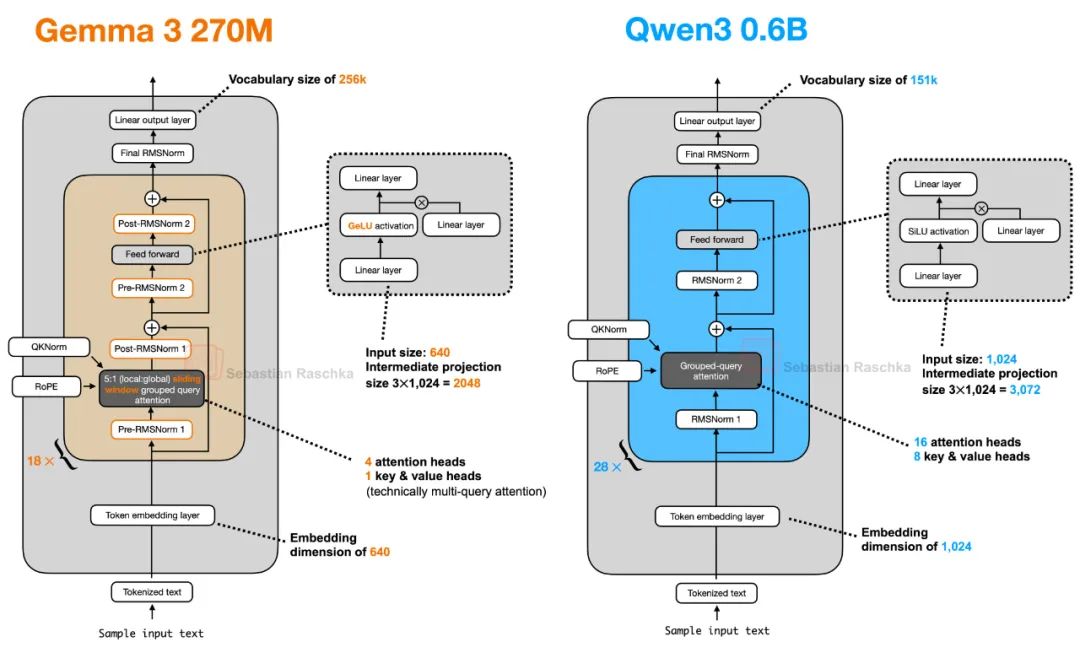
Google DeepMind has open-sourced DiffusionGemma, a 26-billion parameter Mixture of Experts model that uses text diffusion instead of autoregressive generation. Instead of predicting one token at a time, DiffusionGemma generates entire 256-token blocks simultaneously through an iterative denoising process. The result is staggering: over 1000 tokens per second on a single H100 GPU, which is 4x faster than comparably sized autoregressive models. The model is experimental and comes with caveats — it may not match the reasoning quality of top-tier autoregressive models on complex tasks, and the output quality can be less consistent for long-form generation. However, for high-throughput applications like bulk text generation, data augmentation, or real-time translation, this architecture is a paradigm shift. The open-source release includes weights, inference code, and a technical report detailing the diffusion process. Builders working on applications where throughput matters more than peak quality — such as synthetic data generation, chatbot response drafting, or content mills — should immediately benchmark DiffusionGemma. It also runs efficiently on lower-end hardware thanks to the MoE architecture, which activates only a subset of parameters per forward pass. Keep an eye on the community fine-tunes that will inevitably emerge; a fine-tuned DiffusionGemma could become the default model for high-volume, cost-sensitive text generation.
Meine Einschätzung: This is the most technically interesting release today. Diffusion models for text are still experimental, but 1000 tokens/sec on a single H100 is impossible to ignore.
Deep Dive
How to Build Autonomous Agent Deployment Pipelines with Cloudflare Temporary Accounts
The biggest bottleneck in agentic AI today is not code generation — it's deployment. An AI agent can write perfect code, but if it can't spin up infrastructure autonomously, it's just a suggestion engine. Cloudflare's temporary Workers accounts change this equation entirely. Here's how to build a pipeline that lets your agents deploy to production without human intervention. First, understand the flow. Your agent generates code (a Worker script), then calls Cloudflare's API to request a temporary account. The API returns an ephemeral API token and a subdomain. The agent then uses that token to deploy the Worker via wrangler or the Cloudflare API. The result is a live HTTPS endpoint that exists for a limited time (configurable up to 24 hours). The agent can then test the endpoint, iterate on the code, and even chain multiple Workers together. To implement this, you need three components: a code generation module (your agent), a deployment orchestrator (a thin wrapper around Cloudflare's temp account API), and a monitoring layer (like Agent Beacon from today's news, which logs all activities). The orchestrator should handle token lifecycle, rate limiting, and error recovery. When a token expires, the agent should detect the failure and request a new one. This creates a self-healing deployment loop. Practical considerations: temporary accounts are ideal for prototyping, testing, and short-lived tasks like data processing jobs or webhooks. For production, you'll want to graduate to permanent accounts with proper IAM roles. But for the development cycle, this eliminates the most common friction point. Start by creating a simple MCP server that wraps the Cloudflare temp account API. Your coding agent (Claude Code, Codex CLI, or a custom agent) can then call this MCP server whenever it needs to deploy. The MCP server handles authentication, deployment, and provides the live URL back to the agent. This pattern is already being used by early adopters to build agents that autonomously create dashboards, API endpoints, and data pipelines. The key insight: your agent doesn't need to be perfect at coding — it just needs to be able to deploy, test, and iterate quickly. With temporary accounts, that iteration loop is now fully automated.
Your agent can finally ship to production without asking for permission. Go build something that deploys itself.