Wednesday — June 24, 2026
Automatisiert mit einem lokalen KI-Modell erstellt, ohne redaktionelle Prüfung vor Veröffentlichung.
Agentic Workflow Architect
You are a senior enterprise architect. Given a business process description, design an agentic workflow using AWS Blocks as the backend framework, specifying which agents handle data retrieval, decision-making, and action execution. Include steering file rules for compliance and governance. Output the architecture as a structured JSON schema.
AWS Blocks Lets Agents Build Their Own Backends
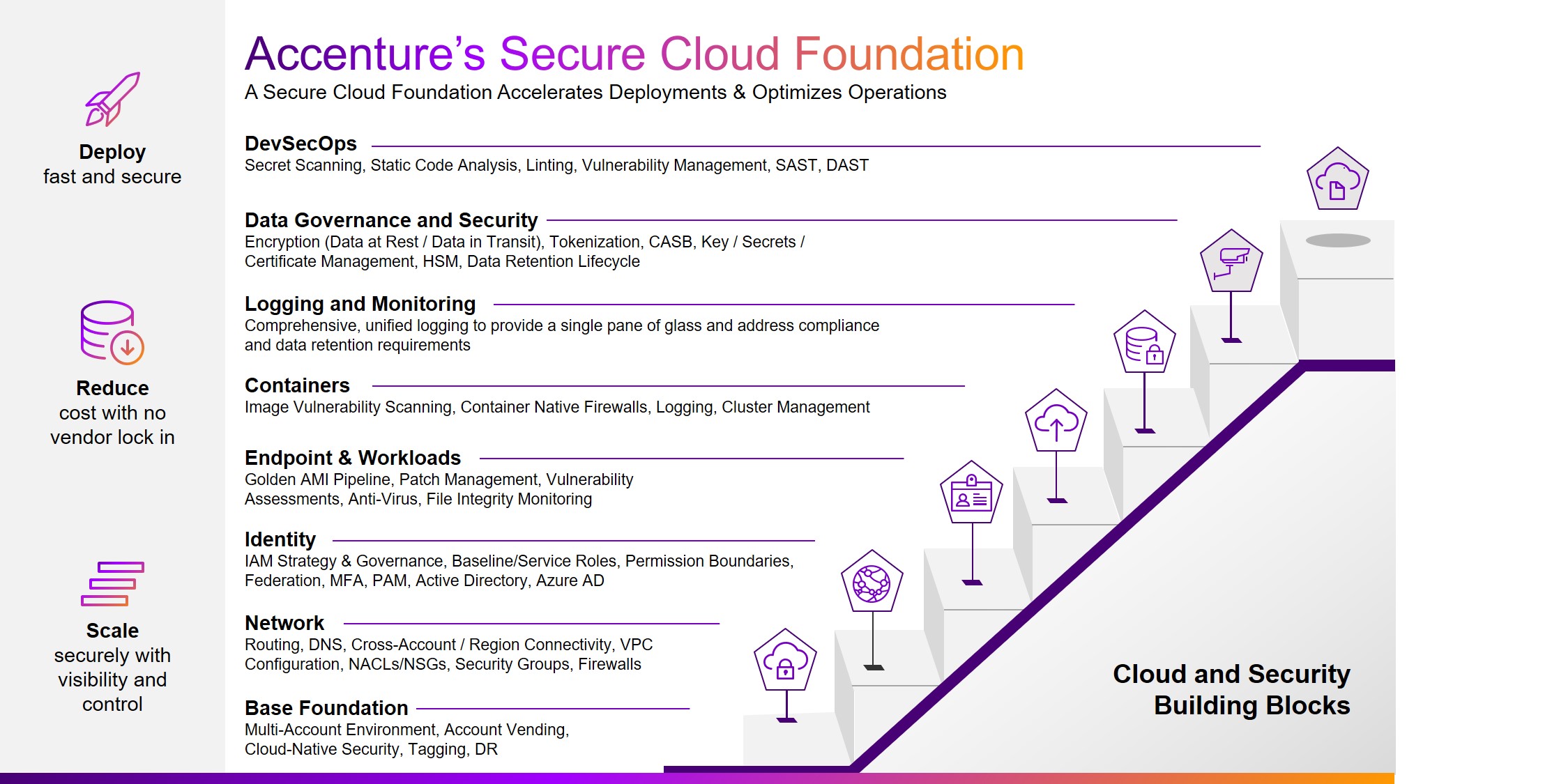
AWS Blocks is an open-source TypeScript framework that fundamentally changes how AI agents interact with cloud infrastructure. Instead of requiring a human engineer to provision servers, set up databases, or configure networking, Blocks lets agents write and deploy their own backend code. The framework includes built-in steering files—essentially architectural guardrails—that nudge agents toward best practices without rigidly constraining them. For example, a steering file might specify that all data must be stored in a Postgres-compatible database with row-level encryption, and the agent will automatically generate code that meets those requirements.
The implications are significant. Historically, one of the biggest bottlenecks in scaling agentic systems has been the human-in-the-loop requirement for infrastructure management. Every time an agent needed a new data source or a compute-intensive task, a developer had to spin up resources. Blocks removes that friction entirely, allowing agents to dynamically create and tear down backends as needed. This is particularly powerful for long-running agents that need to persist state, handle variable workloads, or integrate with existing enterprise systems.
For enterprise teams, this means agentic workflows can now be built and deployed by a broader set of contributors—not just senior DevOps engineers. The steering files act as a policy enforcement layer, ensuring that even if an agent takes an unexpected path, it stays within approved architectural boundaries. This is a direct answer to the compliance and governance concerns that have slowed enterprise AI adoption.
The framework is designed to work with any TypeScript-compatible runtime, and AWS has published reference implementations for common patterns like retrieval-augmented generation (RAG) workflows, real-time data pipelines, and multi-agent coordination. Early adopters report that Blocks reduces the time to deploy a new agentic backend from weeks to hours.
Competing frameworks like LangChain and AutoGPT have focused on agent orchestration and tool use, but Blocks tackles the lower-level infrastructure problem. This positions AWS as a leader in the agentic backend space, especially for enterprises that already run on AWS and need a secure, scalable way to let agents operate autonomously. If you're building agentic systems today, Blocks is worth a close look—it might save you an entire team of DevOps engineers.
Meine Einschätzung: Finally, AWS is treating agents like actual developers instead of dumb API callers. This is the kind of abstraction that makes agentic systems actually deployable at scale.
EDB Brings Agentic Database to Postgres
EDB's new agentic database capabilities are a direct response to the limitations of current AI architectures, where data must be extracted, transformed, and loaded into separate AI systems before anything intelligent can happen. This introduces latency, governance gaps, and operational complexity. EDB's approach embeds agentic workflows directly into the Postgres database layer, meaning agents can query, analyze, and act on live data without moving it.
The key innovation is converged analytics—the ability to run relational, analytical, vector, and agentic workloads on the same data, in the same database, with consistent governance. For example, an agent handling customer support can simultaneously run a vector similarity search on past tickets, a relational query on account status, and an analytical query on usage patterns—all without leaving Postgres. The database handles query routing and optimization automatically, choosing the right engine for each workload.
Governance is a first-class concern. EDB's row-level data sovereignty means that agents can only access data they're authorized to see, even within the same table. This is critical for regulated industries like healthcare, finance, and insurance, where AI agents must operate within strict compliance boundaries. The database enforces these rules at the storage layer, not just the application layer, closing a common loophole.
For enterprises already running Postgres, the upgrade path is straightforward—no need to migrate to a new database or adopt a separate AI platform. EDB's agentic capabilities are available as an extension to existing EDB Postgres AI deployments, and the company has published reference architectures for common patterns like real-time fraud detection, autonomous customer service, and dynamic pricing.
The timing is strategic. As more enterprises move from experimental chatbots to production agentic systems, the need for a unified data and AI platform becomes critical. EDB is positioning Postgres—already the world's most popular database—as the foundation for this new architecture. If you're building agentic systems on Postgres, this is the infrastructure you've been waiting for.
Meine Einschätzung: This is what 'AI-native database' should mean—not bolting on a vector store, but letting agents operate directly on live, governed data at machine speed. Every enterprise running Postgres should care about this.
Attention AI Raises $30M for Agentic Revenue Platform
Attention's $30 million Series B is a clear signal that the market for agentic AI in revenue operations is accelerating. The company's platform goes beyond the typical 'revenue intelligence' tools that passively analyze calls and emails to generate insights. Instead, Attention's agents actively participate in the revenue workflow—drafting and sending follow-up emails, updating CRM records, scheduling next steps, and even triggering outreach sequences based on real-time signals.
The key differentiator is autonomy. Most revenue tools require a human to review and approve every action, which defeats the purpose of automation. Attention's agents operate with configurable autonomy levels, from 'suggest only' to 'execute and notify,' allowing teams to gradually increase trust. The platform includes guardrails to prevent common errors, like sending duplicate messages or updating the wrong record, and provides a full audit trail for compliance.
The funding round was led by a group of enterprise-focused venture firms, and the company plans to use the capital to expand its engineering team and build out integrations with major CRM and sales engagement platforms. Current customers report measurable improvements in response rates and pipeline velocity, with some seeing a 30% reduction in time spent on administrative tasks.
This is part of a broader trend of AI agents moving from observation to action. In revenue operations, where every minute of a sales rep's time is costly, the ability to offload routine tasks to autonomous agents is a direct bottom-line benefit. Attention's success suggests that the next wave of enterprise AI will be defined not by how well it analyzes data, but by how much work it actually does.
For revenue leaders, the takeaway is clear: the tools for agentic revenue operations are maturing. If you're still relying on manual processes for follow-ups, CRM updates, and outreach sequencing, you're leaving money on the table. The question is no longer whether AI can do this work, but how quickly you can trust it to do so.
Meine Einschätzung: The shift from 'AI that watches' to 'AI that does' is finally happening in revenue operations. Attention's funding proves that enterprises are willing to pay for agents that close the loop, not just generate reports.
Five9 and RingCentral Launch Contact Center AI Agents

Two major contact center platforms announced agentic AI capabilities on the same day, signaling that the industry is moving decisively away from scripted chatbots and interactive voice response (IVR) systems. Five9's Voice AI Agents and AI Agent Studio provide a complete environment for building, testing, deploying, and monitoring autonomous voice agents. These agents can handle complex multi-turn conversations, access customer data in real time, and seamlessly hand off to human agents when needed.
RingCentral's expansion of its AIR Pro platform takes a similar approach, with native AI agents for inbound and outbound interactions, autonomous outreach, intelligent handoffs, and a natural language workflow builder. Both platforms emphasize the ability to maintain context across interactions, so a customer doesn't have to repeat themselves when switching between AI and human agents.
The technology behind these agents has matured significantly in the past year. Advances in speech recognition, natural language understanding, and real-time voice synthesis mean that AI agents can now handle the vast majority of routine calls—password resets, order status checks, appointment scheduling—without frustrating customers. The key metric for both platforms is 'containment rate,' or the percentage of calls handled entirely by AI without human escalation. Early deployments are reporting containment rates above 70% for common use cases.
For enterprises, this represents a direct cost savings opportunity. Contact centers are one of the largest operational expenses for many companies, and the ability to automate even 50% of calls can translate to millions in annual savings. But the real value is in the data: AI agents capture every interaction in structured form, enabling analytics and continuous improvement that scripted systems never could.
The competitive landscape is heating up. Beyond Five9 and RingCentral, platforms like Zendesk, Intercom, and Salesforce are all investing heavily in agentic AI for customer service. The winners will be determined by who can achieve the highest containment rates while maintaining customer satisfaction—and that requires not just good AI, but good integration with existing systems and workflows.
Meine Einschätzung: The contact center is ground zero for agentic AI—high volume, repetitive tasks, and clear ROI. Five9 and RingCentral are racing to replace legacy IVR systems before someone else does it for them.
Boardmix Launches 100+ AI Agents for Visual Workflows
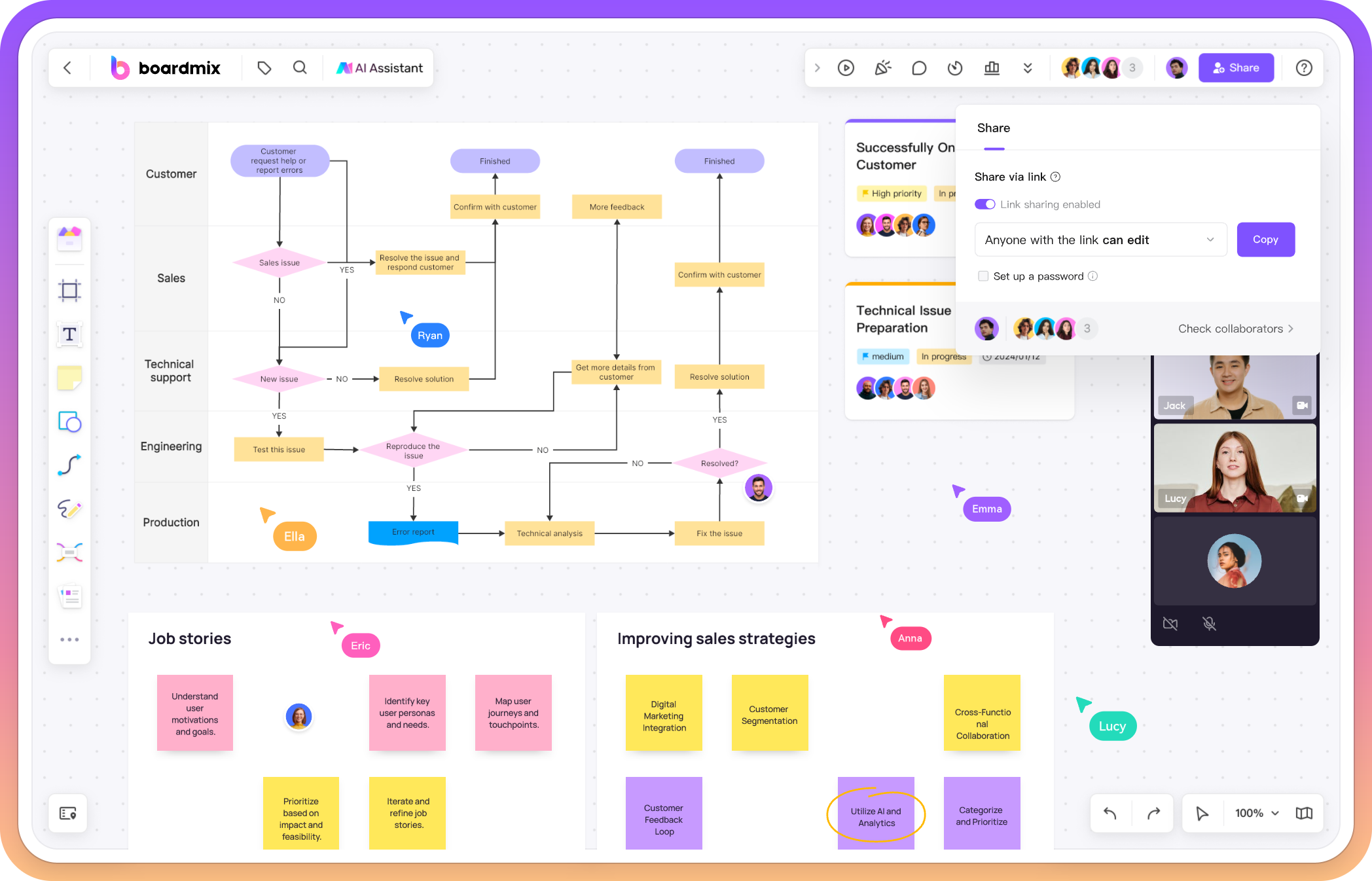
Boardmix's launch of over 100 AI agents represents a different approach to agentic AI: instead of building a standalone platform, the company is embedding agents directly into an existing visual collaboration tool. The agents can generate diagrams, mind maps, flowcharts, and project plans from natural language prompts. They can also extract structured data from uploaded PDFs, convert hand-drawn sketches into digital diagrams, and automatically format outputs into presentation-ready visuals.
What makes this noteworthy is the breadth of functionality. Rather than releasing a handful of general-purpose agents, Boardmix has created specialized agents for specific tasks—a mind map agent, a flowchart agent, a Gantt chart agent, a SWOT analysis agent, and dozens more. Each agent is optimized for its specific task, with tailored prompts and output formats. This specialization means users get better results than they would from a generic AI assistant trying to do everything.
The agents operate directly on the digital canvas, so users can see the output in context and make adjustments in real time. This is a significant improvement over the typical workflow of generating something in a separate AI tool and then copying it into a whiteboard. Boardmix's approach keeps the entire process in one place, reducing friction and enabling faster iteration.
For teams that do visual planning—product managers, designers, strategists, and project managers—this could be a game-changer. The ability to generate a complete project plan or system architecture diagram from a single sentence, then immediately iterate on it with the team, eliminates hours of manual work. The data extraction agents are particularly useful for teams that regularly work with PDF reports or research documents.
Boardmix is positioning itself as a practical alternative to more abstract AI tools. While other companies focus on building general-purpose AI assistants, Boardmix is betting that specialized, task-specific agents embedded in existing workflows will win in the long run. Early user feedback suggests they may be right.
Meine Einschätzung: This is the kind of practical AI that actually gets used—not another chat interface, but agents that work inside tools teams already use. Visual planners should take note.
Deep Dive
How to Design Agentic Workflows That Actually Deploy
Today's news makes one thing clear: agentic AI is moving from demos to production. But the difference between a demo and a deployed system is governance. Every launch we covered today—AWS Blocks, EDB, Golem, Five9, RingCentral—includes some form of guardrails, steering, or policy enforcement. That's not an accident. It's the single most important factor in whether an agentic system gets deployed or stays in a Jupyter notebook.
Here's the practical framework I use for designing agentic workflows that actually ship. First, define the 'perimeter'—the boundary within which the agent is allowed to operate autonomously. For a customer service agent, that might be 'password resets and order status only.' For a revenue agent, it might be 'send follow-ups for leads that haven't been contacted in 7+ days.' The perimeter should be narrow enough that you're comfortable with full autonomy, but wide enough that the agent provides real value.
Second, implement steering files or policy-as-code. This is what AWS Blocks does with its TypeScript framework—it gives the agent architectural guardrails without dictating every step. For your own systems, this means defining rules like 'never delete data,' 'always log decisions,' or 'require human approval for actions above $X value.' Encode these rules in a machine-readable format and enforce them at the infrastructure level, not just in the agent's prompt.
Third, design for graceful handoff. No agentic system should be all-or-nothing. Build in escalation paths for when the agent hits its confidence threshold or encounters an edge case. Five9 and RingCentral both emphasize this—the agent should be able to say 'I need help' and hand off context to a human seamlessly. This builds trust and prevents the catastrophic failures that kill enterprise AI projects.
Fourth, measure containment rate and escalation patterns. The key metric for any agentic workflow is not accuracy or latency—it's containment rate: the percentage of tasks the agent completes without human intervention. Track this over time, and use escalation patterns to identify where the agent needs improvement. If 80% of escalations happen on a specific task type, invest in improving that capability.
Finally, iterate in production. Agentic systems are not set-and-forget. They learn from data, and the data comes from real interactions. Set up monitoring dashboards that show agent performance, escalation trends, and user feedback. Run A/B tests between different agent configurations. The teams that succeed with agentic AI are the ones that treat it as a product, not a project.
If you're building agentic workflows today, start with a narrow perimeter, strong governance, and a clear escalation path. Deploy to a small subset of users, measure everything, and expand from there. The technology is ready—but only if you design for reality, not demos.
Agentic AI is leaving the lab today—your infrastructure, database, and contact center all just got smarter. The question isn't if, but how fast you'll deploy.