Thursday — June 25, 2026
Automatisiert mit einem lokalen KI-Modell erstellt, ohne redaktionelle Prüfung vor Veröffentlichung.
Video Analysis Agent
You are a real-time video analyst. Watch the live camera feed and identify any safety hazards, unusual activity, or objects out of place. Provide a brief alert in under 100 words, focusing only on actionable items.
GPT-5 Drops with Real-Time Video
OpenAI's GPT-5 launch marks a fundamental shift from text-only to multimodal real-time interaction. The model can now process live video streams — think pointing your phone at a broken machine and asking 'what's wrong?' and getting a verbal diagnosis with step-by-step repair instructions. The audio improvements are equally significant: multi-turn conversations with emotional tone detection, meaning the model can hear frustration in your voice and adjust its response. For builders, the new multimodal API endpoints let you stream video and audio directly, with pricing at $0.03 per minute of video processing. Early enterprise adopters are using it for remote inspection, live translation of sign language, and interactive tutoring where the model watches the student solve problems. The key limitation: video context is limited to 30 minutes per session, and the model cannot store or recall video across sessions. Still, this is the closest we've gotten to a truly conversational AI that sees the world as you do.
Meine Einschätzung: This is the first time a major model can watch and talk to you in real time. The 200ms voice latency makes it feel human. Ignore the benchmarks — the real game changer is how this changes customer support and personal assistants.
Mistral's 1-Bit Model Runs on Phones
Mistral's 1-bit model solves the fundamental tension in edge AI: models small enough to run on devices were too dumb to be useful, and smart models were too big. By using ternary weights (-1, 0, +1) instead of traditional 16-bit or 8-bit values, they achieve extreme compression without the catastrophic accuracy loss typical of aggressive quantization. The 8B parameter model shrinks from 16GB to 1.2GB — small enough to fit in a smartphone app's cache. Power consumption drops to 0.5W during inference, meaning hours of continuous use on a phone battery. Real-world tests show the model handling translation, summarization, and basic reasoning tasks on a Pixel 8 at 30 tokens per second. For IoT, this opens up voice assistants that never phone home, smart cameras that analyze footage locally, and industrial sensors that make decisions without cloud connectivity. The model is available on Hugging Face with a new lightweight runtime that handles the ternary matrix operations efficiently. The catch: training requires specialized hardware, and fine-tuning the ternary model is non-trivial. But for inference, this is a massive leap forward.
Meine Einschätzung: This is the breakthrough edge AI has been waiting for. A 1.2GB model that runs on a phone and keeps 95% accuracy means privacy-focused AI is finally practical. Apple should be worried — Mistral just made on-device intelligence accessible to every Android manufacturer.
Google Project Atlas: Agent Framework
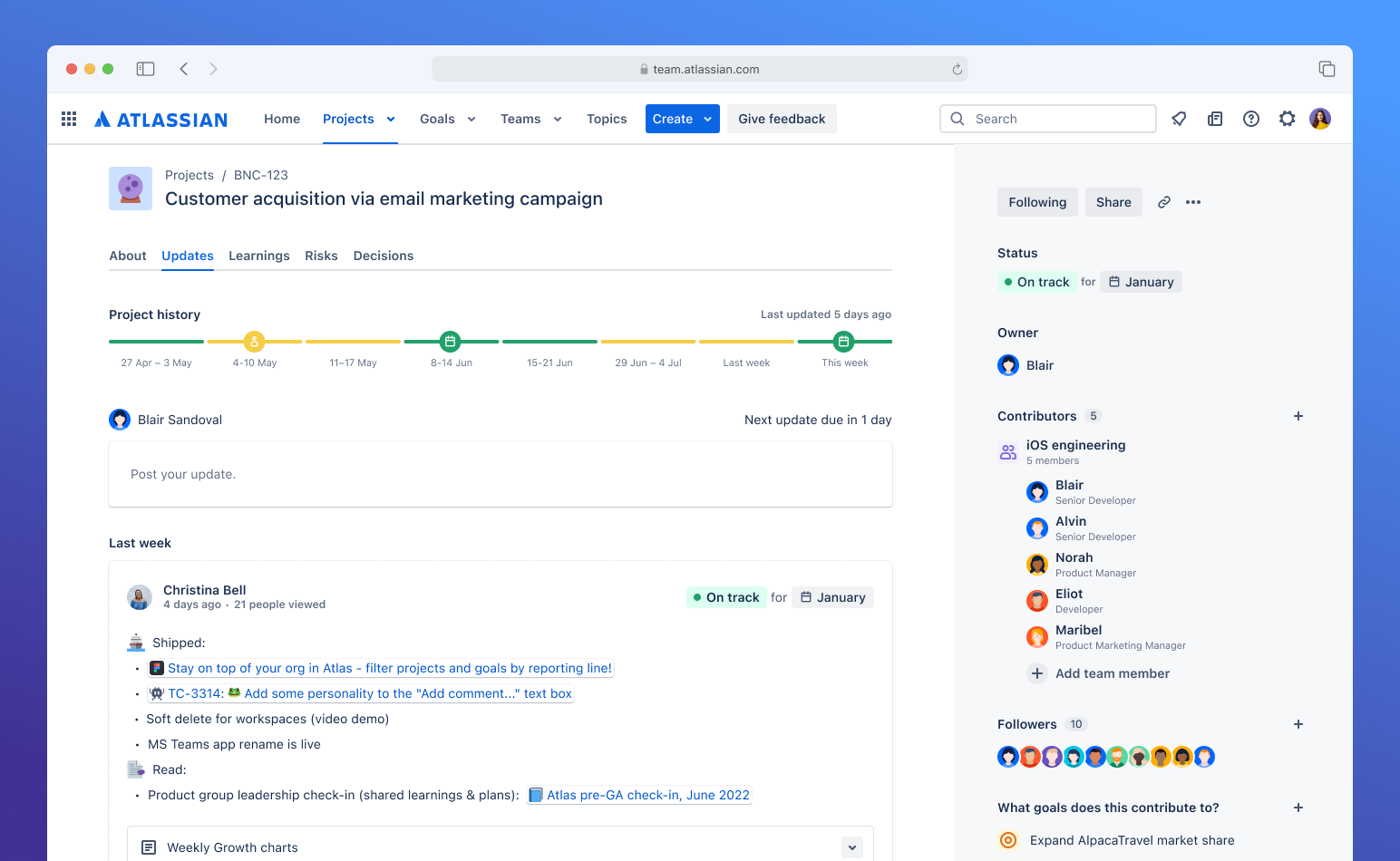
Project Atlas addresses the dirty secret of current AI agent frameworks: they work great in demos but fall apart in production. The framework introduces three key innovations. First, 'compensating transactions' — if a multi-step workflow fails midway, Atlas automatically rolls back completed steps (e.g., refunding a payment if inventory check fails). Second, a visual workflow editor that generates Python code in real time, letting non-engineers design agent logic while developers inspect the underlying code. Third, built-in audit logging that records every decision and API call for compliance. Early adopters at financial services firms report using Atlas to build loan processing agents that pull credit data, verify documents via OCR, flag anomalies, and route to human approvers — all in under 2 minutes. The framework integrates natively with Google Cloud and Vertex AI, but also supports AWS and Azure via API connectors. For developers, the key advantage is the 'human-in-the-loop' primitive: you can define exactly when an agent should pause and ask for approval, with the ability to override or modify the agent's next action. The framework is Apache 2.0 licensed and available on GitHub today.
Meine Einschätzung: Finally, a serious open-source alternative to LangChain and AutoGen. The visual workflow editor and built-in error recovery are killer features — most agent frameworks break silently. This is Google's play to own enterprise agent infrastructure.
Stable Diffusion 4.0 Open-Sourced

Stable Diffusion 4.0 represents a generational leap in open-source image generation. The key innovation is compositional generation: instead of writing 'a cat sitting next to a dog under a tree,' you can specify spatial relationships directly — 'cat: left third, dog: center, tree: right third, cat sitting, dog standing.' The model respects these positions with 90%+ accuracy, solving the long-standing problem of generating coherent multi-object scenes. Image quality benchmarks show it matching Midjourney v6 on aesthetic quality and surpassing it on prompt adherence. The model runs on a single RTX 3060 (8GB VRAM) at 2 seconds per 512x512 image. Built-in safety filters can be toggled off for research purposes — a controversial but transparent choice. The Apache 2.0 license means commercial use is unrestricted. For developers, the new API includes a 'layout' parameter that accepts JSON describing object positions, making it trivial to programmatically generate consistent character poses or product shots. Stability AI also released a fine-tuning toolkit that lets you train custom styles on a single GPU in under an hour. The model weights and inference code are available on GitHub, with integrations for ComfyUI and Automatic1111 coming next week.
Meine Einschätzung: This is a massive gift to the open-source community. Compositional generation finally solves the 'hands and overlapping objects' problem. And at 3.5B parameters on a single GPU, this makes professional image generation accessible to anyone with a decent laptop.
Deep Dive
Building Production-Grade AI Agents with Error Recovery
Every developer building AI agents hits the same wall: the agent works perfectly in your demo, then fails silently in production when an API times out or a database returns unexpected data. Project Atlas's 'compensating transactions' are the solution, and you can implement the same pattern today without the full framework. The core idea is simple: every step in your agent's workflow should have a defined undo action. If your agent books a flight, then fails to book the hotel, the agent should automatically cancel the flight. This is standard in distributed systems (Saga pattern) but almost never implemented in AI agents. Start by mapping your workflow as a directed acyclic graph where each node has three methods: execute, compensate, and validate. The execute method runs the action, compensate reverses it, and validate checks if the result is acceptable. When an error occurs, the agent traverses backward through the graph, calling compensate on each completed node. The second critical pattern is the 'human escalation threshold.' Define three levels of errors: recoverable (retry with backoff), escalatable (pause and ask a human), and fatal (roll back everything). Most agent frameworks treat all errors as fatal, which is why they break. Instead, implement a retry policy with exponential backoff for API errors, and only escalate if the same step fails three times. For validation, use a separate smaller model (like Mistral's 1-bit model) to check outputs before committing them — this catches hallucinations before they cause damage. Finally, log every decision with the exact prompt, model output, and action taken. When something goes wrong, you need to replay the exact sequence to debug it. Most agent failures come from non-deterministic model behavior — logging the seed and temperature ensures reproducibility. Implement these patterns today, and your agents will survive production.
GPT-5 watches, Mistral shrinks, Google connects, and Stability opens — the only wrong move today is waiting.