Saturday — June 27, 2026
Automatisiert mit einem lokalen KI-Modell erstellt, ohne redaktionelle Prüfung vor Veröffentlichung.
Security-Focused Code Review
You are a senior security engineer. Review the following code snippet for vulnerabilities, focusing on common weaknesses like injection, improper input validation, and insecure data handling. Provide a list of issues found, their severity, and specific remediation steps.
US Government Pulls Anthropic's Frontier Models
The US government took unprecedented action today by removing Anthropic's frontier AI models from public access. The Commerce Department cited unspecified national security concerns, marking the first time a major frontier model has been pulled from public availability. This follows an earlier limited preview of Mythos and comes amid escalating tensions in the global AI trade war. Anthropic also accused Alibaba of illicitly extracting its AI capabilities through 28.8 million fraudulent exchanges, suggesting the models may have been compromised or that the government is acting preemptively to protect sensitive capabilities. For developers and enterprises, this creates immediate uncertainty. If you built workflows around Fable 5 or Mythos 5, you need to identify alternative models or local deployments. The broader implication is that frontier AI is becoming a regulated strategic asset, similar to nuclear technology. Expect more government interventions, not fewer. Companies should diversify model providers and consider on-premise or self-hosted alternatives for critical workflows. The era of unrestricted access to cutting-edge AI is ending.
Meine Einschätzung: This is a massive escalation. If the government can pull models at will, every AI company building frontier systems is now operating under direct sovereign risk. Plan your dependencies accordingly.
OpenAI and Broadcom Unveil Jalapeño Chip
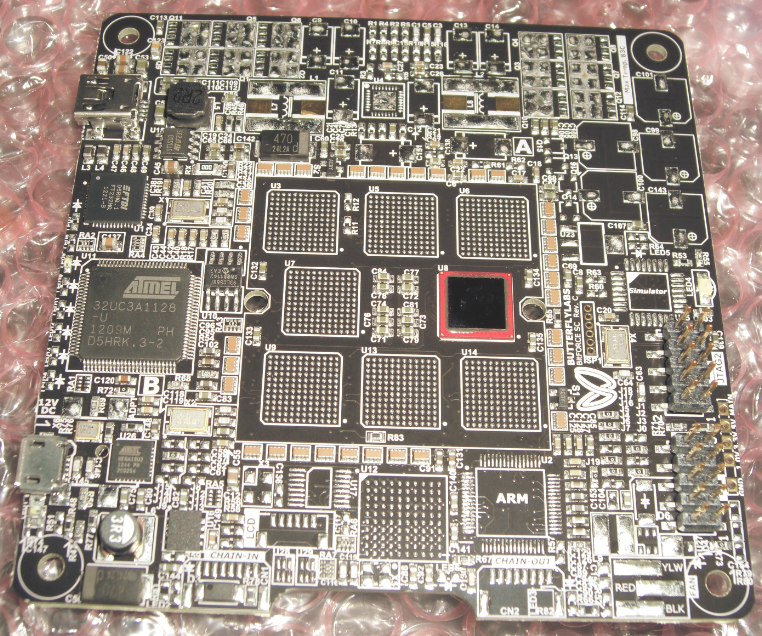
OpenAI and Broadcom announced the Jalapeño ASIC chip, a custom inference processor designed specifically for AI workloads. The chip went from design to tape-out in just nine months, an unusually fast timeline that reflects the intense competition in AI hardware. Jalapeño delivers approximately 50% cost savings compared to typical AI GPUs while matching the performance of Nvidia's Blackwell architecture and Google's TPU. This is a strategic move by OpenAI to reduce its dependence on Nvidia hardware and control its own infrastructure costs. For enterprise buyers, the implications are clear: if OpenAI passes these savings to customers, per-token pricing could drop significantly. The chip is expected to be deployed by end of 2026, but early access programs may start sooner. Companies building large-scale AI applications should factor in potential cost reductions and consider negotiating flexible pricing contracts that capture future savings. This also pressures competitors like Google and Amazon to accelerate their own custom chip programs. The era of Nvidia's hardware monopoly is officially ending.
Meine Einschätzung: This is a direct shot at Nvidia's pricing power. If Jalapeño delivers on its promises, enterprise API costs could drop significantly. Start negotiating annual contracts now.
Microsoft Launches Copilot Cowork

Microsoft launched Copilot Cowork, a new enterprise product that shifts AI from assistive tools to coordinated digital labor. Unlike previous Copilot products that offered suggestions or auto-completions, Copilot Cowork can plan and execute multi-step work across applications. This means an AI agent can take a high-level instruction like 'prepare the quarterly report' and autonomously gather data from Excel, draft text in Word, create slides in PowerPoint, and email stakeholders. The product defines how human and digital labor interact within enterprise workflows, aiming to improve output quality and speed. For enterprise leaders, this is both an opportunity and a challenge. The opportunity is massive productivity gains; the challenge is rethinking job roles, workflows, and oversight mechanisms. Companies should start identifying processes that can be fully or partially automated with digital labor. This also raises questions about accountability, error handling, and security. Microsoft is positioning this as the next evolution of enterprise software, and competitors like Google and Salesforce will need to respond. The era of AI as a tool is giving way to AI as a colleague.
Meine Einschätzung: This is the real enterprise AI play. Copilot Cowork turns AI from a suggestion engine into an actual worker. If you're not planning for digital labor workflows, you're already behind.
Google Delays Gemini 3.5 Pro to July
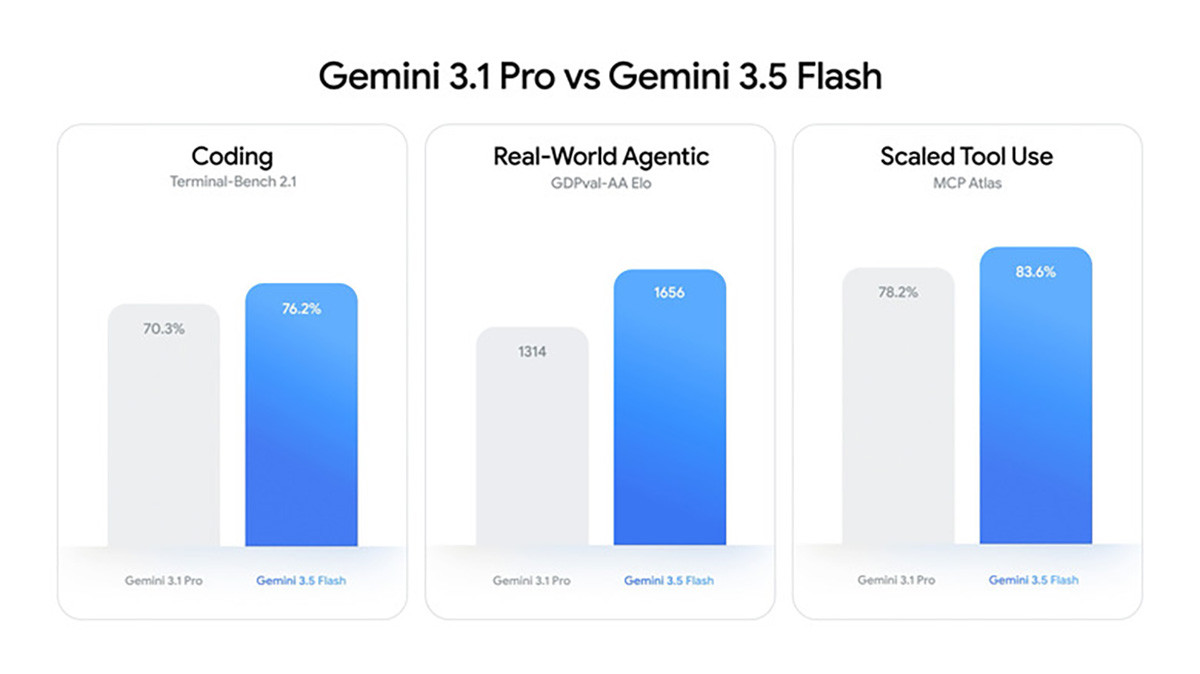
Google announced a delay for its next frontier model, Gemini 3.5 Pro, pushing the release from June to July. The company cited the need for additional feedback from early testers, suggesting the model may not have met internal quality benchmarks. While delays are common in AI development, this gives competitors like OpenAI and Anthropic additional time to capture market share. More significantly, Google released Gemini 3.5 Flash with native computer use as a built-in tool. This means a single model can now see screens and operate across browsers, mobile, and desktop environments. This is a direct competitor to Anthropic's computer use feature and Microsoft's Copilot ecosystem. For developers, this opens up new possibilities for automation, testing, and workflow integration. The computer use capability is available immediately in Gemini 3.5 Flash, making it one of the first production-ready agentic AI models. Enterprises should evaluate Gemini 3.5 Flash for tasks that require GUI interaction, such as data entry, form filling, and cross-application workflows. The delay of Gemini 3.5 Pro may be frustrating, but the Flash release is a meaningful step forward for practical agentic AI.
Meine Einschätzung: Delays happen, but the real news is Gemini 3.5 Flash getting native computer use. That's a direct competitor to Anthropic's computer use and Microsoft's Copilot. The race for agentic AI is heating up.
Qualcomm Acquires Modular for $3.9 Billion
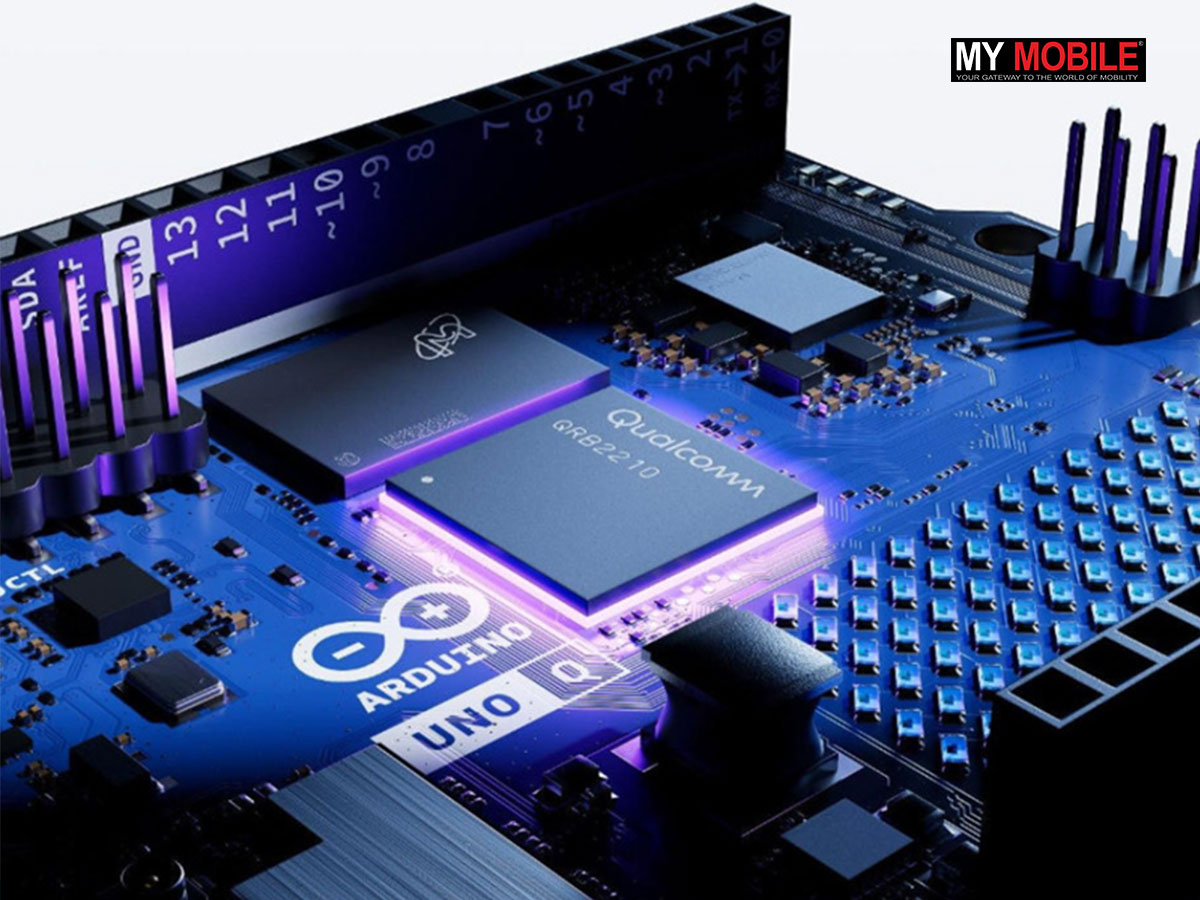
Qualcomm announced the acquisition of Modular for $3.9 billion, bringing chip-agnostic software that lets developers write AI applications once and run them across different hardware. This is a strategic move to enter the data center market, which has been dominated by Nvidia and Intel. Qualcomm also announced Dragonfly C1000 CPUs with Meta as launch customer and a new High Bandwidth Compute chip for Microsoft. The Modular acquisition solves a key problem for AI developers: vendor lock-in. Currently, optimizing AI workloads for specific hardware (Nvidia CUDA, AMD ROCm, Google TPU) requires significant engineering effort. Modular's software abstracts this complexity, allowing developers to target multiple hardware platforms with a single codebase. For enterprises, this means greater flexibility in choosing hardware providers and potentially lower costs through competition. The acquisition also positions Qualcomm as a serious contender in the data center AI market, challenging Nvidia's dominance. Developers should evaluate Modular's toolchain for their AI deployment pipelines, especially if they are considering multi-cloud or hybrid strategies. The era of hardware-specific AI development may be ending.
Meine Einschätzung: Qualcomm is serious about breaking into the data center. This acquisition makes their hardware play viable by solving the portability problem. Developers should watch for simpler multi-cloud AI deployments.
Deep Dive
Building Resilient AI Dependencies in a Volatile Regulatory Environment
Today's news that the US government pulled Anthropic's frontier models from public access is a wake-up call for every organization building on top of AI APIs. If you've built critical workflows around a single model provider, you now face immediate operational risk. The days of treating AI models as stable, always-available utilities are over. Governments are increasingly treating frontier AI as a strategic asset, and that means models can be restricted, delayed, or removed without warning. The first step to building resilience is diversifying your model providers. Don't rely on a single API for critical workflows. Identify at least two alternative models that can handle your core tasks. For text generation, consider OpenAI, Anthropic, Google, and open-source alternatives like Llama or Mistral. For code generation, evaluate multiple providers. The second step is designing for model portability. Use abstraction layers that let you swap models without rewriting your application. Libraries like LangChain, LlamaIndex, and the new AI SDK 7 from Vercel can help. Define your prompts and workflows in a way that's provider-agnostic. The third step is considering on-premise or self-hosted models for sensitive or critical workloads. Open-source models like NousResearch's hermes-agent or Mistral's OCR 4 can run on your own infrastructure, giving you full control. This may require upfront investment in hardware, but it eliminates dependency on external APIs. The fourth step is monitoring the regulatory landscape. The EU AI Act, US executive orders, and other regulations are creating a patchwork of rules that will affect which models are available in which jurisdictions. Build compliance checks into your deployment pipeline. Finally, negotiate flexible contracts with model providers. Include clauses that address service disruptions, model deprecation, and price changes. The goal is to build an AI stack that can survive any single provider failure or regulatory action. The organizations that treat AI as a commodity rather than a dependency will be the ones that thrive.
Build your AI stack like it could be taken away tomorrow, because today it was.