Sunday — June 28, 2026
Automatisiert mit einem lokalen KI-Modell erstellt, ohne redaktionelle Prüfung vor Veröffentlichung.
Government-Gated Model Access
You are a US federal AI compliance officer. Draft a 3-paragraph internal memo for a government-approved organization explaining the operational requirements for accessing OpenAI GPT-5.6 Sol, including security protocols, usage reporting, and incident response timelines. Use formal but clear language.
OpenAI GPT-5.6 Launches with Government Gate
The launch of GPT-5.6 Sol, Terra, and Luna represents a seismic shift in how frontier AI models are distributed. For the first time, a major US AI company has voluntarily—or under pressure—restricted access to its most powerful models to a small set of government-vetted organizations. Sol's 96.7% score on internal cybersecurity benchmarks is notable, but the real story is the access model. This isn't just about safety; it's about control. The US government is effectively creating a two-tier AI ecosystem: one for approved entities with access to frontier capabilities, and another for everyone else running older or weaker models. For businesses, this means the competitive moat between 'has access' and 'doesn't' just widened dramatically. If your organization isn't among the ~20 approved, you need to start the vetting process now or plan for a world where your competitors have access to models you don't. The pricing also signals a premium tier: Sol at $30/output tokens is 5x the cost of Luna, creating a natural stratification by budget and need.
Meine Einschätzung: This is the new normal. If you're not on the approved list, you're playing yesterday's game. The government just became the gatekeeper of frontier intelligence.
SpaceX Acquires Cursor for $60 Billion
The $60 billion all-stock acquisition of Anysphere by SpaceX is the kind of deal that makes you re-evaluate what 'vertical integration' means in the AI era. Cursor has become the default coding environment for AI-assisted development, with millions of developers using its IDE to generate, debug, and refactor code. SpaceX, traditionally a hardware-first company, is now betting that the future of aerospace engineering is software-defined and AI-native. The connection to xAI's Colossus infrastructure is key: Cursor's models were already trained on Colossus, and this acquisition formalizes that relationship. For developers, the immediate impact is uncertainty. Cursor's recent acquisition of Continue—an open-source coding assistant with 34,000 GitHub stars—will be shut down, with the codebase handed to the community. This suggests a move toward a more proprietary, integrated stack. The bigger picture is that AI coding tools are becoming critical infrastructure, and the companies that control the IDE, the model, and the compute will have an unassailable advantage. Expect other major players (Google, Microsoft, Amazon) to make similar moves in the next 12 months.
Meine Einschätzung: This is the weirdest and most consequential acquisition of 2026. SpaceX buying a coding IDE? Either Elon sees something we don't, or he's building a software layer for Mars-bound autonomous systems. Either way, Cursor users should brace for integration with xAI models.
Claude Mythos 5 Re-authorized After Suspension
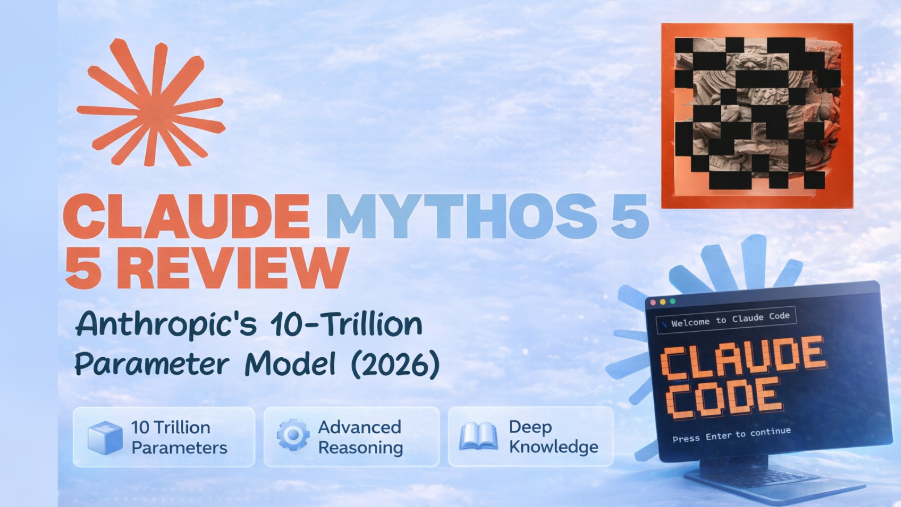
The re-authorization of Claude Mythos 5 ends a tense two-week period where one of the world's most capable AI models was effectively quarantined. The suspension was triggered by national security concerns—details remain classified, but sources suggest the model demonstrated unexpected capabilities in vulnerability discovery. Mythos 5's return to 100+ trusted organizations is a relief for those partners, but the conditions of its return likely include enhanced monitoring and reporting requirements. The fact that Claude Fable 5 remains offline suggests the government is taking a tiered approach: some capabilities are simply too risky to deploy, even to trusted partners. For organizations using Mythos 5, this is a reminder that access is a privilege, not a right. The BenchLM.ai score of 99 is impressive, but it's also a target—other models will compete for that top spot, and the government will be watching all of them. The broader implication is that AI governance is moving from voluntary commitments to active, real-time oversight. Companies should expect more suspensions, more gates, and more reporting requirements in the coming months.
Meine Einschätzung: The two-week suspension was a warning shot. Anthropic got their model back, but the message is clear: the government can and will pull access if they don't like what they see. This is the new relationship between AI labs and the state.
Hyperscalers to Spend $650B on AI in 2026
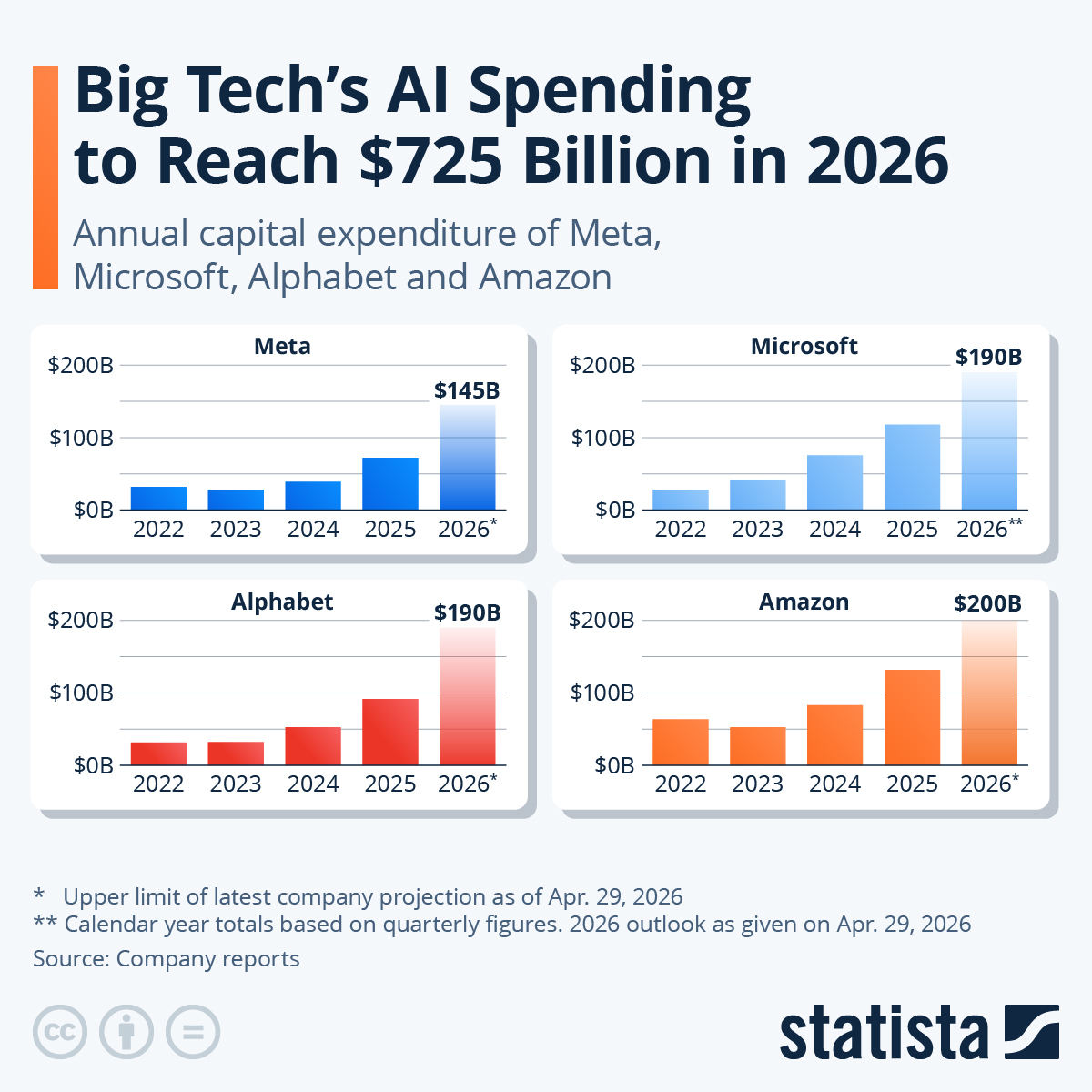
When four companies commit to spending $650 billion on a single category in one year, something fundamental has shifted in the global economy. This isn't just about building data centers; it's about rewiring the entire infrastructure of computation. The $35B AI XPV Platform from Broadcom, Apollo, and Blackstone adds a new dimension: private equity is now directly financing AI compute capacity, with a goal of enabling over 20 gigawatts by 2028. For context, 20 gigawatts is roughly the output of 20 nuclear power plants. This infrastructure buildout creates enormous demand for AI accelerators, high-bandwidth memory (HBM), custom silicon, and cooling systems. South Korea and Samsung have already announced three mega-projects to capture this demand. For startups and mid-size companies, the implication is both good and bad: good because compute capacity will eventually become more available and potentially cheaper; bad because the hyperscalers will have first access to the best hardware. The race is now between the hyperscalers building their own infrastructure and the financial consortiums building shared infrastructure. Either way, the cost of entry for frontier AI development just went up by several orders of magnitude.
Meine Einschätzung: The numbers are so large they lose meaning. $650 billion is more than the GDP of most countries. This isn't a gold rush—it's a planetary-scale industrial revolution, and the only question is who gets left behind.
US AI Incident Reporting Act Proposed
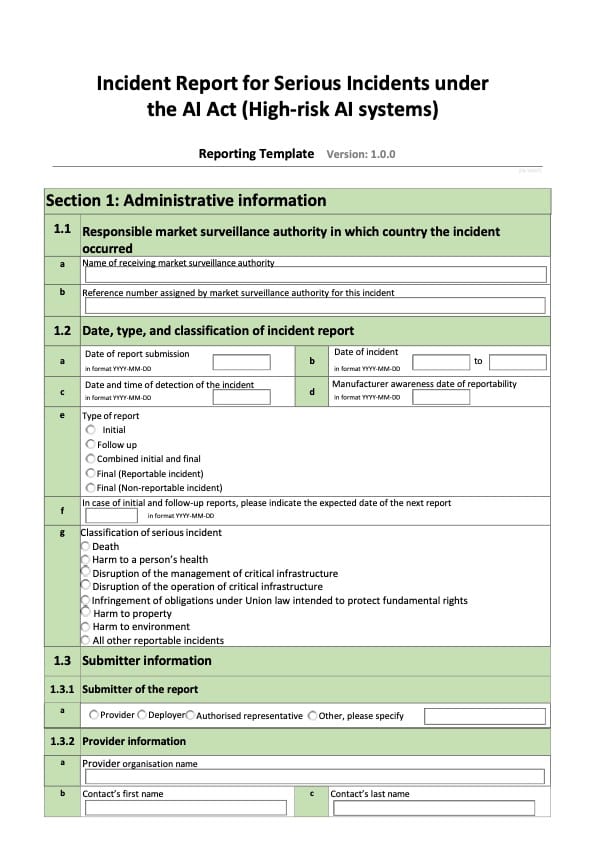
The AI Incident Reporting Act represents the most concrete step yet toward federal AI regulation. The bill's core requirement—reporting dangerous capabilities, security breaches, or safety incidents within seven days—sounds reasonable on paper, but the operational reality is brutal. For frontier AI models that can exhibit emergent behaviors, identifying what constitutes a 'dangerous capability' is itself a research challenge. The bill follows the precedent set by the order that forced Anthropic to suspend Claude Mythos 5, and it effectively codifies that kind of government intervention into law. For AI companies, this means building internal monitoring systems that can detect and classify incidents in real-time, with legal teams ready to file reports on tight deadlines. The Commerce Department will need to staff up significantly to handle these reports, creating a new regulatory apparatus. For businesses using AI models, this bill means more stability: if models are safer and incidents are reported, the risk of sudden shutdowns decreases. But it also means more overhead for model providers, costs that will likely be passed down to customers. The era of 'move fast and break things' in AI is officially over.
Meine Einschätzung: Seven days is aggressive. Most companies can't triage a major security incident in a week, let alone file a government report. This bill will force AI labs to build incident response teams that rival those at defense contractors.
Deep Dive
How to Prepare for Government-Gated Model Access
The launch of GPT-5.6 Sol with government-gated access and the re-authorization of Claude Mythos 5 under strict conditions signal a new reality: frontier AI models are becoming regulated infrastructure. If your organization wants access to these models, you need to prepare now. Here's a practical framework for getting and maintaining access. First, understand the vetting process. Government-approved organizations are typically those with existing security clearances, contracts with national security agencies, or demonstrated compliance with frameworks like FedRAMP or IL5. If you don't have these, start the application process for relevant clearances or partnerships. This can take 6-12 months, so begin immediately. Second, build the technical infrastructure for compliance. Government-gated models come with monitoring requirements: you'll need to log all inputs and outputs, implement access controls that prevent model exfiltration, and have audit trails for every query. This means deploying API gateways with logging, setting up data loss prevention (DLP) systems, and potentially air-gapping your model access from the public internet. Third, establish an incident response protocol that meets the proposed seven-day reporting window. This means having a designated security officer, a legal team familiar with AI-specific regulations, and automated systems that can detect anomalous model behavior—like unexpected capability emergence or data leakage. Practice this process quarterly with tabletop exercises. Fourth, consider the cost implications. GPT-5.6 Sol at $30 per million output tokens is expensive, and government-gated access may come with additional fees for compliance auditing. Budget for 2-3x the base model cost when planning. Finally, build redundancy. Don't rely on a single government-gated model. Maintain access to multiple approved models (Mythos 5, GPT-5.6 variants) and have fallback plans for less capable but unrestricted models. The government can suspend access at any time, as Anthropic learned. The organizations that survive and thrive in this new era will be those that treat model access as critical infrastructure, not just another API key.
The gate is closing on frontier AI. Get on the right side of it, or get left behind.