Monday — June 29, 2026
Automatisiert mit einem lokalen KI-Modell erstellt, ohne redaktionelle Prüfung vor Veröffentlichung.
AI Agent ROI Pitch
You are a business consultant. Write a 3-paragraph executive summary for a CFO explaining why investing in AI agents for customer service yields a 171% average ROI, with year-over-year growth from 41% to 124%. Use data from the latest enterprise deployments and cite specific use cases like contract automation saving $5 million.
Enterprise AI Agent ROI Hits 171% Average
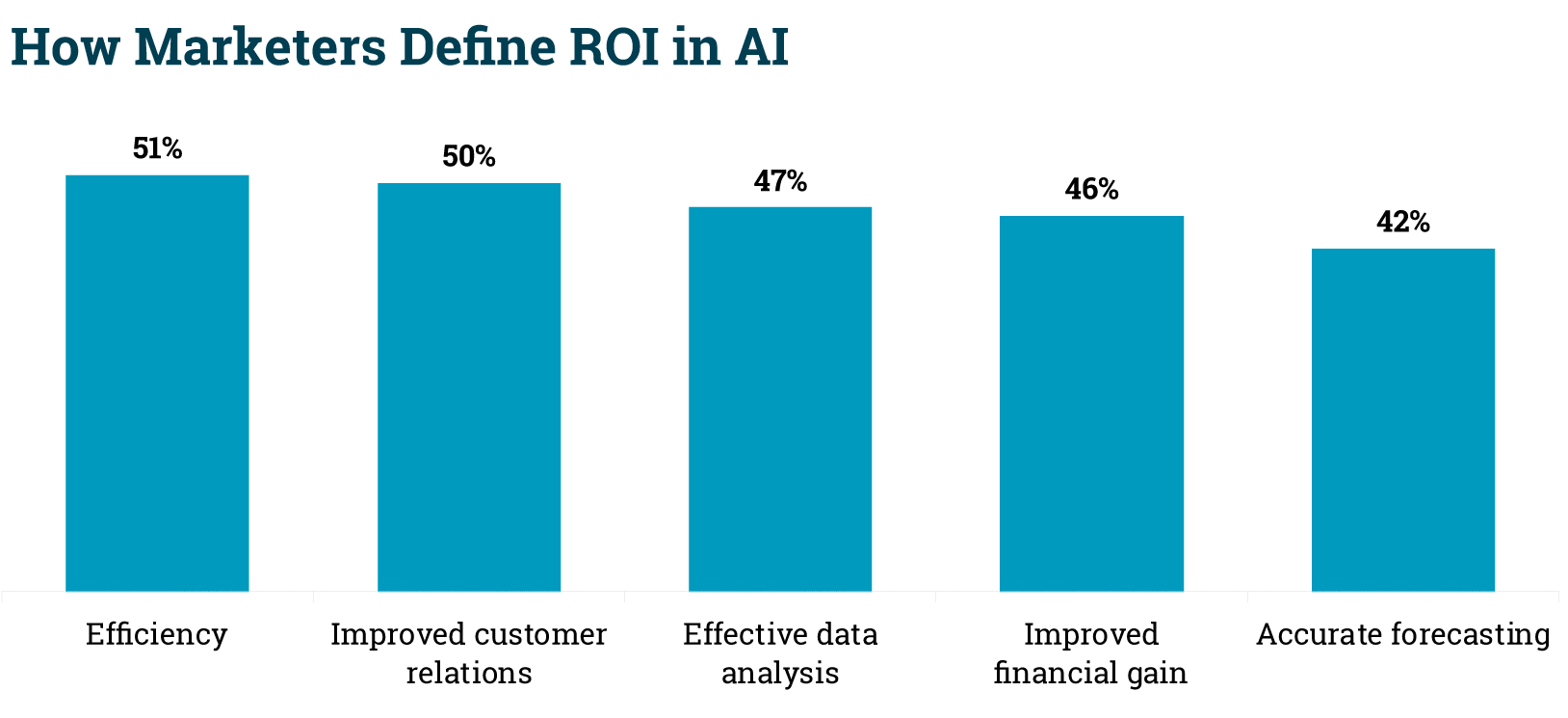
The numbers are finally here, and they're staggering. Enterprise AI agent deployments now average a 171% return on investment, according to aggregated data from multiple verified sources. Customer service use cases lead the pack, delivering 41% ROI in the first year, accelerating to 87% in year two, and crossing 124% by year three. Salesforce's Agentforce, a key example, now resolves 84% of cases without human intervention — meaning the agents aren't just assisting, they're closing the loop. Legal departments are also seeing massive wins: one company reported $5 million in savings through contract automation alone. The pattern is clear: AI agents don't just reduce costs — they compound value over time as they learn and integrate deeper into workflows. For decision-makers, the takeaway is twofold. First, start with a high-volume, low-complexity use case like customer service or contract review to capture early wins. Second, build measurement frameworks from day one — track resolution rates, time saved, and cost per interaction. The data shows that agent performance improves with scale, so early adopters who invest in measurement and iteration will pull ahead. The 171% average is a floor, not a ceiling, for those who treat agents as a strategic asset rather than a one-off experiment.
Meine Einschätzung: If you're not tracking ROI by year on your AI agents, you're flying blind. The compounding returns are real — but only if you measure them.
OpenAI Business Revenue Now Over 40% of Total
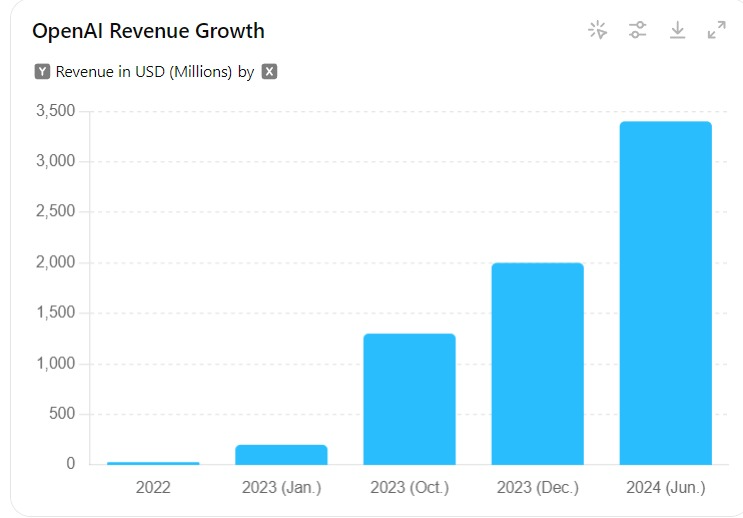
OpenAI's enterprise pivot is paying off in a big way. The company now derives over 40% of its revenue from business customers, a dramatic shift from its consumer-driven roots. The scale is staggering: its APIs process more than 15 billion tokens per minute, and Codex — its coding assistant — has grown to 3 million weekly active users. These aren't just vanity metrics. HP Inc.'s deployment shows the real-world impact: one engineer processed 122 pull requests across 43 projects in a matter of weeks, and a security team remediated multiple bugs in a single day, saving an estimated 82 hours of security-team capacity per week. That's the equivalent of two full-time security engineers freed up for higher-value work. For enterprises, this signals a few things. First, the cost-per-token is dropping while value-per-token is rising — the ROI case for API integration is stronger than ever. Second, coding assistants like Codex are moving from 'nice to have' to 'competitive necessity' for engineering teams. If your developers aren't using AI-assisted code review and pull request processing, they're operating at a disadvantage. The 15 billion tokens per minute also hints at infrastructure implications: companies that build their own AI stacks will need to match OpenAI's latency and throughput, or risk falling behind. The message is clear: the enterprise AI race is on, and OpenAI is running ahead.
Meine Einschätzung: OpenAI is no longer a consumer toy — it's an enterprise engine. The 15 billion tokens per minute stat should make every cloud vendor nervous.
Ericsson and Striding AI Treat Agents as Infrastructure
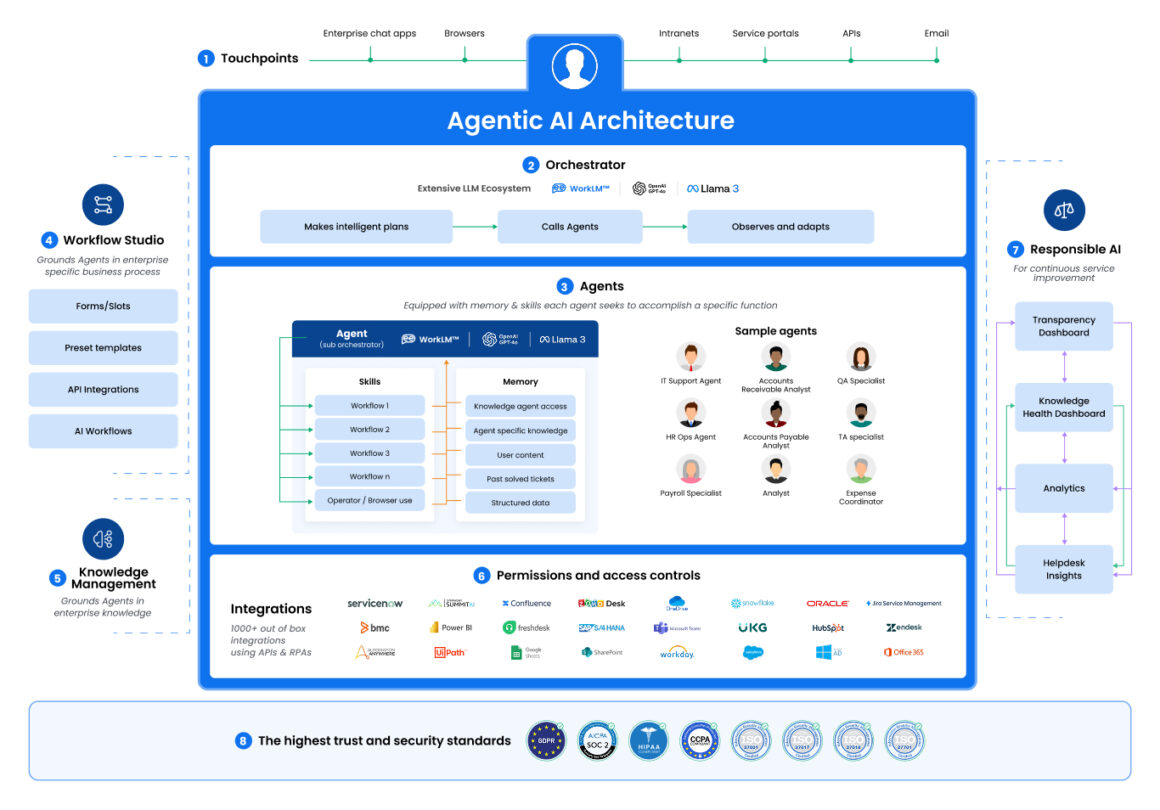
Two major announcements today signal a fundamental shift in how enterprises think about AI. Ericsson has embedded an agentic AI layer directly into its OSS/BSS (Operations Support Systems / Business Support Systems) stack — the backbone of telecom network management. Instead of bolting on AI as a separate tool, Ericsson is treating AI agents as core infrastructure, unifying customer journeys, service lifecycles, and network assurance. This means agents can autonomously manage network issues, optimize routing, and handle customer interactions without human handoffs. Meanwhile, Striding AI is taking a similar approach in physical retail. Their robotic foundation systems integrate foundation models with robotic perception, control systems, and data infrastructure, using human-in-the-loop reinforcement learning for continuous improvement. The goal is to make physical automation — like restocking shelves or managing inventory — as adaptable as software automation. The common thread is architecture: both companies are building closed-loop systems where agents learn, act, and improve without requiring new deployments. For enterprise architects, this is a wake-up call. The days of 'deploy an agent, measure it, then redeploy' are ending. The winners will embed agentic capabilities into their core systems — ERP, CRM, OSS/BSS — so agents can act on live data, learn from outcomes, and adapt in real-time. If you're still treating AI as a separate project or department, you're missing the infrastructure shift. Start by auditing your core systems for integration points where agents could replace manual workflows or decision trees.
Meine Einschätzung: The shift from 'AI as feature' to 'AI as infrastructure' is the most important architectural trend of 2026. If your agents aren't baked into the stack, you're already behind.
Google Daily Brief and Gmail Live Launch
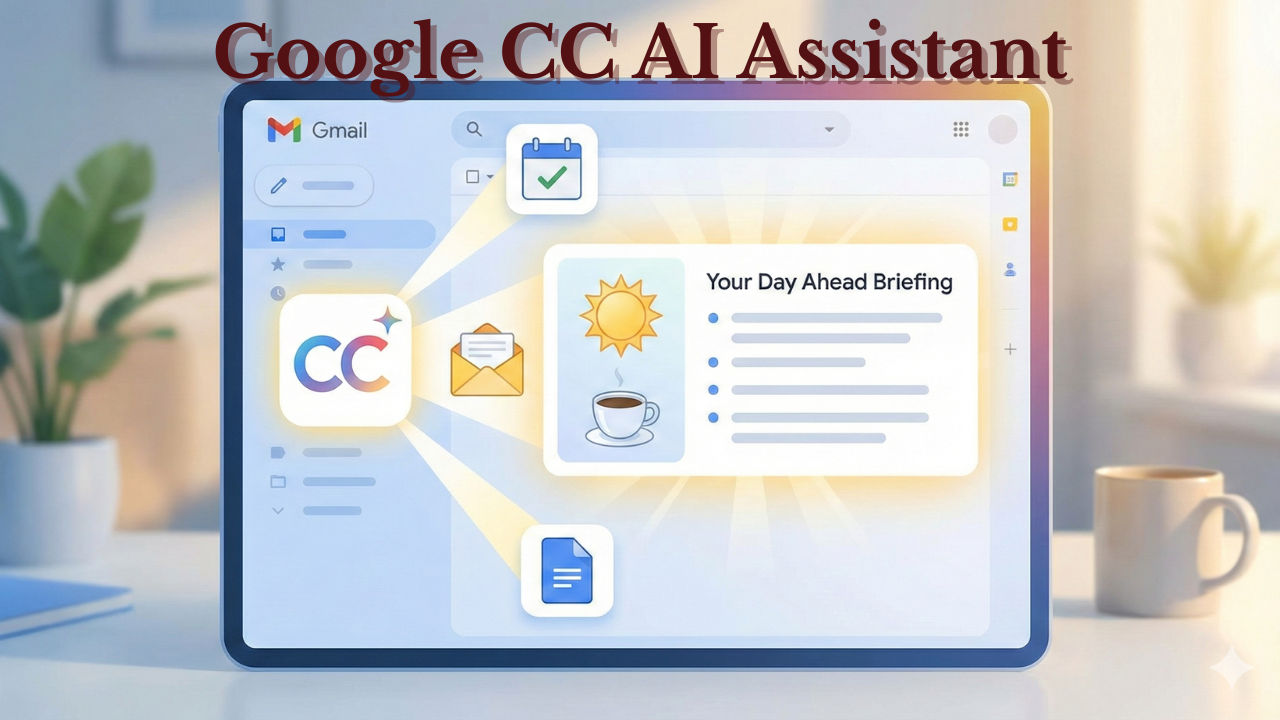
Google is making a dual move to reclaim the productivity AI space with two new launches. Daily Brief is an AI personal assistant that scans your emails and calendar to produce a sorted, summarized list of daily commitments — meetings, deadlines, action items — delivered as a morning brief. Gmail Live goes a step further, adding native voice integration that lets users verbally query their inboxes: 'Show me emails from Sarah about the Q3 budget' or 'What's the status on the Acme deal?' Both products are designed to combat the growing problem of inbox overload, which studies show costs knowledge workers an average of 2.5 hours per day. For context, Microsoft has been pushing similar capabilities through Copilot in Outlook and Teams, and startups like Superhuman and Shortwave have built entire products around AI-powered inbox management. Google's advantage is scale — Gmail has over 1.8 billion users — but the challenge is integration. Daily Brief and Gmail Live need to work seamlessly with Google Calendar, Google Tasks, and third-party tools to deliver real value. The risk is that they become siloed features that users try once and abandon. For knowledge workers, the immediate takeaway is to test these tools if you're a Google Workspace user. Set up Daily Brief first — it's lower friction — and use Gmail Live for high-volume querying during peak hours. If the integration holds, these could save 30-60 minutes per day. If not, the market for third-party inbox AI tools remains wide open.
Meine Einschätzung: Google is finally catching up to the 'AI inbox' trend, but the real question is whether these tools integrate with the rest of the productivity stack or remain isolated features.
Deep Dive
How to Measure AI Agent ROI by Year (and Why It Matters)
The 171% average ROI figure from today's news is impressive, but it's meaningless without understanding how to measure it. Most enterprises still treat AI agents as cost centers, tracking only deployment costs and ignoring the compounding value over time. The data shows that customer service agents deliver 41% ROI in year one, 87% in year two, and over 124% by year three — meaning the real value comes from learning and integration, not initial deployment. To measure this in your own organization, start with three metrics: resolution rate (percentage of cases handled without human escalation), time saved (hours per week reclaimed by human agents), and cost per interaction (including agent compute, human oversight, and training overhead). Track these monthly and calculate ROI as (value of time saved + cost reduction) / (deployment + operational costs). The key insight from the data is that ROI improves over time because agents learn from feedback and integrate deeper into workflows. For example, an agent that resolves 60% of cases in year one might reach 84% by year three — like Salesforce's Agentforce — because it accumulates training data and edge cases. To accelerate this, implement a feedback loop: every time a human agent overrides or corrects an AI agent, log that interaction and retrain the model weekly. Also, expand the agent's scope incrementally — start with one use case (e.g., password resets), then add adjacent ones (e.g., billing inquiries) as the agent proves reliability. The biggest mistake companies make is measuring ROI once and moving on. Instead, build a dashboard that updates monthly, showing ROI by year, resolution rate trends, and cost per interaction. Share this with leadership to justify scaling. The 171% average is achievable, but only if you measure, iterate, and expand systematically.
Treat AI agents like infrastructure, measure ROI by year, and build feedback loops — the compounding returns are real.