Friday — July 03, 2026
Automatisiert mit einem lokalen KI-Modell erstellt, ohne redaktionelle Prüfung vor Veröffentlichung.
Agentic Code Reviewer
You are a senior software engineer reviewing a pull request. Analyze the diff for bugs, security vulnerabilities, and performance issues. Provide a concise list of findings with severity and suggested fixes, and flag any code that could break under concurrent execution.
Anthropic Ships Sonnet 5, Restores Fable 5
Anthropic made two moves that reshape the playing field for AI builders. First, Claude Sonnet 5 became the default model on June 30 for all Free and Pro users. It matches Opus 4.8 on reasoning, tool use, and coding, but at introductory pricing of $2 per million input tokens and $10 per million output tokens through August 31. That's roughly 10x cheaper than Opus-class models for comparable quality. Second, Claude Fable 5 was fully restored globally on July 1 after the U.S. lifted export controls that had restricted its availability. Anthropic added new classifier safeguards to address the vulnerabilities that led to its original removal. The Remote Labor Index benchmark shows Fable 5 leading all public models with a 16.1% success rate on 240 real remote-work projects across 23 domains. Mythos 5 remains limited to approved US organizations only. For builders, this means you now have a frontier-class model (Fable 5) available worldwide, plus a cost-effective daily driver (Sonnet 5) that handles most tasks. The API pricing window through August is likely a promotional hook — lock in usage patterns now before prices normalize. If you've been waiting to build agentic workflows on Anthropic, the window is wide open.
Meine Einschätzung: Sonnet 5 is the new sweet spot for builders — near-best performance at a fraction of the cost. Fable 5's return is huge for anyone needing frontier reasoning on remote work tasks.
Microsoft Drops $2.5B on Enterprise AI Unit
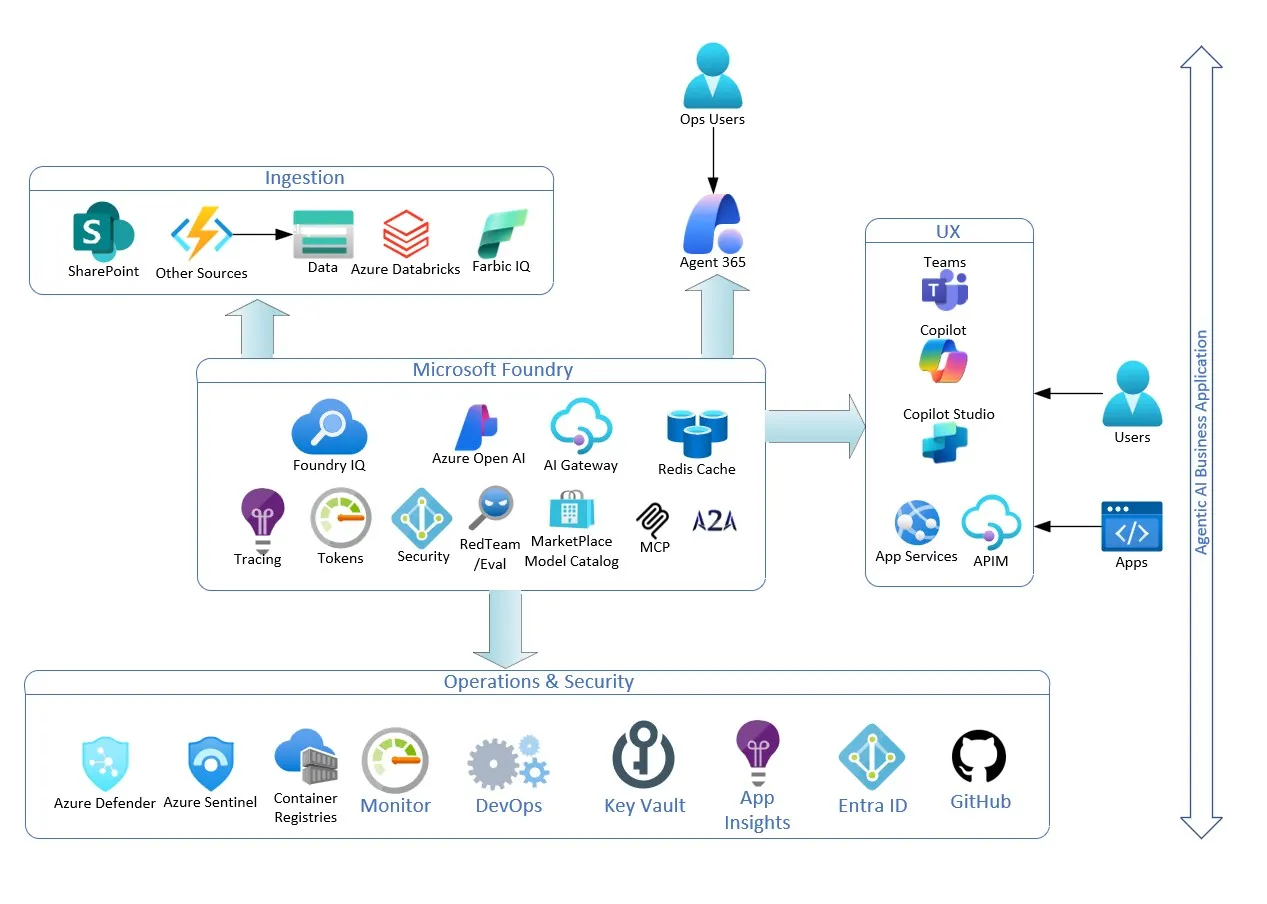
Microsoft announced Frontier Company, a dedicated operational business unit with $2.5 billion in committed investment and 6,000 AI specialists. This is not a cloud reseller play — it's a consulting and deployment arm designed to build custom AI solutions for enterprises. The unit provides direct access to Microsoft's AI toolchain, including Azure AI, Copilot stack, and specialized engineering teams. For builders, this changes the calculus on enterprise AI adoption. Instead of navigating Azure's sprawling ecosystem alone, you now have a single point of contact with deep expertise. The $2.5B covers not just infrastructure but also bespoke solution development, change management, and ongoing support. This is Microsoft's answer to the criticism that enterprise AI is too hard to deploy at scale. They're essentially saying: 'Give us the problem, we'll build the solution.' If you're building AI products for enterprise customers, expect Frontier Company to become both a partner and a competitor. The unit's 6,000 experts will likely set new benchmarks for deployment speed and reliability. For internal teams, this is the moment to request a Frontier Company engagement if you're stuck in pilot purgatory.
Meine Einschätzung: This is Microsoft putting its full weight behind AI consulting and deployment, not just selling Azure credits. If you're an enterprise builder, this is the signal to engage Microsoft for bespoke solutions.
Open-Source Agent Tools Surge: Strix, DwarfStar, Agents-A1
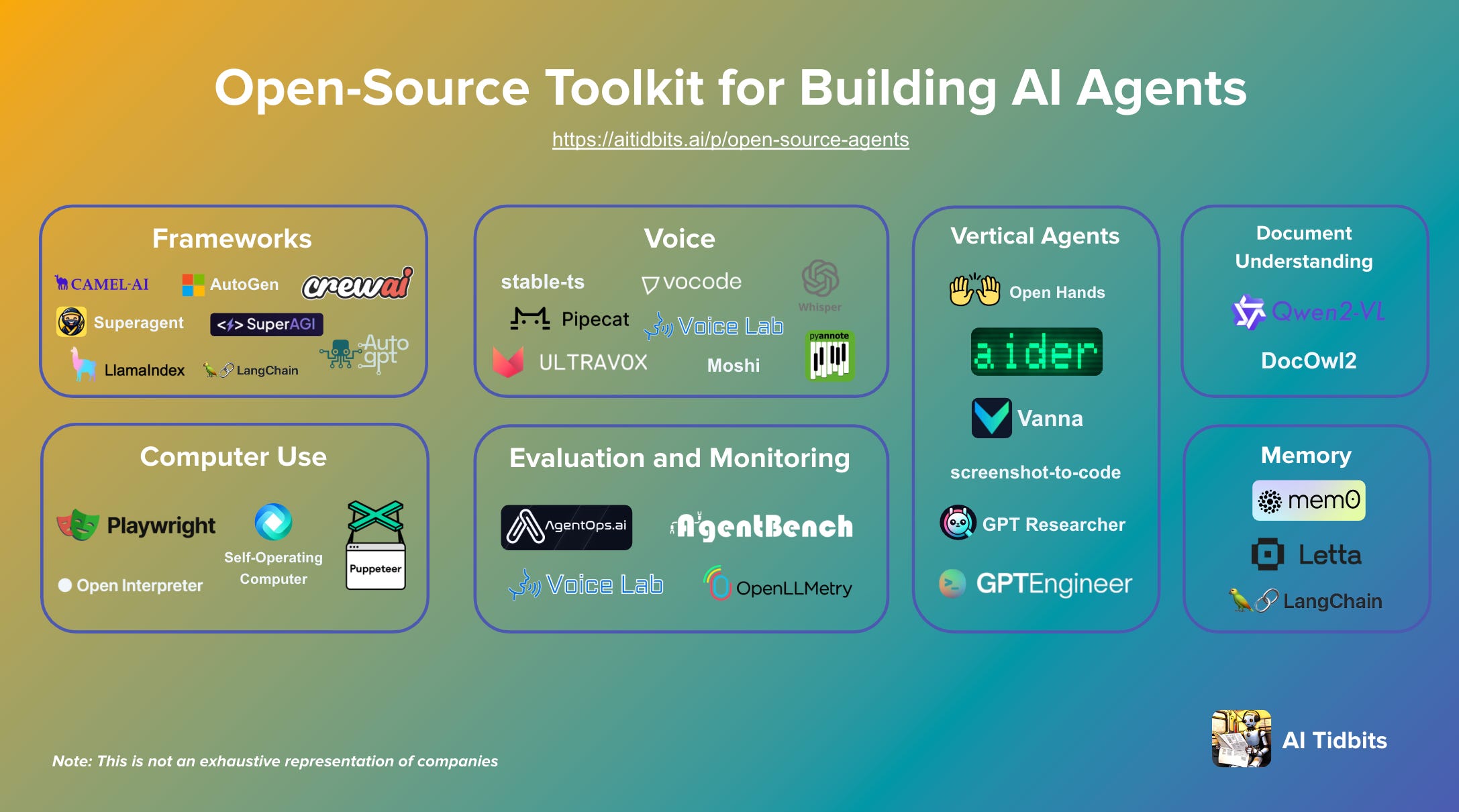
Three open-source releases this week deserve your attention. First, Strix is an AI-powered penetration testing tool that identifies and resolves application vulnerabilities. It's the 2nd most trending GitHub project for July 2026 with 2,500 stars this month alone. For builders, this means you can integrate autonomous security scanning into your CI/CD pipeline without expensive commercial tools. Second, antirez released DwarfStar (ds4), a small native inference engine optimized for DeepSeek V4 Flash and PRO models. It supports Metal, CUDA, and ROCm backends, and includes integrated coding agent capabilities. It's currently in beta but already supports fast local inference on consumer hardware. Third, the Agents-A1 35B Mixture-of-Experts model now has quantized variants released on July 2. This model was built for long-horizon search, engineering, scientific research, and tool-calling. The quantized versions enable efficient deployment on Macs and other consumer hardware. The pattern is clear: open-source agentic models and tools are catching up to proprietary offerings. Strix gives you security automation, DwarfStar gives you local DeepSeek inference with coding agents, and Agents-A1 gives you a capable agentic model that runs on a MacBook. If you've been relying solely on cloud APIs for agentic workloads, now is the time to evaluate self-hosted alternatives for cost, latency, and data privacy reasons.
Meine Einschätzung: The open-source agentic stack is maturing fast. If you're not experimenting with these tools, you're falling behind on cost-effective, self-hosted agent capabilities.
Neo Launches with $30M for AI-Native Work Platform
Bhavin Turakhia, the serial entrepreneur behind Zeta and Flock, launched Neo with $30 million of his own capital. Neo is positioned as an AI-native work platform that unifies work, knowledge, and execution into a single connected system. Unlike traditional productivity suites that bolt on AI features, Neo is built from the ground up with AI as the core orchestrator. The platform handles task management, document collaboration, communication, and automated execution via AI agents. Turakhia's bet is that the current fragmented landscape of Slack, Notion, Asana, and dozens of other tools will be replaced by a single AI-native platform that understands context across all work domains. The $30M self-funding signals deep conviction and avoids the pressure of VC timelines. For builders, Neo represents both a potential platform to build on top of and a competitor to existing workflows. If Neo succeeds, it could become the operating system for AI-augmented work, similar to how Salesforce became the OS for sales. Early adopters should evaluate Neo's API and agent integration capabilities. The platform is likely to offer extensibility for custom AI agents, making it relevant for developers who want to embed their tools into a unified work environment.
Meine Einschätzung: Turakhia has a track record of building billion-dollar companies (Zeta, Flock). This is a serious bet that the future of work is AI-native, not AI-augmented. Watch this space.
Zoom Buys Common Room for AI GTM Intelligence
Zoom announced the acquisition of Common Room, an AI-native Go-to-Market intelligence platform. Common Room aggregates buyer signals from across the web — community discussions, support tickets, product usage, and public data — and uses AI to identify buying intent and recommend next actions. Zoom plans to integrate this into its Revenue Accelerator platform, adding unified buyer intelligence and AI revenue agents that can autonomously engage prospects. This is a strategic move that positions Zoom beyond video conferencing into the AI-powered CRM and revenue intelligence space. For builders, this means Zoom's platform will soon offer APIs for buyer signal ingestion, intent scoring, and automated outreach. If you're building sales tools or AI agents for revenue teams, Zoom's acquisition signals that the battle for AI GTM is heating up. The Common Room team brings deep expertise in community-led growth and signal-based selling. Expect Zoom to release developer tools around this acquisition within the next quarter. For now, existing Common Room customers should watch for migration paths and API changes.
Meine Einschätzung: Zoom is quietly building an AI revenue stack. If you're in B2B sales or marketing, expect Zoom to become a major player in AI-driven go-to-market intelligence.
Deep Dive
How to Build Persistent Agent Memory with Couchbase AI Data Plane
One of the biggest challenges in moving AI agents from prototype to production is memory. Most agents today are stateless — they start fresh with every conversation or task. Couchbase's AI Data Plane, now generally available, addresses this by providing persistent agent memory, real-time context retrieval, and consistent data access across cloud, edge, and lakehouse environments. Here's how to think about building persistent memory for your agents.
First, understand the memory hierarchy. Episodic memory stores past interactions (conversations, task histories). Semantic memory stores facts and knowledge extracted from those interactions. Procedural memory stores how to perform tasks (tool usage patterns, workflows). Couchbase's AI Data Plane supports all three by combining a document database (for episodic and procedural memory) with vector search (for semantic memory retrieval).
Second, design your memory schema. Each agent should have a unique ID, and memories should be stored as structured documents with timestamps, context tags, and embedding vectors. For example, a customer support agent might store: {agent_id, timestamp, conversation_id, user_intent, resolution, embedding}. When a new query comes in, retrieve the top-5 similar memories via vector search and inject them into the agent's prompt as few-shot examples.
Third, implement a memory consolidation loop. Raw conversation logs are noisy. Run periodic batch jobs that summarize, deduplicate, and compress memories. Extract key facts and store them in a separate semantic memory collection. This prevents context window overflow and improves retrieval accuracy. Couchbase's Change Data Capture (CDC) can trigger these consolidation workflows in real-time.
Fourth, handle memory conflicts and decay. Not all memories are equally important. Implement a scoring system based on recency, frequency, and relevance. Old or low-value memories should be archived or deleted. Couchbase's TTL (time-to-live) features can automatically expire stale memories. For conflicting facts (e.g., a user's preference changed), implement a versioning system where the most recent memory takes precedence.
Finally, test with realistic workloads. The Couchbase AI Data Plane promises sub-10ms latency for memory retrieval. But your mileage depends on schema design, indexing strategy, and query patterns. Start with a small set of agents and scale incrementally. Use the platform's observability tools to monitor memory retrieval accuracy and latency. The goal is to make agent memory feel instantaneous — the user shouldn't wait longer than a typical API call to get context-aware responses.
Practical next step: Set up a Couchbase cluster (free tier available), create a bucket for agent memories, and write a simple agent that stores and retrieves conversation context. Test with 100 conversations, then scale to 10,000. Measure retrieval latency and accuracy. This hands-on experience will inform your architecture decisions for production agent systems.
The only constant in AI is that the frontier moves while you're reading this. Build with what works today, but always have one eye on the open-source stack that's catching up fast.