Sunday — July 05, 2026
Automatisiert mit einem lokalen KI-Modell erstellt, ohne redaktionelle Prüfung vor Veröffentlichung.
Context Window Strategy
You are an AI strategy consultant. Given the launches of Claude 4 Opus (2M tokens) and Gemini 2.5 Ultra (3M tokens), analyze three enterprise use cases where this context length unlocks entirely new workflows that were impossible before. For each use case, provide a one-paragraph implementation plan and a risk assessment. Output in a structured table format.
Claude 4 Opus vs Gemini 2.5 Ultra: Context War
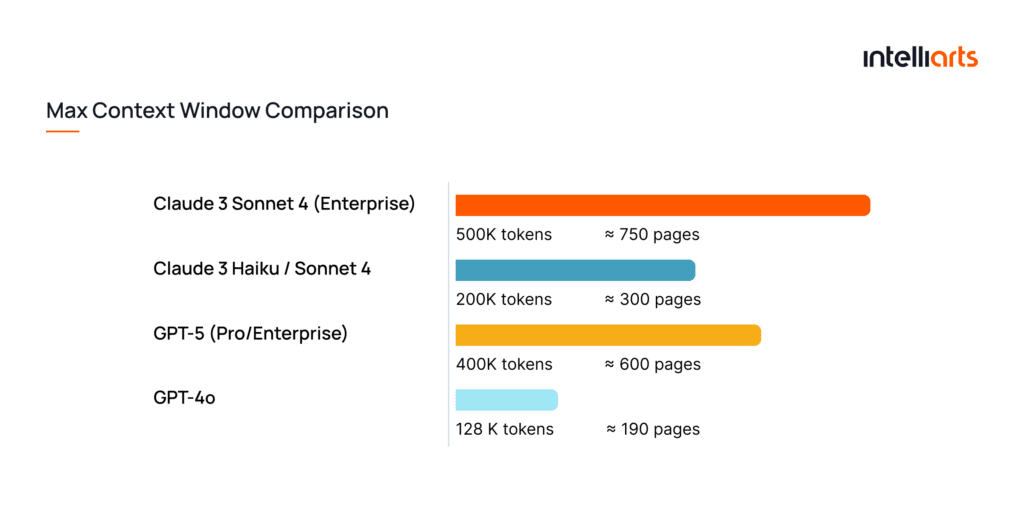
The context window race just went nuclear. Anthropic kicked things off with Claude 4 Opus, their most powerful model to date, achieving 89.7% on MMLU-Pro and shipping a 2 million token context window. That's enough to process the entire Harry Potter series seven times over in a single prompt. More importantly, they launched Computer Use 2.0, an API that lets Claude control desktop applications directly — think automated data entry, form filling, and multi-step workflows that previously required brittle RPA scripts.
Google responded within hours with Gemini 2.5 Ultra, pushing the boundary to 3 million tokens. That's roughly 4.5 million words or about 9,000 pages of text. For context, that's the entire Federal Register for a year, or all of Wikipedia's featured articles. Google is betting that enterprise customers will pay a premium for the ability to dump their entire codebase, documentation, and conversation history into a single prompt.
Here's what matters: context length isn't just a number. Real-world performance degrades as you approach the limit, and both models use sophisticated attention mechanisms to maintain coherence. Anthropic claims Claude 4 Opus maintains accuracy at 95% of its context window, while Google hasn't published similar benchmarks for Gemini 2.5 Ultra at full capacity.
For builders, the practical implication is clear: you can now build applications that maintain conversation state for weeks, analyze entire books in one shot, or process multi-hour meeting transcripts without chunking. The Computer Use 2.0 API is arguably the more interesting innovation — it turns Claude from a chatbot into an autonomous desktop agent that can manipulate any software.
Pricing is competitive. Claude 4 Opus is available now in the Anthropic console and AWS Bedrock. Gemini 2.5 Ultra is rolling out via Google AI Studio and Vertex AI. Both are priced at a premium over their predecessors, but the capability jump justifies it for enterprise use cases involving document analysis, legal review, or codebase understanding.
Your move: If you're building applications that require sustained context over long sessions, test both. If you need desktop automation, Claude 4 Opus with Computer Use 2.0 is the clear winner today. If you're processing massive documents, Gemini's 3M token window gives you headroom.
Meine Einschätzung: This is the AI equivalent of the iPhone vs Android spec war, but for memory. Both are impressive. The real question is whether your workflow actually needs 3M tokens or if you're just paying for bragging rights.
US Lifts Restrictions on Anthropic's Top Models
The regulatory landscape for frontier AI just shifted dramatically. On July 4, the US Department of Commerce lifted all restrictions on Anthropic's most advanced AI systems — Claude Fable 5 and Mythos 5. These models had been under a contentious regulatory standoff for months, with the government citing national security concerns about their advanced capabilities.
The lifting of restrictions is a watershed moment. It signals that the US government is moving toward a more permissive regulatory framework for frontier AI, at least for domestic companies. This stands in stark contrast to the EU AI Act's approach, which imposes strict obligations on general-purpose AI models starting August 2, 2026.
Here's the catch: Claude Fable 5's billing structure changes on July 7, just three days from now. This suggests Anthropic anticipated the restriction lift and has already planned a pricing overhaul. Early adopters should lock in current rates before the change takes effect.
For enterprise customers, this means you can now deploy Anthropic's most capable models without legal uncertainty. Mythos 5, in particular, has been rumored to have advanced reasoning capabilities that outperform GPT-5 on certain benchmarks. The question is whether your organization has the infrastructure and governance in place to handle models this powerful.
The practical implications are immediate: if you've been waiting on the sidelines due to regulatory risk, the wait is over. Start evaluating Fable 5 and Mythos 5 for your most complex use cases — but do it before July 7 if you want to avoid the billing change.
Meine Einschätzung: This is the biggest regulatory win for AI since... ever. The US government just signaled that frontier models can be deployed without export controls, but the July 7 billing change on Fable 5 means Anthropic is already optimizing for revenue, not access.
Meta Open-Sources Llama 4 405B, Meituan Drops 1.6T Model
Open-source AI just got a massive injection of horsepower from two very different players. Meta released Llama 4 405B Instruct on Hugging Face, continuing their strategy of releasing increasingly capable open-weight models. At 405 billion parameters, it's one of the largest openly available models and is designed for instruction following and chat applications.
But the bigger surprise came from Meituan, the Chinese food delivery and services giant. They open-sourced LongCat-2.0 under the MIT license — a staggering 1.6 trillion parameter mixture-of-experts model. That's 1,600 billion parameters, making it one of the largest models ever released to the public. More importantly, it was trained entirely on domestic Chinese chips, demonstrating that China's semiconductor ecosystem can produce competitive hardware for AI training.
LongCat-2.0's performance is no joke. It narrowly surpasses GPT-5.5 on SWE-bench Pro, a rigorous software engineering benchmark, and previously topped OpenRouter's leaderboard for several weeks. The MIT license means you can use it for commercial applications, modify it, and distribute it freely.
Here's the reality check: a 1.6 trillion parameter model requires massive infrastructure to run. We're talking hundreds of GPUs and terabytes of VRAM. Most teams won't be able to deploy LongCat-2.0 directly. The significance is more strategic — it proves that open-source can match, and in some cases exceed, closed-source frontier models, and that Chinese AI development isn't dependent on advanced Western chips.
For practical builders, Llama 4 405B is the more immediately useful release. It's large but deployable on multi-GPU setups, has strong community support through Meta, and comes with a well-documented instruct version. Use it for self-hosted deployments where data privacy is paramount, or as a base for fine-tuning on domain-specific tasks.
LongCat-2.0 is a signal. If you're building infrastructure for the future, start planning for models of this scale. The MIT license means you can experiment with distillation or quantization to create smaller, more practical versions. And if you're sourcing hardware, take note that Chinese chips can now train frontier models — this has implications for supply chain planning and geopolitical risk management.
Meine Einschätzung: Two different philosophies of open-source: Meta gives you a well-supported, battle-tested model you can actually deploy. Meituan gives you a 1.6T monster that proves Chinese chips can compete but is probably too large for 99% of teams to run.
Qualcomm Buys Modular for $3.9B to Fight Nvidia
The AI hardware landscape just shifted in a major way. Qualcomm acquired Modular for $3.9 billion, and if you don't know why that matters, you're about to learn. Modular's MAX product is a hardware-agnostic AI runtime that lets you run inference across Nvidia, AMD, and Qualcomm chips without rewriting your code. It's the closest thing we have to a universal AI runtime.
This is a direct assault on Nvidia's proprietary CUDA ecosystem. For years, Nvidia has dominated AI hardware because their CUDA platform is the de facto standard for AI development. If you build on CUDA, you're locked into Nvidia hardware. Modular's MAX breaks that lock — you write your model once, and it runs on any chip.
For builders, this is huge. It means you can optimize for cost, availability, and performance rather than being forced to use Nvidia hardware because that's what your code supports. If AMD offers better pricing on their MI300X, you can switch. If Qualcomm's upcoming AI chips offer better power efficiency for edge deployment, you can use them. No vendor lock-in.
The $3.9 billion price tag tells you how serious Qualcomm is about this. They're not just buying a technology — they're buying a position in the AI infrastructure stack. With Modular's runtime, Qualcomm can now offer a complete solution: their chips plus the software to make them work seamlessly with existing AI models.
What this means for you: if you're building AI applications, start evaluating hardware-agnostic runtimes. Modular's MAX is now backed by one of the largest chip companies in the world, which means it will get serious investment and support. Test your models on AMD and Qualcomm hardware. Build your deployment pipeline to be runtime-agnostic. The era of Nvidia-only AI is ending.
For enterprise infrastructure planners, this acquisition should trigger a review of your hardware procurement strategy. If you've been exclusively buying Nvidia GPUs, you now have a viable alternative path. Diversify your hardware stack to reduce risk and improve negotiating leverage with all vendors.
Meine Einschätzung: This is the most important infrastructure move of the year. Nvidia's CUDA moat just got a massive crack. If you've been worried about being locked into Nvidia hardware, Qualcomm just handed you an exit strategy.
Deep Dive
How to Evaluate Context Windows: Beyond the Number
With Claude 4 Opus shipping 2M tokens and Gemini 2.5 Ultra pushing to 3M, it's tempting to just pick the bigger number. But context window performance isn't that simple. Here's how to actually evaluate whether a model's context window works for your use case.
First, understand that context window size is a theoretical maximum, not a practical guarantee. Models use attention mechanisms that scale quadratically with sequence length — meaning a 3M token context requires roughly 2.25x more computation than a 2M token context for the same attention operation. Both Anthropic and Google use optimized attention (like sparse attention or sliding window attention) to mitigate this, but quality degradation at the edges is real.
Second, test for 'needle in a haystack' performance. The standard benchmark involves placing a specific fact (the needle) at various positions within a long document (the haystack) and asking the model to retrieve it. Claude 4 Opus claims 95% accuracy at 95% of its context window, but you should replicate this test with your own data. Your documents might have different characteristics — code, tables, or mixed languages — that affect retrieval accuracy.
Third, consider your actual use case. Do you need 3M tokens of continuous context, or would 128K tokens with a retrieval-augmented generation (RAG) pipeline serve you better? RAG is often cheaper and more reliable for most applications. The sweet spot for long-context models is when you need the model to understand relationships across very long documents — legal contracts, scientific papers, codebases — where chunking would lose cross-references.
Finally, benchmark cost vs. value. Both Claude 4 Opus and Gemini 2.5 Ultra are premium-priced. Calculate the cost per token for your expected usage and compare it to a RAG-based solution using a cheaper model. For many applications, the marginal benefit of long context doesn't justify the cost. But for applications where it does — like analyzing entire codebases for security vulnerabilities or processing multi-hour meeting transcripts — the investment pays for itself in reduced engineering complexity.
Here's your action plan: Take your three most common long-document workflows. Test each with both Claude 4 Opus (2M) and Gemini 2.5 Ultra (3M) using your actual documents. Measure accuracy, latency, and cost. Then compare against your current approach. The right answer depends on your data, not on the spec sheet.
The context war is a distraction — the real battle is between open and closed ecosystems, and the winner determines who controls your AI infrastructure.