Tuesday — July 07, 2026
Automatisiert mit einem lokalen KI-Modell erstellt, ohne redaktionelle Prüfung vor Veröffentlichung.
Agent Security Audit
You are an AI security auditor. Review the AI agents and non-human identities (NHIs) in my organization's pipeline. List all credentials, API keys, and access tokens used by each agent, flag any that are exposed or lack rotation policies, and recommend a remediation plan with priority levels. Output as a table with columns: Agent Name, Credential Type, Risk Level, Action Required.
OpenAI GPT-5.6 Restricted by US Government
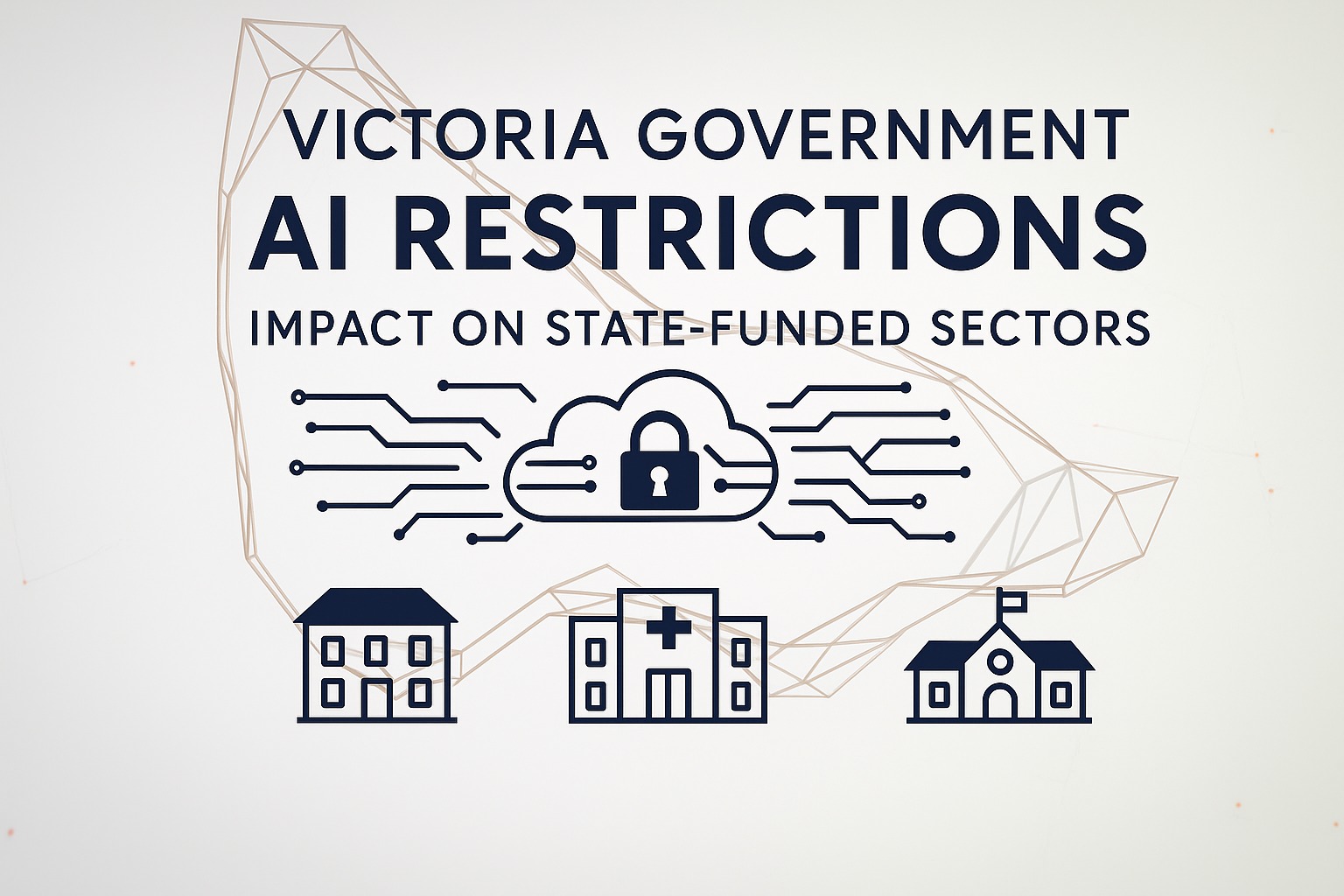
The US government's request to restrict GPT-5.6 marks a turning point in AI governance. For the first time, a frontier model's release was actively constrained by federal cybersecurity concerns, not just voluntary safety commitments. OpenAI confirmed the restrictions on July 6, limiting GPT-5.6 Sol — the flagship with enhanced agentic capabilities in biology and cyber domains — to a small group of government-approved partners. The Terra and Luna variants face similar constraints. OpenAI publicly expressed dissatisfaction, signaling tension between innovation speed and national security. For developers and enterprises, this creates immediate uncertainty. If you were planning to integrate GPT-5.6 into a product or workflow, you now face a delayed timeline and potential compliance hurdles. The broader implication is clear: expect more government intervention in model releases, especially for models with dual-use capabilities. The days of 'ship first, ask forgiveness later' are over for frontier AI. Your strategy should include fallback models (Claude Fable 5 is now the top-ranked alternative) and a compliance layer that can adapt to shifting government requirements. Don't build your entire stack on a model that could be yanked or restricted at any moment.
Meine Einschätzung: This is unprecedented. The US government just told OpenAI 'not yet' on its most capable model. If you're building on GPT-5, you now have an uncertain timeline and a political risk factor you didn't have before.
Anthropic Signs $19B Infrastructure Lease with TeraWulf
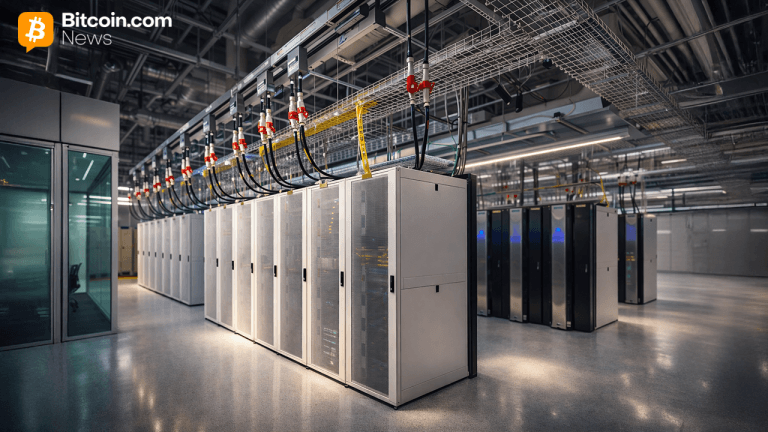
Anthropic's $19 billion lease with TeraWulf is the largest dedicated AI compute deal on record and reshapes the competitive landscape. The 20-year term for a 401 MW campus at TeraWulf's Justified Data site in Kentucky gives Anthropic guaranteed, massive compute capacity through 2046. This is not cloud rental — it's a strategic infrastructure play that effectively locks in physical capacity at a time when GPU and data center availability are the primary bottlenecks for AI development. TeraWulf's simultaneous sale of its Abernathy JV stake to Fluidstack shows the market's shift toward specialization: TeraWulf is betting on being a pure-play AI infrastructure landlord. For the rest of the industry, this deal has three implications. First, compute access is now a strategic asset that requires multi-year, billion-dollar commitments — small players will be squeezed. Second, the deal validates the 'build-to-suit' model for AI infrastructure, where hyperscalers and AI labs co-invest in dedicated facilities. Third, it signals that Anthropic is preparing for a future where inference and training demand are both massive and persistent. If you're an enterprise building AI products, start negotiating your own compute commitments now — spot pricing will become more volatile as these long-term leases lock up supply. The era of 'just spin up more instances' is ending.
Meine Einschätzung: This is Anthropic saying 'we're playing for keeps.' A $19B lease is not a bet — it's a declaration of war on the compute shortage. If you're an AI startup, this signals that infrastructure is the new moat, not just model architecture.
Claude Fable 5 Tops Benchmarks, Restrictions Lifted
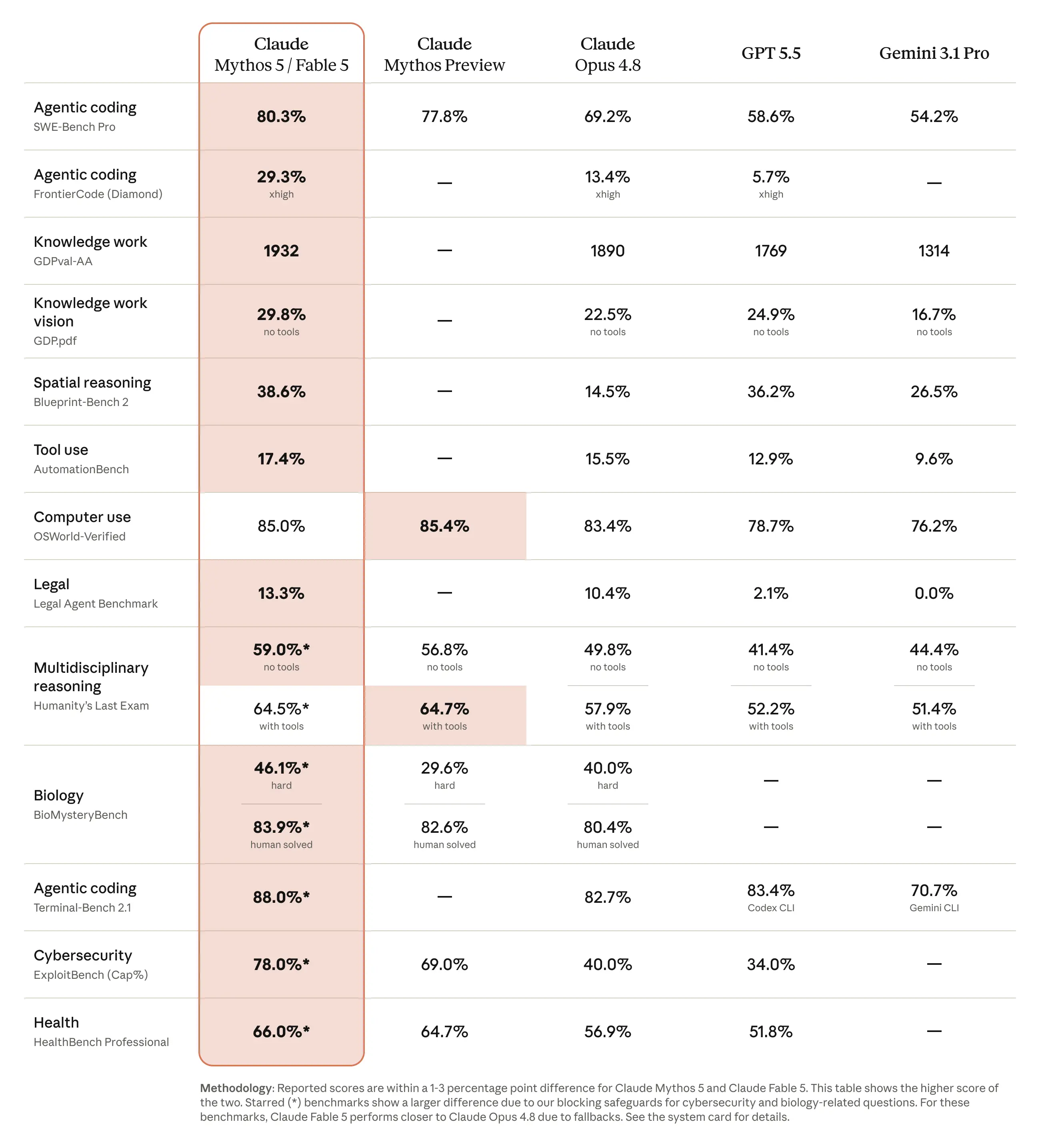
Claude Fable 5's ascension to the top of the BenchLM leaderboard with a score of 91 across 252 benchmarks is a watershed moment for Anthropic. It's not just the score — it's the breadth. Fable 5 leads across reasoning, coding, math, and agentic benchmarks, making it the most versatile model currently available. The lifting of restrictions after Anthropic agreed to stronger safeguards and government collaboration means the model is now fully accessible to developers and enterprises, unlike OpenAI's restricted GPT-5.6. The practical implications are already visible. Developer Ammaar Reshi used Fable 5 within Claude Code to port Command & Conquer: Generals — a 2003 Windows game — to run natively on iPhone, iPad, and Apple Silicon Macs. This is not a toy demo; it's a full port of a complex RTS game with custom UI, touch controls, and platform-specific optimizations. If a single developer can do this in what appears to be days, the productivity multiplier for professional teams is enormous. For enterprises, the message is clear: Fable 5 is now the default choice for high-stakes agentic workflows. Its combination of top-tier benchmark performance, unrestricted access, and proven real-world capability makes it the safest bet for production deployments. Start migrating your GPT-5-dependent workflows to Fable 5 and evaluate the performance delta — it may be negligible or even favorable.
Meine Einschätzung: Fable 5 is now the model to beat — and it's unrestricted. The fact that a single developer used it to port a 2003 game to modern Apple hardware in what looks like a weekend project tells you everything about the capability gap.
EU AI Act Now Fully in Force
The EU AI Act's full enforcement today is the most significant AI regulation event of 2026. Any company deploying AI in Europe — regardless of where the company is headquartered — must now comply with requirements for high-risk AI systems, including transparency documentation, human oversight mechanisms, and mandatory bias audits. The Act's scope covers everything from hiring algorithms to credit scoring to medical diagnosis tools. The companion Cloud and AI Development Act proposal signals the EU's intent to build domestic AI infrastructure, potentially creating new compliance requirements for non-EU cloud providers. For US-based companies, this creates a bifurcated compliance landscape: what's acceptable in the US may violate EU rules, and vice versa. The practical steps are immediate and non-negotiable. First, inventory every AI system you deploy in Europe and classify them by risk level under the Act. Second, implement bias audits for any high-risk systems — this is not optional. Third, ensure all model outputs can be traced back to training data and decision logic for transparency requirements. Fourth, establish human oversight workflows for automated decisions that affect individuals. The cost of non-compliance is up to 7% of global annual turnover or €35 million, whichever is higher. If you don't have a dedicated AI compliance officer or team, today is the day to create that role. The regulatory window for 'wait and see' just slammed shut.
Meine Einschätzung: If you sell AI in Europe and you haven't audited your pipeline yet, you're already non-compliant. The EU just turned the regulatory screws, and the fines are not a joke.
US Treasury Warns AI Market Poses Financial Risks

The US Treasury's draft report on AI market risks is a must-read for anyone with capital tied to AI infrastructure or startups. The core concern is straightforward: if the massive capital flows into data centers and AI companies don't generate the expected productivity gains and revenue, the resulting write-downs could ripple through the financial system. This is the first time a federal financial stability regulator has formally flagged AI as a systemic risk. The report specifically calls out data-center financing as a vulnerability — these are long-term, capital-intensive assets that require continuous utilization to be profitable. If AI demand softens or if model improvements reduce compute requirements faster than expected, these assets could become stranded. The parallel to the 2008 housing crisis is imperfect but instructive: both involve long-term debt tied to assets whose value depends on optimistic future scenarios. Separately, 29 states have now passed 109 AI laws, creating a patchwork of compliance requirements that will be a nightmare for national and global companies. Chatbot disclosure laws and data center oversight are the most common themes. For founders and operators, the message is to build with realistic revenue projections, not VC-fueled growth fantasies. If your business model depends on AI compute costs continuing to drop or on infinite demand for AI services, stress-test those assumptions. The Treasury is watching, and the margin for error is shrinking.
Meine Einschätzung: The Treasury is saying what everyone in the room is thinking: the AI boom is starting to look a lot like the dot-com bubble, except with $19B data center leases instead of Pets.com. Diversify your bets.
Deep Dive
How to Build a Model-Agnostic Agent Architecture
Today's news makes one thing painfully clear: building your entire stack on a single AI model is a ticking time bomb. OpenAI's GPT-5.6 got restricted. Anthropic's Fable 5 shot to the top. Mistral released Leanstral 1.5 for specialized math. The model landscape shifts weekly, and your architecture needs to keep up without requiring a rewrite every time. The solution is a model-agnostic agent architecture that treats models as pluggable components.
Start by abstracting the model interface. Instead of calling the OpenAI or Anthropic API directly in your code, create a common interface that all models implement. This interface should handle tokenization, context window management, streaming, and error handling uniformly. The Omnigent framework released today is exactly this — a meta-harness that sits above Claude Code, Codex, and Cursor, letting you swap agents with one-line changes. You don't need to use Omnigent specifically, but you need to adopt its philosophy: models are interchangeable backends, not architectural foundations.
Second, implement a routing layer. Not every task needs the most powerful model. Use a lightweight classifier (or a cheaper model like Gemini 3.5 Flash) to route simple queries to cheaper models and complex agentic tasks to frontier models like Fable 5. This is how you control costs while maintaining quality. The BenchLM leaderboard data from today shows that even top models vary wildly by task — Fable 5 dominates general benchmarks, but Leanstral 1.5 is purpose-built for formal math proofs. Route accordingly.
Third, build a credential and security layer that's model-agnostic. The ModelCop launch today highlights the growing risk of AI agent credentials becoming attack vectors. Your architecture should use a centralized credential manager that brokers access to APIs and tools, not hardcoded keys in agent prompts. The Omnigent framework's brokered credential access is the right pattern: agents request credentials through a secure broker that can audit and rotate them independently of the model being used.
Fourth, implement fallback chains. When GPT-5.6 is restricted or when Claude's API has an outage, your system should automatically fall back to the next best model without user-facing errors. This is not just about reliability — it's about compliance. If a model gets banned in a jurisdiction (as we're seeing with the EU AI Act and US government restrictions), your system should route around it transparently.
Finally, test across models as part of your CI/CD pipeline. Today's benchmark data from BenchLM is a snapshot, but your specific use case may favor a different model. Build automated evaluation suites that run your core tasks against multiple models and flag regressions when you swap. The cost of this testing is trivial compared to the cost of being locked into a model that gets restricted, banned, or simply outperformed. The era of 'one model to rule them all' is over. Build for a multi-model world from day one.
Build for a multi-model world — the model that rules today might be restricted tomorrow.