Wednesday — July 08, 2026
Automatisiert mit einem lokalen KI-Modell erstellt, ohne redaktionelle Prüfung vor Veröffentlichung.
AI Strategy Brief
Act as a senior AI strategist. Given the latest AI news from July 8, 2026, summarize the three most impactful shifts for enterprise decision-makers in 2-3 sentences. Focus on pricing, infrastructure, and deployment governance.
Claude Fable 5 Now Costs Extra on Top of Subscription
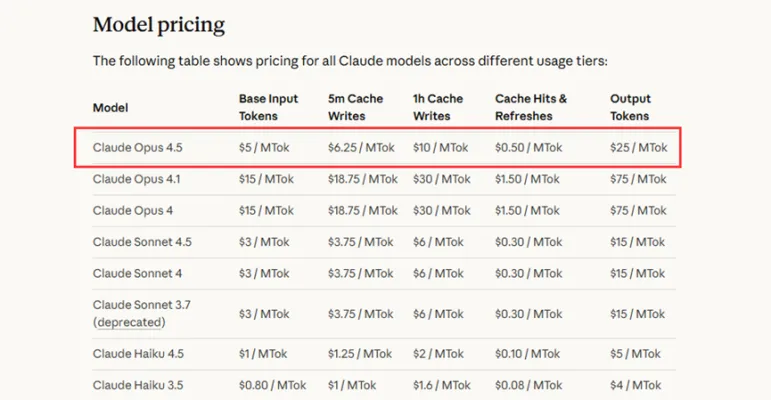
Anthropic's pricing change for Claude Fable 5 marks a significant shift in how the company monetizes its frontier models. Previously, Fable 5 was included within the usage limits of Pro ($20/month) and Max ($100/month) subscriptions, allowing developers and power users to experiment without incremental costs. Effective immediately, every call to Fable 5 incurs per-token charges: $10 per million input tokens and $50 per million output tokens. For context, a typical agentic session involving multiple tool calls and long context windows could easily consume 100,000 output tokens per session, costing $5 per session on top of the subscription fee. Anthropic explicitly states that developers integrating Fable 5 into agents or Claude Code sessions on Pro or Max plans must enable usage credits for continued access. This creates a two-tier system: casual users can still access Sonnet 5 and Opus 4.8 without extra charges, but anyone needing Fable 5's advanced reasoning must pay per-use. The move mirrors industry trends where frontier models are increasingly treated as premium, metered resources rather than included features. For teams building production systems, this means re-evaluating which model to use for which task. Fable 5 should be reserved for high-value, complex reasoning tasks where its cost is justified by the outcome. Simpler tasks should be routed to Sonnet 5 or Opus 4.8 to avoid unnecessary burn. Developers should also implement cost tracking and budgeting tools to avoid surprise bills. Anthropic likely made this change to align revenue with compute costs, as Fable 5 is significantly more expensive to run. The broader implication is that the era of all-you-can-eat frontier model access is ending. Companies should plan for variable AI costs as a line item, not a fixed subscription fee.
Meine Einschätzung: This is a classic bait-and-switch. Anthropic got everyone hooked on Fable 5's capabilities, then moved the goalposts. If you built agents on Fable 5 expecting stable pricing, your budget just got blown up.
Google Rebuilds Gemini 3.5 Pro, Delays to July 17
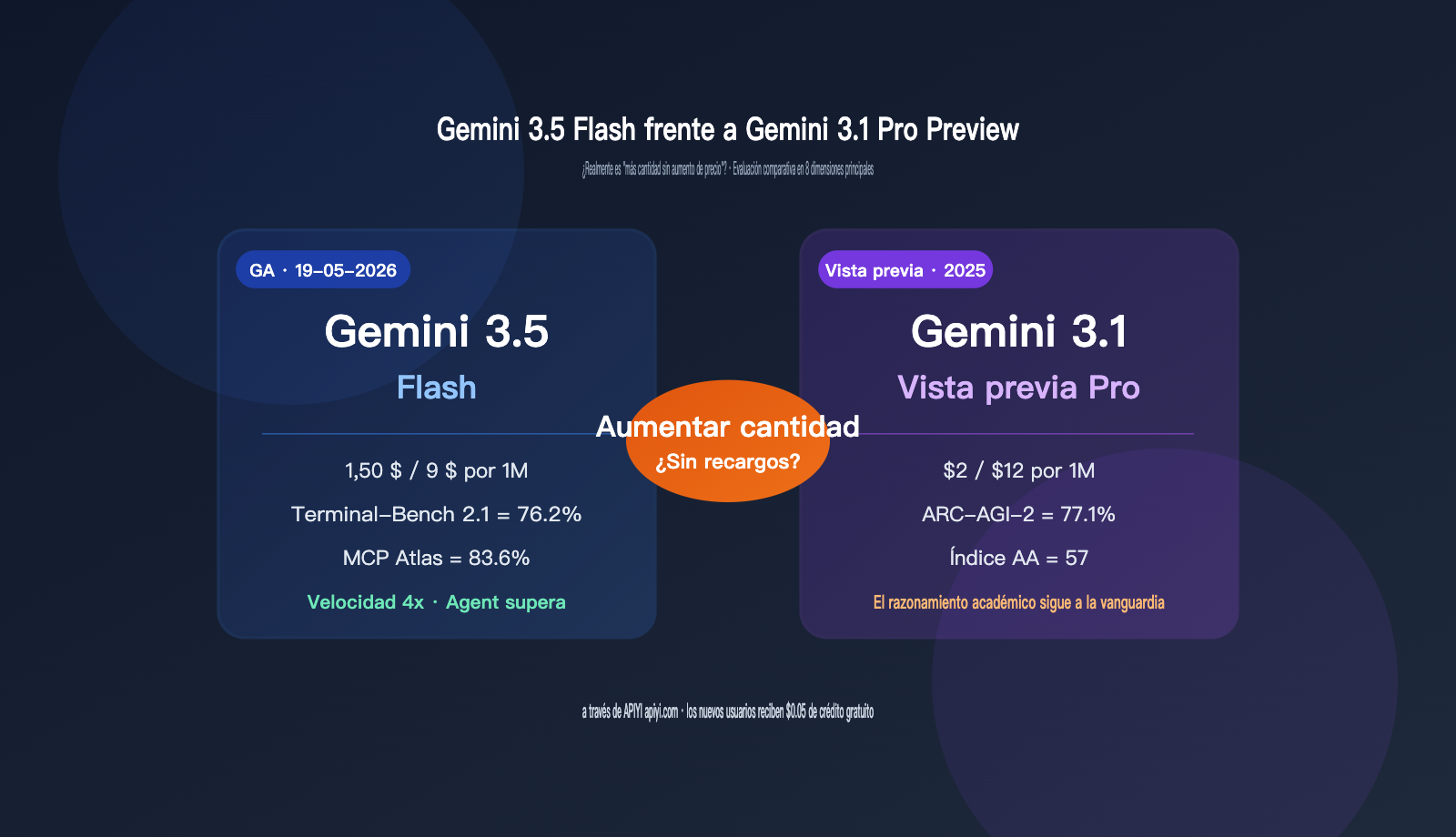
Google DeepMind's decision to delay Gemini 3.5 Pro for a complete architectural rebuild is a bold and risky move. The company had originally planned a sooner release, but internal benchmarks apparently showed the model wasn't competitive enough on complex reasoning and agentic tasks. The rebuilt version promises three major upgrades: a 2 million token context window, a new Deep Think Reasoning Layer for multi-step problem-solving, and autonomous workflow capabilities. The 2M context window is particularly notable — it doubles the already-large 1M token window of the previous version and positions Gemini 3.5 Pro as a serious contender for long-document analysis, codebase understanding, and complex research tasks. The Deep Think Reasoning Layer is designed to handle problems that require multiple steps of reasoning, such as mathematical proofs, legal analysis, and complex coding tasks. This is Google's answer to OpenAI's o-series reasoning models and Anthropic's extended thinking. The autonomous workflow capabilities suggest Google is building toward agentic AI that can execute multi-step tasks without constant human intervention. While Google hasn't provided specific benchmarks, the delay suggests they're aiming for a significant leap rather than an incremental update. For developers, this delay means continued reliance on Gemini 3.5 Flash, which is now the default model in the Gemini app and Google Search. Flash is faster and cheaper but less capable on complex tasks. The delay also gives Anthropic and OpenAI more time to solidify their positions. Google's strategy appears to be: ship a capable Flash model now, take the time to get Pro right, and then dominate with a superior reasoning model. The risk is that the market moves on and developers build habits around competing platforms. For builders, the key takeaway is to architect your AI stack with model abstraction layers that allow easy swapping between providers. Don't hardcode model-specific logic. When Gemini 3.5 Pro finally arrives, you should be able to plug it in without rewriting your entire system.
Meine Einschätzung: Google is right to delay and rebuild rather than ship a half-baked model. But this also signals they're playing catch-up to OpenAI and Anthropic on reasoning and agentic capabilities. The 2M context window is a flex, but execution matters more.
DeepSeek Builds Its Own AI Inference Chip
DeepSeek's decision to build its own AI inference chip is a direct response to geopolitical tensions and supply chain vulnerabilities. The company, which has gained attention for its competitive large language models, is now moving upstream to control its own hardware destiny. The chip is specifically designed for inference — the process of running trained models to generate responses — rather than training. This is a smart focus because inference is where most AI compute costs are incurred in production. By optimizing for inference, DeepSeek can reduce costs, improve latency, and achieve greater independence from Nvidia and Huawei. The move is particularly significant given the ongoing US-China tech tensions and export controls on advanced semiconductors. DeepSeek is a Chinese company, and building its own chip reduces its exposure to potential sanctions or supply disruptions. The chip is reportedly being developed in-house with a focus on energy efficiency and throughput for transformer-based models. If successful, DeepSeek could offer inference-as-a-service at significantly lower prices than competitors using Nvidia hardware. This would put pressure on the entire AI ecosystem to reduce costs and improve efficiency. For global developers, this means several things. First, expect increased competition in the inference market, which should drive down prices over time. Second, be aware that DeepSeek's models may become more tightly integrated with its hardware, potentially creating lock-in effects. Third, the move signals that AI companies are increasingly viewing hardware as a strategic asset, not just a commodity. The broader implication is that the AI industry is moving toward vertical integration, where companies control the full stack from chips to models to applications. This could lead to more optimized systems but also more fragmentation. For builders, the advice is to keep your model and hardware choices flexible. Don't bet the farm on any single provider's ecosystem. The next few years will see significant shifts in who controls the AI value chain.
Meine Einschätzung: This is the most strategically significant move in AI hardware this year. DeepSeek is essentially saying 'we can't trust foreign chips for our AI future.' If they succeed, it reshapes the entire supply chain.
HP Deploys OpenAI Frontier Across Entire Enterprise
HP's enterprise-wide deployment of OpenAI's Frontier platform is a landmark moment for enterprise AI adoption. Unlike the countless pilot programs and small-scale experiments that have characterized most corporate AI initiatives, HP is committing to a full-scale, governed deployment across its global operations. The scope covers three main areas: customer experiences, employee productivity, and software development. For customer experiences, HP is likely using AI to power support chatbots, personalize marketing, and optimize sales processes. For employee productivity, the platform will assist with document creation, data analysis, and workflow automation. For software development, HP developers will use AI-assisted coding tools to accelerate feature development and improve code quality. The key word here is 'governed.' HP is not just handing out OpenAI accounts and hoping for the best. The deployment includes centralized management, security controls, and usage policies. This is the mature approach to enterprise AI that many companies are still struggling to implement. The partnership also signals that OpenAI is serious about the enterprise market and is building the infrastructure to support large-scale deployments. For builders and vendors, HP's move creates several opportunities. First, there will be increased demand for tools that integrate with OpenAI's platform for monitoring, governance, and cost management. Second, companies will need solutions for fine-tuning and customizing models for specific enterprise use cases. Third, the security and compliance requirements of enterprise AI deployments will drive demand for specialized consulting and implementation services. The broader lesson is that enterprise AI is moving from 'can we do this?' to 'how do we do this at scale?' Companies that have been waiting on the sidelines should start building their AI governance frameworks now. The technology is ready; the organizational readiness is the bottleneck.
Meine Einschätzung: This is the kind of enterprise AI deal that actually matters — not a pilot, not an experiment, but a full-scale deployment. HP is betting its operational efficiency on OpenAI. Other CIOs should take notes.
Microsoft Shifts AI Strategy to Enterprise Deployment
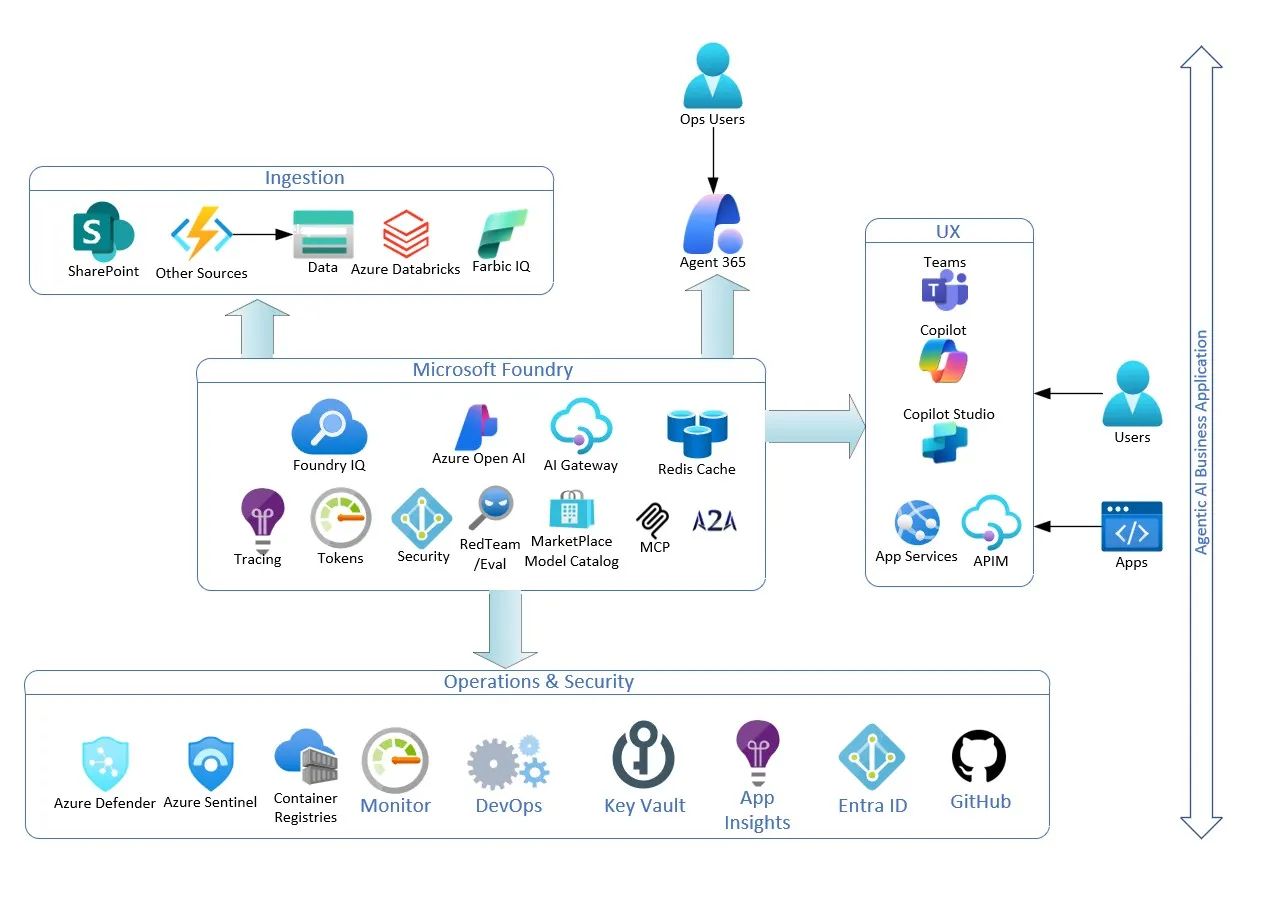
Microsoft's $2.5 billion Frontier Company initiative represents a strategic pivot from model building to deployment enablement. The company is essentially saying that the biggest bottleneck in enterprise AI isn't model capability — it's the organizational and technical infrastructure needed to put those models to work. The initiative will embed 6,000 AI engineers and industry experts directly into customer organizations to help them move AI projects from pilot to production. This is a massive consulting and implementation play that directly competes with systems integrators like Accenture and Deloitte. The focus is on measurable business outcomes rather than technology showcases. Microsoft wants to help customers reduce costs, increase revenue, and improve operational efficiency using AI. The program covers the full lifecycle: strategy, architecture, implementation, and ongoing optimization. For builders and developers, this shift has several implications. First, Microsoft is signaling that the value in AI is shifting from model creation to application development and integration. Second, the demand for AI engineers who can bridge the gap between research and production will continue to grow. Third, Microsoft's approach of embedding engineers in customer teams could become a new standard for enterprise AI deployment. The initiative also reflects a growing recognition that most AI projects fail not because the technology doesn't work, but because organizations don't know how to integrate AI into their existing workflows, data systems, and decision-making processes. Microsoft's bet is that by providing hands-on support, they can capture a larger share of the enterprise AI market. For companies considering AI adoption, the lesson is clear: don't underestimate the organizational change management required for successful AI deployment. The technology is increasingly commoditized; the competitive advantage comes from execution and integration.
Meine Einschätzung: Microsoft is betting that the real money in AI isn't in building better models — it's in getting existing models to actually work in enterprises. That's a smart bet. Model quality is table stakes; deployment is the moat.
Deep Dive
How to Build a Cost-Effective AI Agent Stack After the Fable 5 Pricing Shift
The Claude Fable 5 pricing change is a wake-up call for anyone building AI agents. The era of flat-rate access to frontier models is ending, and variable costs are becoming a reality. Here's how to adapt your architecture to stay cost-effective without sacrificing capability. First, implement a model router that classifies each request by complexity and routes it to the appropriate model. Simple queries like data extraction or summarization should go to Sonnet 5 or Opus 4.8, which remain included in subscriptions. Only complex reasoning tasks like multi-step planning, code generation with deep logic, or analysis requiring extended context should hit Fable 5. This tiered approach can reduce your Fable 5 costs by 60-80% while maintaining output quality. Second, add cost tracking and budgeting to every agent session. Before making a model call, estimate the token cost based on expected input and output length. Set hard caps per session and per user. Use tools like Anthropic's own usage API or third-party monitoring solutions to track costs in real time. If a session is approaching its budget, the agent should either simplify its approach or escalate to a human. Third, optimize your prompts and context windows. The biggest cost driver is token count, especially output tokens at $50 per million. Design your prompts to be concise, use system prompts to set behavior rather than repeating instructions in every user message, and implement context window management that prunes irrelevant history. For long-running agents, consider using a sliding window approach that keeps only the most recent and most relevant context. Fourth, cache common responses. If your agent frequently answers similar questions, implement a semantic cache that stores and reuses responses for identical or near-identical queries. This can dramatically reduce API calls for routine tasks. Fifth, consider hybrid architectures where local models handle routine tasks and cloud models handle complex reasoning. With tools like Ollama and open-weight models like those from Z.ai's ZCode, you can run smaller models locally for simple tasks and only call Fable 5 when needed. This approach also improves latency and privacy for sensitive data. Finally, build in observability and alerting. Monitor not just costs but also performance metrics like response quality and user satisfaction. If you notice that routing simpler tasks to Sonnet 5 is causing a drop in quality, adjust your routing thresholds. The goal is to find the optimal balance between cost and capability for your specific use case. The Fable 5 pricing change is not a disaster — it's a forcing function to build smarter, more efficient AI systems. The teams that adapt will have a competitive advantage over those that simply write bigger checks.
The winners in AI won't be the ones with the best models — they'll be the ones who figure out how to deploy them without going broke.