Friday — July 10, 2026
Automatisiert mit einem lokalen KI-Modell erstellt, ohne redaktionelle Prüfung vor Veröffentlichung.
AI News Analyst
Act as an AI industry analyst. Given today's AI news, identify the top three strategic shifts happening in the market and explain each in one paragraph. Focus on competitive dynamics and cost implications.
OpenAI GPT-5.6: Three Tiers for Every Budget
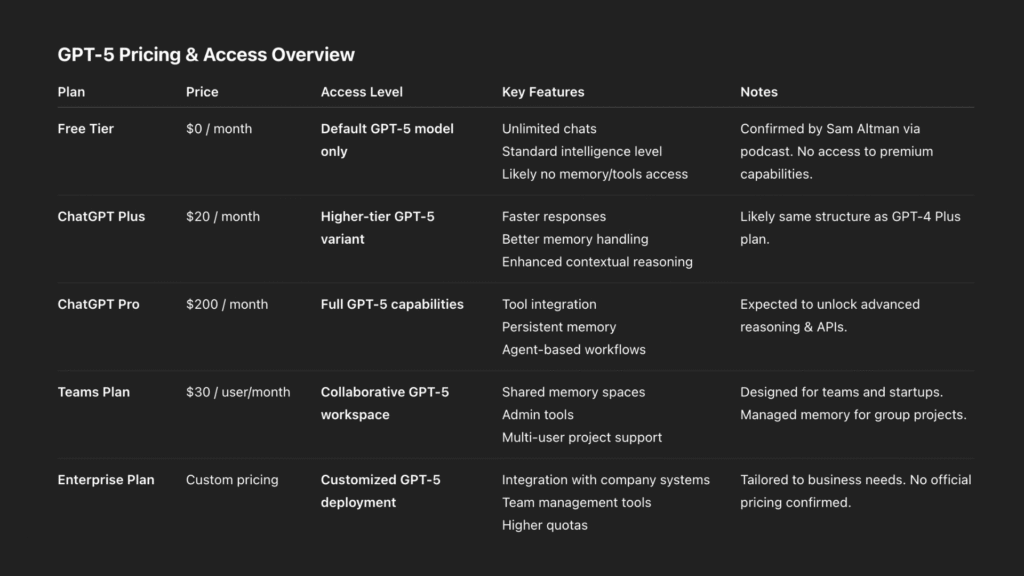
OpenAI's GPT-5.6 launch marks a strategic shift from one-size-fits-all to tiered pricing. The Sol model targets the high-end reasoning market where Anthropic's Fable 5 currently leads, but at $5/$30 per million tokens for input/output, it's dramatically cheaper. Terra at $2.50/$15 is the sweet spot for most businesses, offering 95% of Sol's capability at half the cost. Luna at $1/$6 is for high-volume, low-latency tasks like customer support chatbots or simple code completions. The Artificial Analysis Intelligence Index comparison is telling: Sol at 59 vs Fable 5 at 60, but Sol costs 66% less per task. This pricing pressure will force Anthropic to either cut prices or justify the premium with demonstrably better outputs. For developers, the API pricing makes GPT-5.6 the default choice for cost-sensitive applications. The tiered model also reduces the risk of overpaying for capability you don't need. Expect enterprise contracts to shift toward Terra as the standard tier, with Sol reserved for critical reasoning tasks. The real winner here is the developer ecosystem: cheaper access to frontier models means more experimentation and more products.
Meine Einschätzung: OpenAI is finally playing the pricing game properly. Sol is cheaper than Fable 5 and almost as good. Terra and Luna are smart segmentation for different use cases. This is how you compete.
Microsoft MAI-Code-1 Replaces Third-Party Models

Microsoft's MAI-Code-1 announcement is a quiet earthquake in the AI industry. The model offers coding performance comparable to Anthropic's Opus 4.6 but at a lower cost, and Microsoft is already deploying it to replace third-party models in Office apps. This is exactly what we predicted would happen: the hyperscalers will eventually replace external models with their own to control margins and data. For Microsoft, the math is simple. Every API call to OpenAI or Anthropic is a cost. Every call to MAI-Code-1 is a margin. With millions of Office users generating billions of AI requests, the savings are enormous. But the implications go deeper. Microsoft now controls the entire stack: the OS, the applications, the cloud infrastructure, and the AI models. This vertical integration gives them pricing power, data advantages, and the ability to optimize models for their specific use cases. For developers building on Microsoft's ecosystem, this means you'll get better integration and lower costs for first-party AI features. But it also means you're locked into Microsoft's AI roadmap. For OpenAI and Anthropic, this is a warning shot. Microsoft is still their largest customer and investor, but the relationship is shifting from dependency to competition. Expect Microsoft to gradually replace third-party models across all its products, starting with coding and expanding to general intelligence.
Meine Einschätzung: This is the beginning of the end for third-party AI models in Microsoft products. If you're an AI vendor selling to Microsoft, your clock just started ticking. Microsoft is going full vertical integration.
Claude Code: Autonomous Coding Agent from Terminal
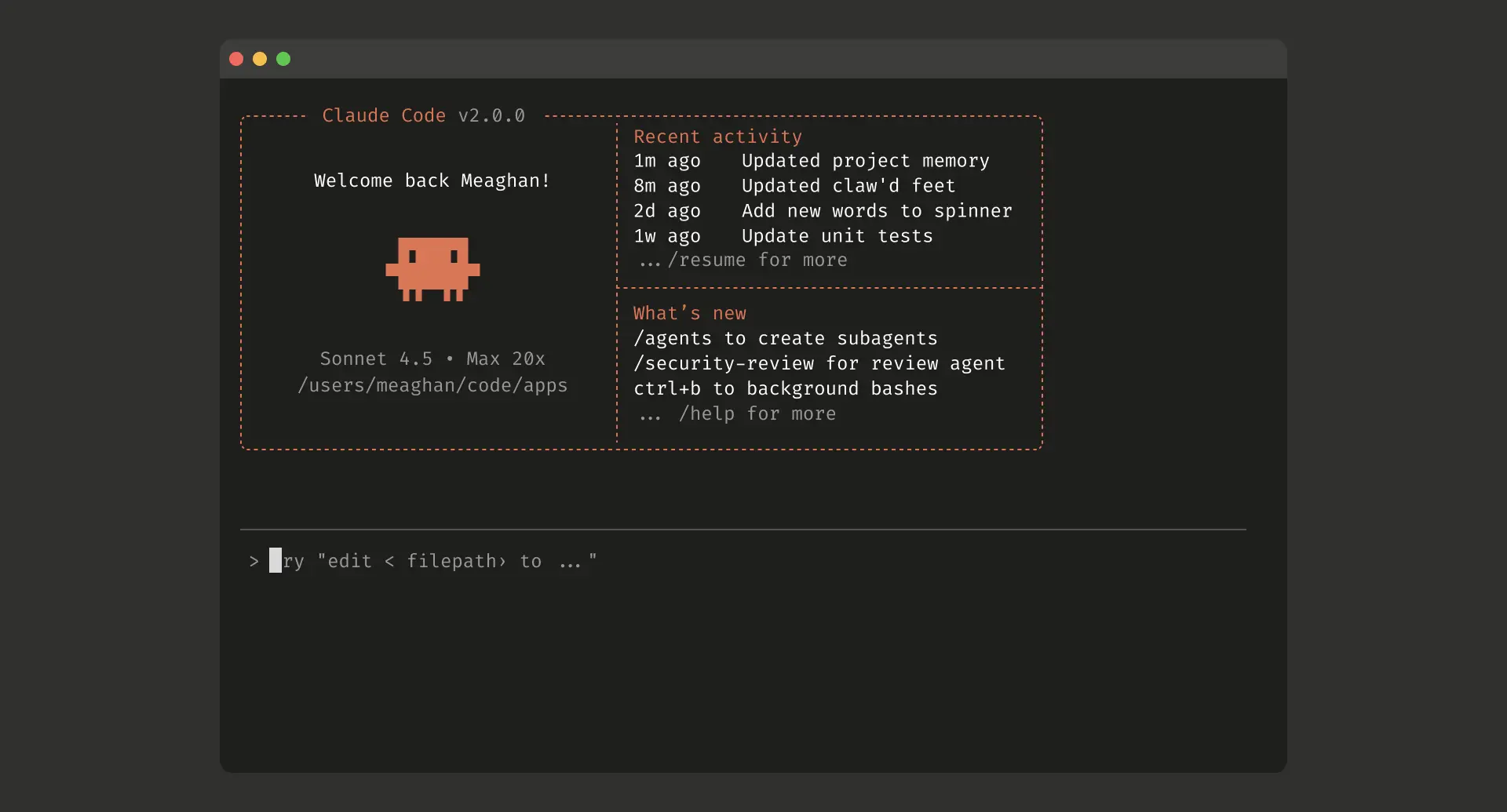
Anthropic's Claude Code is a significant step forward for AI-assisted development. Unlike chat-based coding assistants, Claude Code operates directly from the terminal, allowing it to plan, edit, and test entire projects autonomously. The agent can understand project structure, make multi-file changes, run tests, and iterate based on results. This is closer to a junior developer than a code completion tool. The timing is strategic: with OpenAI launching GPT-5.6 and Microsoft releasing MAI-Code-1, Anthropic is doubling down on the developer experience. Claude Code is integrated into paid Claude offerings, meaning it's immediately available to existing subscribers. For developers, the terminal-native approach is a game-changer. It integrates with existing workflows, version control, and CI/CD pipelines without requiring a new IDE or plugin. The autonomous nature means you can give it a task like 'add user authentication to the API' and let it work through the implementation, tests, and documentation. The key limitation is trust: developers will need to review the agent's output carefully, especially for security-sensitive code. But for boilerplate, refactoring, and testing, Claude Code can dramatically reduce development time. Fable 5's availability worldwide complements this by providing the underlying reasoning engine for complex coding tasks. Together, these launches position Anthropic as the serious developer's AI platform.
Meine Einschätzung: Claude Code is the most practical coding agent yet. Terminal-first, autonomous, no GUI overhead. This is what developers actually want: AI that works where they work.
Mistral Robostral Navigate: Robotics with One Camera
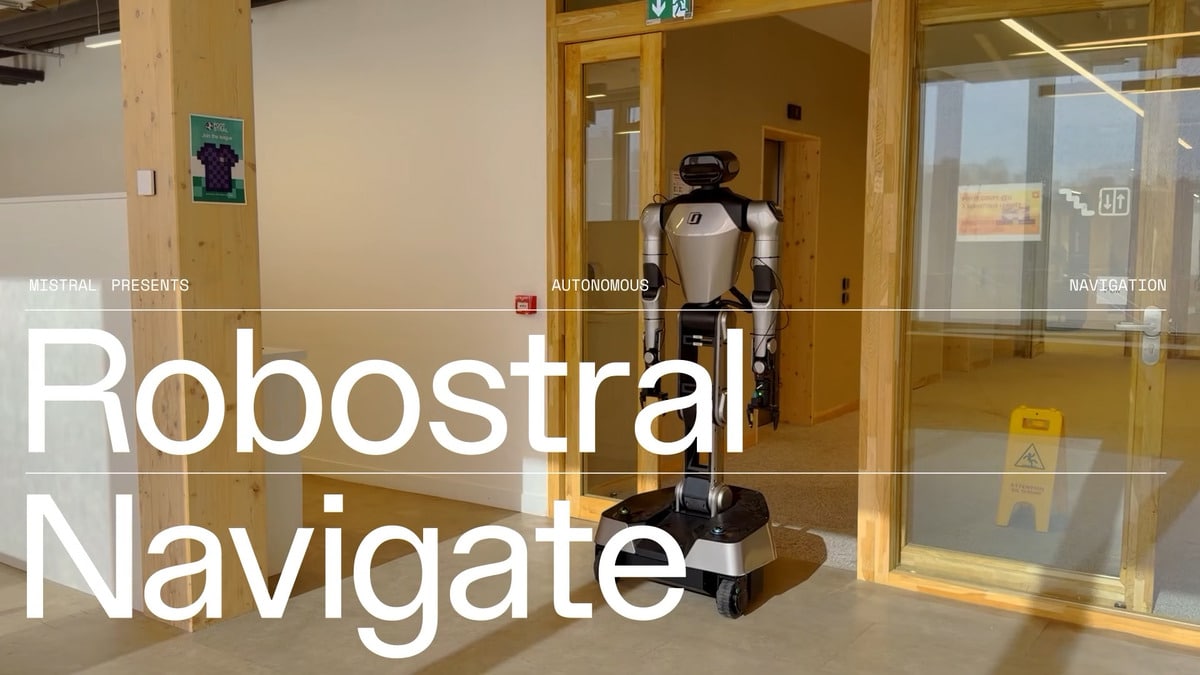
Mistral's Robostral Navigate is a refreshingly practical robotics model. At 8B parameters, it's small enough to run on edge devices but powerful enough to navigate complex environments using just a single RGB camera. The 76.6% success rate on the R2R-CE benchmark is competitive with much larger models. The key innovation is the natural language interface. Instead of programming navigation paths, operators can give commands like 'go to the kitchen and check the refrigerator' and the robot handles the pathfinding, obstacle avoidance, and task completion. The hardware-agnostic design means it can run on any robot with a camera and compute module, from Boston Dynamics' Spot to custom-built platforms. For businesses, this dramatically reduces the cost of deploying autonomous navigation. No LIDAR, no expensive sensor arrays, no custom hardware. A $500 camera and a $200 compute module can replace a $10,000 sensor suite. The implications for logistics, healthcare, and manufacturing are significant. Warehouse robots can navigate dynamic environments, hospital delivery bots can find rooms without RFID tags, and manufacturing robots can adapt to layout changes without reprogramming. Mistral's open-source approach means developers can fine-tune the model for specific environments. The robotics community should pay attention: this is the kind of practical, deployable AI that moves the industry forward.
Meine Einschätzung: Mistral is quietly building the most practical robotics AI. Single camera, natural language, hardware-agnostic. This is the kind of model that actually gets deployed in warehouses and hospitals.
Deep Dive
How to Choose Between GPT-5.6 Tiers for Your Business
The GPT-5.6 tiered pricing model is a gift for businesses that know what they need. But the wrong choice wastes money or leaves performance on the table. Here's how to decide.
Start with task complexity. If your use case involves multi-step reasoning, code generation from scratch, or complex data analysis, Sol is the right choice. The extra cost buys you the ability to handle edge cases and reduce errors on high-stakes tasks. For customer support, content generation, or simple data extraction, Terra will give you 95% of Sol's quality at half the cost. Luna is for high-volume, low-complexity tasks like classification, sentiment analysis, or basic summarization where speed and cost matter more than perfection.
Measure your error tolerance. Run a blind A/B test with 100 samples of your typical workload. Compare Sol vs Terra outputs. If Terra makes acceptable errors less than 5% of the time, use Terra. If errors are critical (financial calculations, medical advice, legal analysis), use Sol. The cost difference is significant: at 1 million tokens per day, Sol costs $30,000 per month while Terra costs $15,000. That's $180,000 per year in savings if Terra works for you.
Consider latency requirements. Luna is optimized for speed and can handle real-time applications like chatbots or live transcription. Sol is slower but more thorough. If your users can wait 2-3 seconds for a response, Sol is fine. If you need sub-second responses, Luna is the only choice.
Plan for escalation. Build a routing system: send all requests to Luna first. If Luna's confidence is below a threshold, escalate to Terra. If Terra is also uncertain, escalate to Sol. This tiered approach can reduce your costs by 60-80% while maintaining quality for critical tasks. OpenAI's API supports this natively with model routing.
The bottom line: don't default to the most expensive model. Test your workload against each tier. The savings are real, and the performance gap is smaller than you think.
The cost of intelligence is dropping. The question isn't which model is best, but which model is best for the job you're paying for.